“I’ve noticed small bumps forming around my eyes.”
“I can’t identify what kind of condition this is, and I’m not sure what to do.”
If any of these concerns sound familiar, you are not alone. To get straight to the point: small bumps around the eyes may be caused by a skin condition called syringoma.
Syringoma does not cause pain or swelling. However, because the bumps tend to appear in visible areas, many people find them a cosmetic concern. Currently, syringoma cannot be treated with medication alone, so consulting a clinic about a clinical procedure is advisable.
This page explains the causes of syringoma and four available treatment options. If you have been troubled by unexplained bumps, reading on may help you identify your condition.
Table of Contents
- 1 What Is Syringoma? Unexplained Bumps That Often Appear Under the Eyes
- 2 Other Conditions That Resemble Syringoma and How to Tell Them Apart
- 2.1 Milia
- 2.2 Epidermoid Cyst (Atheroma)
- 2.3 Xanthoma
- 3 Four Syringoma Treatments Available at a Dermatology Clinic
- 3.1 Surgery
- 3.2 AGNES
- 3.3 Carbon Dioxide (CO2) Laser
- 3.4 Cryotherapy with Liquid Nitrogen
- 4 Frequently Asked Questions About Syringoma
- 4.1 Q. Is syringoma treatment covered by insurance?
- 4.2 Q. Can syringoma recur?
- 4.3 Q. Can medication treat or prevent syringoma?
- 5 Six Features of Our Clinic That Patients Appreciate
- 5.1 Many patients visit us with the following concerns. Do any of them sound familiar?
What Is Syringoma? Unexplained Bumps That Often Appear Under the Eyes

Syringoma is a condition in which small bumps of approximately 1–3 mm develop just below the eyes, on the upper eyelids, or on the forehead. It can also appear on areas outside the face, such as the arms or hands, and in rare cases it has been observed to develop across the entire body.
Syringoma does not cause itching or pain, but because it tends to form in prominent areas, many people are bothered by its appearance.
At present, the underlying cause of syringoma has not been identified.
However, because the number of affected individuals tends to increase with age, aging is considered a contributing factor. Genetics may also play a role in the development of syringoma.
The mechanism behind syringoma involves the proliferation of sweat ducts—the structures responsible for secreting sweat—within the skin. As these ducts multiply, the skin surface becomes raised, resulting in the characteristic bumps.
Other Conditions That Resemble Syringoma and How to Tell Them Apart
“

The following three conditions are commonly mistaken for syringoma.
| Condition | Characteristics |
|---|---|
| Milia | Appear white and translucent |
| Epidermoid Cyst (Atheroma) | Caused by accumulation of dead skin cells and sebum |
| Xanthoma | Yellowish raised patches on the skin |
This section explains how to distinguish these three conditions from syringoma. Use the descriptions below as a reference to help determine which condition may apply to you.
Please note, however, that accurately self-diagnosing a skin condition is difficult. Rather than attempting to treat yourself, we recommend visiting a clinic for a proper evaluation.
Milia
Milia is a condition in which small bumps form primarily around the eyes.
Because it affects areas such as under the eyes and on the eyelids, the affected sites are similar to those of syringoma, making the two easy to confuse. Milia contains accumulated old keratin beneath the surface, which gives the bumps a white, translucent appearance.
Milia is associated with disrupted skin cell turnover caused by aging. As metabolism slows with age, multiple lesions tend to develop.
Milia may resolve on its own, but it can take a considerable amount of time for the bumps to disappear. Improvement through skincare alone is generally not expected, so if the appearance is a concern, consulting a clinic for treatment is worth considering.
For more information about milia, please refer to the following article.
Can You Remove Milia Yourself? Causes and Two Treatment Options at a Clinic
Epidermoid Cyst (Atheroma)
An epidermoid cyst is a type of cyst that forms when dead skin cells and sebum accumulate beneath the skin surface. In the early stages, only a small lump under the skin can be felt, with no visible changes on the surface, making the condition easy to overlook.
If left untreated, the accumulation of dead skin cells and sebum continues, causing the affected area to become more prominent.
Without treatment, bacteria can enter through the pore opening on the surface, leading to inflammation. This inflammation can cause pain, redness, and discharge of pus from the affected area.
Severely inflamed epidermoid cysts may require surgical intervention, so early attention is important.
For details on the characteristics and treatment of epidermoid cysts, please visit the following page.
About Epidermoid Cysts (Atheroma)
Xanthoma
Xanthoma is a condition in which raised patches appear on the skin, lighter in color than the surrounding tissue.
While the affected skin in syringoma tends to resemble the color of normal skin, xanthoma lesions appear lighter and have a yellowish hue.
Touching the affected area does not cause pain or itching; the texture is only slightly softer than surrounding skin.
Xanthoma most commonly develops on the eyelids or above the eyes, but it can also appear on the hands or feet. A high-lipid diet increases the risk of developing xanthoma, and patients with hyperlipidemia are more likely to develop the condition concurrently.
Treatment for xanthoma involves surgical removal of the affected area or laser therapy. In cases where xanthoma forms on the eyelids, there is a possibility of recurrence even after surgical removal.
For more information about xanthoma, please refer to the following article.
What Is Xanthoma? Symptoms and Causes of Xanthelasma and Two Treatment Options at a Clinic
Four Syringoma Treatments Available at a Dermatology Clinic
There are four main treatment options for syringoma available at a dermatology clinic.
| Treatment | Characteristics |
|---|---|
| Surgery | Complete removal of the lesion is possible, which may help reduce the risk of recurrence |
| AGNES | Treatment can be performed without damaging the skin surface |
| Carbon Dioxide (CO2) Laser | Lower likelihood of pain or bleeding during treatment |
| Cryotherapy with Liquid Nitrogen | Simple procedure often used for wart treatment |
At our clinic, surgical excision is the only treatment option eligible for insurance coverage.
The following sections explain each treatment in detail.
Surgery
Surgical excision may be performed when a lesion is large or when multiple small lesions are clustered together.
Depending on the condition of the affected area, different instruments may be used, such as a punch tool for removing circular sections of skin or a scalpel. The punch tool removes skin sections of up to approximately 6 mm in diameter, allowing treatment with minimal visible scarring.
Given the typical depth of syringoma, complete removal may be achievable, which can help reduce the likelihood of recurrence. However, when numerous lesions are present, surgery may not always be advisable due to concerns about scarring.
AGNES
AGNES is a treatment using a radiofrequency-based skin care device.
A fine needle is inserted deep into each individual lesion, and the thermal energy from the radiofrequency current works to reduce the syringoma.
One advantage of AGNES is that its needles are extremely fine, allowing treatment to be delivered without damaging the skin surface. Because heat is not applied directly to the surface of the skin, this approach tends to leave fewer marks than laser treatment.
However, a single AGNES session is generally not sufficient to fully address syringoma. Treating syringoma typically requires a period of approximately 3 to 6 months.
At our clinic, the cost of AGNES treatment varies depending on the area treated and the number of sessions. For details on the AGNES treatment process and pricing, please refer to the following page.
AGNES for Acne Removal and Under-Eye Care: Pricing, Expected Outcomes, and Four Clinical Applications
Carbon Dioxide (CO2) Laser
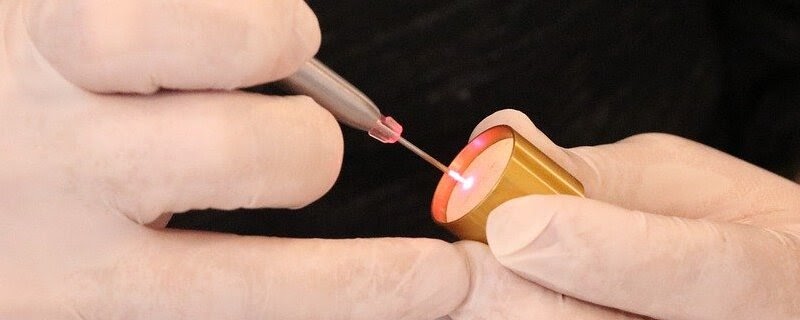
CO2 laser treatment works by vaporizing the moisture within syringoma tissue, effectively removing the lesion.
However, because CO2 laser treatment can leave marks at the treated site, alternative treatments may be considered for larger lesions.
To minimize marking, the laser is applied as superficially as possible. Individual sensitivity to discomfort from CO2 laser treatment varies, though many patients describe the sensation as similar to a needle prick.
Another advantage of CO2 laser treatment is a lower risk of bleeding. Even if a blood vessel is nicked as the skin is ablated, the laser’s coagulation effect causes the vessel to seal almost instantly.
For details on CO2 laser treatment options and pricing, please refer to the following page.
CO2 Laser Removal of Warts and Moles: Three Key Features, Pricing Overview, and Important Considerations
Cryotherapy with Liquid Nitrogen
Cryotherapy with liquid nitrogen may also be used in the treatment of syringoma.
Cryotherapy involves applying a cotton swab soaked in ultra-cold liquid nitrogen to the affected area to rapidly freeze and destroy the tissue.
Because it is a straightforward procedure, cryotherapy with liquid nitrogen is frequently used for wart treatment.
However, cryotherapy does have drawbacks. The treatment can be quite painful, and patients who are sensitive to discomfort may find it difficult to continue.
Cryotherapy must be performed consistently to achieve sufficient treatment results; without ongoing sessions, syringoma may not improve as desired.
There is also a risk that the procedure may spread the virus to surrounding areas, potentially enlarging the affected region. In consideration of these risks, our clinic does not offer cryotherapy with liquid nitrogen.
Frequently Asked Questions About Syringoma

Below are answers to questions we frequently receive about syringoma.
Q. Is syringoma treatment covered by insurance?
Insurance coverage is available for syringoma treatment when surgical excision is performed.
However, treatment with AGNES or a CO2 laser is not covered by insurance.
Following a consultation and assessment of your condition, we will propose an appropriate treatment plan. Please feel free to contact our clinic for an initial consultation.
Q. Can syringoma recur?
Syringoma can recur even after removal.
A single syringoma contains numerous cells capable of forming new lesions, meaning there is a risk of recurrence at the same site or in an entirely different location.
With the possibility of recurrence in mind, it is important to address any new lesions as they appear in order to maintain the desired appearance over time.
Q. Can medication treat or prevent syringoma?
Syringoma cannot be prevented or treated with medication. This is because syringoma originates from the eccrine sweat glands located in the dermis—a deeper layer of the skin. Active ingredients in topical medications applied to the skin surface are generally unable to penetrate deeply enough to reach the dermis.
Treating syringoma requires a direct approach to the affected tissue, such as surgical excision or laser treatment.
Six Features of Our Clinic
That Patients Appreciate

Many patients visit us with the following concerns.
Do any of them sound familiar?

At our clinic, dermatologists and plastic surgeons work together as a team, aiming to provide treatment with minimal discomfort. If you are considering treatment for syringoma, please do not hesitate to reach out to IC Clinic for a consultation.