
This page provides information supervised by specialist physicians at IC Clinic.
Inflamed Epidermoid Cyst (Atheroma): Symptoms, Causes & Treatment | For Those Experiencing Pain or Swelling

“My epidermoid cyst suddenly turned red and started hurting.” “It feels warm to the touch.” — If you are experiencing these symptoms, you may have an inflamed epidermoid cyst (atheroma). Unlike an ordinary epidermoid cyst, an inflamed cyst can worsen rapidly if left untreated, making prompt attention important.
In this article, supervised by a specialist in plastic and reconstructive surgery, we explain in detail how to identify an inflamed epidermoid cyst, when to seek treatment, and what the treatment process typically involves.
What Is an Inflamed Epidermoid Cyst? | Key Differences from an Ordinary Cyst
An inflamed epidermoid cyst (atheroma) is a cyst that has become infected with bacteria, leading to inflammation and suppuration. It is sometimes referred to as a “suppurative epidermoid cyst.”
An ordinary epidermoid cyst causes no pain and tends to grow slowly, so it is often put off with a “I’ll see a doctor eventually” attitude. An inflamed cyst, however, can progress rapidly within just a few days, causing significant pain and swelling.
| Comparison | Ordinary Epidermoid Cyst | Inflamed Epidermoid Cyst |
| Pain | None | Intense throbbing pain |
| Appearance | Skin-colored to slightly whitish lump | Red, swollen, and spreading |
| Feel | Firm lump | Soft and warm to the touch |
| Rate of progression | Slow growth over months to years | Rapid worsening within days |
| Odor | Little to none | May produce a distinctive unpleasant odor from pus |
| Urgency | Can schedule a visit at your convenience | Prompt medical attention is recommended |
Symptoms of an Inflamed Epidermoid Cyst | 5 Signs You Should See a Doctor
If any of the following symptoms apply to you, an inflamed epidermoid cyst is a possibility and we recommend seeking medical attention promptly.
① Redness and Swelling
The area around the cyst turns red and swells noticeably beyond its original size. As inflammation spreads, the area of redness may continue to expand.
② Throbbing Pain
You may notice a pulsating pain that beats in time with your heartbeat. The pain may persist even at rest and can interfere with daily activities.
③ Warmth at the Site
The affected area feels noticeably warmer than the surrounding skin. This is a sign of the inflammatory response as the body works to combat the bacterial infection.
④ Changes in the Skin
The overlying skin may become thin and take on a shiny appearance. This can indicate that pus is accumulating inside and pressure is building up.
⑤ Discharge of Pus or Contents
The cyst may rupture spontaneously, releasing pus or malodorous contents. This is known as “spontaneous rupture,” and you should seek medical attention immediately.
Why Does an Epidermoid Cyst Become Inflamed? | 3 Main Causes
An ordinary epidermoid cyst can become inflamed for the following three main reasons.
Cause 1: Bacterial Infection
An epidermoid cyst has a small opening at its center, sometimes called the “punctum.” When bacteria from the skin surface enter through this opening, they can multiply rapidly inside the cyst. Because few immune cells are present within the cyst wall, once bacteria gain entry, infection tends to spread easily.
Cause 2: Physical Irritation
Friction from clothing, pressure from belts or bags, or habitual touching of the cyst can all serve as triggers. Cysts located in areas subject to regular pressure—such as the back, buttocks, or around the hip joints—tend to be particularly prone to inflammation.
Cause 3: Attempts at Self-Treatment
Attempting to squeeze or pop a cyst in the belief that “I can get rid of it myself” is one of the most common causes of inflammation. Manipulating the cyst in an unsterile manner introduces bacteria and frequently leads to rapid worsening.
What Happens If an Inflamed Epidermoid Cyst Is Left Untreated? | 4 Stages of Worsening
If an inflamed epidermoid cyst is left untreated, symptoms may progress through the following stages.
Stage 1: Mild Inflammation
Redness begins to appear, and there is mild pain when pressed. If you seek treatment at this stage, it may be possible to manage the condition with oral antibiotics and monitoring.
Stage 2: Abscess Formation
Pus accumulates inside the cyst, causing marked swelling. Significant pain and warmth are present, and at this stage incision and drainage are typically required.
Stage 3: Spontaneous Rupture
The pressure inside becomes too great, and the skin breaks open, releasing pus. While pain may temporarily ease, there is a risk that new bacteria will enter through the open wound, causing the infection to spread further.
Stage 4: Progression to Cellulitis
Infection spreads to the surrounding subcutaneous tissue, causing widespread redness and swelling. Fever and general fatigue may also occur, and hospitalization may be required in some cases.
To prevent such serious complications, it is important to seek medical attention promptly at the first sign of inflammation.
Treatment for Inflamed Epidermoid Cysts | 2 Approaches Based on Severity
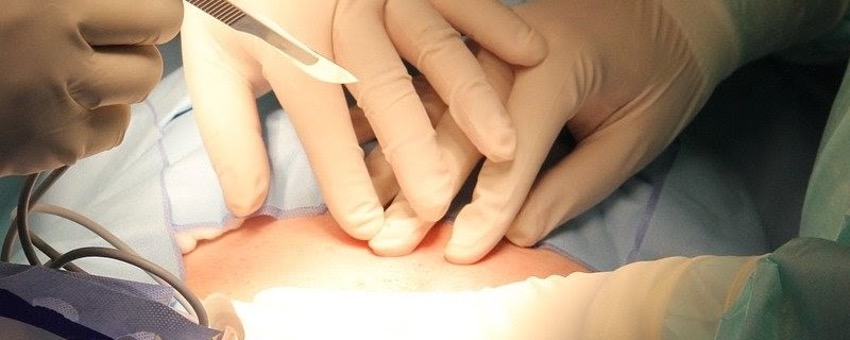
The treatment approach for an inflamed epidermoid cyst depends on the degree of inflammation.
Mild Inflammation: Conservative Treatment with Antibiotics
In the early stages, where redness is present but an abscess has not yet formed, oral antibiotics may help reduce inflammation. However, this is a symptomatic approach to managing the inflammation only—it does not eliminate the cyst itself. Once the inflammation has settled, definitive surgical removal will be discussed.
Moderate to Severe Inflammation: Incision and Drainage Followed by Definitive Surgery at a Later Date
When pus has accumulated, an incision and drainage procedure is first performed to release the pus. This typically provides significant pain relief; however, because the cyst wall (capsule) remains in place, the cyst is likely to recur without further treatment.
The standard approach is to perform definitive surgery to remove the cyst wall approximately 1 to 2 months after the inflammation has fully resolved.
Why Is Treatment Performed in Two Stages?
When a cyst is inflamed, the cyst wall becomes fragile and adheres to the surrounding tissue, making complete removal difficult. Attempting surgery under these conditions increases the risk that part of the wall will be left behind, leading to recurrence. By waiting until the inflammation has resolved and the tissue has stabilized, more thorough removal and minimization of scarring become possible.
Definitive Surgery After Inflammation Has Resolved | 2 Surgical Techniques
For definitive surgery after the inflammation has settled, one of the following two techniques is selected based on the condition of the cyst.
| Technique | Punch Excision (Punch-Out Method) | Excision with Fusiform Incision |
| Incision size | Small opening approx. 2–5 mm in diameter | Fusiform (elliptical) incision sized to the cyst |
| Scarring | Small and less noticeable | Somewhat larger, but allows reliable removal |
| Operation time | Approx. 10–15 minutes | Approx. 15–30 minutes |
| Indication | When adhesions after inflammation are minimal | Strong adhesions or larger cysts |
| Recurrence risk | Depends on surgical technique | Very low |
When there is a history of an inflamed epidermoid cyst, adhesions to surrounding tissue are common, so the fusiform excision technique is often selected to ensure complete removal. Which technique is most appropriate will be determined through a medical consultation.
→ For more information about epidermoid cyst surgery, please see ‘What Is an Epidermoid Cyst (Atheroma)? A Guide to Treatment.’
Treatment Costs for Inflamed Epidermoid Cysts | Covered by Health Insurance
Treatment for inflamed epidermoid cysts is covered by Japanese public health insurance. The following are approximate costs at our clinic.
| Approximate Treatment Costs for Inflamed Epidermoid Cysts (30% patient co-payment) | ||
| Treatment | Approximate Cost | Notes |
| Incision and drainage (emergency procedure) | Approx. ¥3,000–¥5,000 | Drainage procedure only |
| Definitive surgery (exposed area, under 2 cm) | Approx. ¥5,000–¥6,000 | Face, neck, hands, etc. |
| Definitive surgery (exposed area, 2–4 cm) | Approx. ¥11,000–¥12,000 | Same as above |
| Definitive surgery (non-exposed area, under 3 cm) | Approx. ¥4,000–¥5,000 | Back, buttocks, etc. |
| Definitive surgery (non-exposed area, 3–6 cm) | Approx. ¥10,000–¥11,000 | Same as above |
※ In addition to the above, separate fees apply for the initial consultation or follow-up visit (approx. ¥1,000), any required tests (approx. ¥1,000), and pathological examination (approx. ¥3,000).
※ In cases of an inflamed epidermoid cyst, two separate procedures—incision and drainage, and definitive surgery—may be required.
What to Do If Your Epidermoid Cyst Ruptures

If an inflamed epidermoid cyst ruptures spontaneously, please take the following first-aid steps and seek medical attention as soon as possible.
① Cover with a Clean Gauze Pad
Gently place a clean gauze pad or cloth over any pus or discharge to protect the wound. Do not press hard or attempt to squeeze out additional contents.
② Keep the Area Clean
If possible, rinse gently with clean running water and cover with a fresh gauze pad. Antiseptic solutions may slow wound healing, so rinsing with water is sufficient.
③ Seek Medical Attention Promptly
A ruptured cyst is susceptible to spreading infection. Please visit a medical facility the same day or the following day to receive appropriate treatment.
What You Should Never Do
Do not attempt to squeeze out any remaining contents. This can spread the infection further and cause damage to the surrounding tissue.
Frequently Asked Questions About Inflamed Epidermoid Cysts
Yes, we recommend seeking medical attention. Redness is an early sign of inflammation, and if left unaddressed, pain and swelling may develop within a few days. Seeking care at this stage may allow you to avoid the need for incision and drainage.
Unfortunately, over-the-counter topical creams are not able to treat an inflamed epidermoid cyst. Because the cyst lies in a deeper layer of the skin, topical medications cannot reach it. In cases of infection, oral antibiotics are also typically necessary. Please see a doctor before your symptoms worsen.
Complete removal is difficult when inflammation is significant. The cyst wall becomes fragile and adheres to surrounding tissue during inflammation, so attempting removal under these conditions increases the risk of residual tissue and recurrence. The standard approach is to first perform incision and drainage to resolve the inflammation, then carry out definitive surgery approximately 1 to 2 months later.
Surgery is performed under local anesthesia, so discomfort during the procedure is minimal. However, local anesthesia may be less effective when inflammation is present, and additional anesthesia may be administered as needed. Pain relief medication will be prescribed after the procedure, so it should not significantly interfere with daily activities.
Please visit a dermatologist or a plastic and reconstructive surgeon. If you are considering definitive surgical treatment, we recommend choosing a clinic with substantial experience in epidermoid cyst surgery. At our clinic, a specialist in plastic and reconstructive surgery oversees the entire process from consultation through surgery.
Yes, that is correct. A cyst that has previously been inflamed has a damaged wall, making it easier for bacteria to re-enter. Repeated episodes of inflammation cause progressive adhesion to surrounding tissue, which also makes surgery more complex. Once the inflammation has settled, we recommend undergoing definitive surgery as soon as reasonably possible.
For Treatment of Inflamed Epidermoid Cysts, Visit IC Clinic
An inflamed epidermoid cyst can cause pain and swelling that interfere with daily life. Waiting to see if it improves on its own can allow symptoms to worsen rapidly, making treatment more complex.
At IC Clinic, our specialist in plastic and reconstructive surgery will carefully assess your condition and discuss a treatment plan suited to the degree of inflammation.
Why Patients Choose Our Clinic

Treatment by a Specialist in Plastic and Reconstructive Surgery
We prioritize minimizing scarring and pay close attention to the cosmetic outcome of every procedure.

Same-Day Appointments Available When Possible
We understand the urgency of inflamed epidermoid cysts and endeavor to provide same-day treatment wherever possible. If you are in pain, please call us to discuss your situation.

Day Surgery | Covered by Health Insurance
Procedures are typically completed in around 20 minutes, allowing you to return home the same day. Japanese public health insurance applies, so you can feel reassured about the cost.
If your cyst has become painful or is red and swollen, please do not hesitate to contact us before your symptoms progress further.