
“My ear was torn by a piercing…” “I’ve always been self-conscious about my naturally split earlobe.” “My piercing hole has stretched, and I’m worried about job interviews.” “I’ve been covering it with my hair, but I want to fix it properly.”
Do any of these concerns sound familiar?
A split earlobe (earlobe cleft) is not only a cosmetic concern but also carries a risk of infection. Many people assume it will heal on its own over time, but in reality, appropriate treatment is necessary.
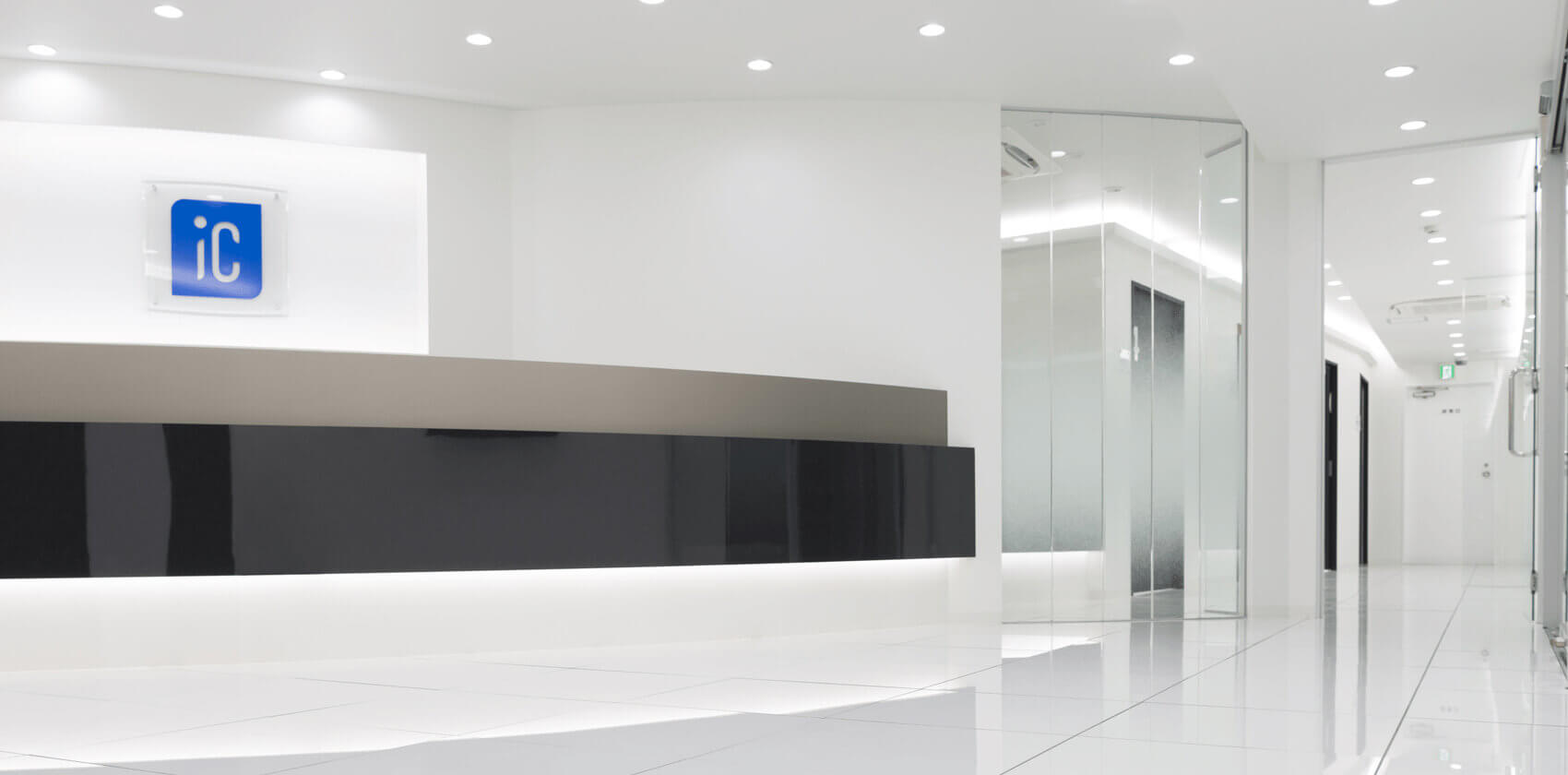
At IC Clinic, our board-certified plastic surgeons provide skilled repair of split earlobes and piercing-related issues. Congenital earlobe clefts may be eligible for insurance coverage, and for acquired cases, we will recommend the most suitable treatment approach based on each patient’s needs and preferences.
You don’t have to face this alone — please feel free to reach out for a consultation. Our specialists will conduct a thorough examination and support you in restoring the appearance of your earlobes.
Important Notes on Pricing
- Congenital earlobe clefts are eligible for insurance coverage.
- Piercing-related earlobe tears and piercing hole closures are not covered by insurance and are treated as out-of-pocket (self-pay) procedures.
- Fees for out-of-pocket (self-pay) procedures are detailed further below.
What Is an Earlobe Cleft (Split Earlobe)?

There are two types of earlobe cleft. The first is a congenital earlobe cleft, where the earlobe is naturally split from birth. The second is an acquired earlobe cleft, where the earlobe becomes torn due to piercings or other causes.
The most common cause of acquired earlobe clefts is piercing-related complications. If a piercing-related earlobe tear is left untreated, bacteria can proliferate in the wound, potentially leading to redness, swelling, and pain. The tear will not heal on its own, and surgery is required for those who wish to have it corrected.
What Is Piercing Hole Correction?
Many patients visit our clinic because their piercing holes have stretched over time — causing earrings to fall out easily — or because they have been asked about their piercing holes in professional or interview settings. We offer piercing hole correction procedures at our clinic. Surgery is performed under local anesthesia. Rather than simple suturing, we use specialized plastic surgery techniques to carefully reshape the earlobe. Sutures are typically removed approximately 7 to 14 days after the procedure.

Causes of Earlobe Clefts and Torn Earlobes
The following are among the most common causes seen in patients who have undergone earlobe cleft and piercing hole correction treatment at IC Clinic.
- · Individuals with allergic tendencies (redness, swelling, or itching around the piercing site when metal is worn)
- · Those who wear piercings for extended periods without removing them
- · Those who frequently wear large, heavy earrings
- · Those whose piercing holes are prone to infection or suppuration
- · Those who keep piercings in for long hours continuously
- · Those with thick earlobes where the earring back digs in
As shown above, piercing-related issues are a leading cause. In most cases, the earlobe gradually splits over time, and patients typically come in after noticing that an earring has fallen out and the earlobe is torn or split.
Why a Torn Earlobe Won’t Reattach on Its Own, and the Risks of Leaving It Untreated
When the earlobe tears at the piercing hole, the torn area undergoes scarring (scar formation), meaning the wound heals over and becomes covered by skin.
However, two scarred surfaces will not reattach to each other on their own.
For this reason, treating an earlobe cleft requires surgically removing the scarred tissue and then suturing the edges together.
Furthermore, if an earlobe cleft is left untreated, bacteria can proliferate in the wound, potentially causing redness, swelling, and pain. The condition will not resolve naturally. If you notice that your earlobe has torn, we recommend seeking treatment as soon as possible.
Types of Earlobe Cleft and Piercing Hole Treatments, and IC Clinic’s Approach
Earlobe Reconstruction Is a Technically Demanding Procedure
The earlobe is a part of the auricle (outer ear) that is not easily concealed by hair, making any deformity particularly noticeable. For this reason, treatment must be carried out with great care to minimize visible scarring. Various techniques have been developed in earlobe cleft repair to avoid creating depressions (indentations) or notches (nicks or grooves). Congenital earlobe clefts in particular present in a wide variety of forms, and numerous classification systems and treatment approaches have been reported. Below, we introduce three of the most representative surgical methods.
Treatment Options for Earlobe Clefts and Torn Earlobes: Three Surgical Approaches
Treatment for earlobe clefts can be broadly divided into the following three approaches. At IC Clinic, we listen carefully to each patient’s wishes and perform surgery using ② Z-plasty, ③ W-plasty, or simple suturing as appropriate. Our physicians specializing in auricular reconstruction assess the condition of the wound and perform treatment with care, aiming to achieve a minimally visible scar.
Linear Method
This method involves excising the skin along the torn area of the earlobe cleft or piercing hole and re-suturing the edges together. Because the amount of tissue removed is minimal, this technique is less likely to reduce the size of the earlobe or create asymmetry between the two sides.
Z-Plasty
Z-plasty is one of the most widely used techniques in plastic surgery.
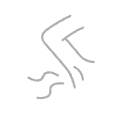
It is commonly used when linear scarring has caused contracture (scar contracture). As shown in the diagram, two incisions are made on either side of the existing scar. Triangular flaps of skin are then transposed, resulting in a Z-shaped scar that provides a lengthening effect — hence the name Z-plasty.
W-Plasty
A W-shaped (or technically V-shaped) wound is created along the edge of the earlobe.
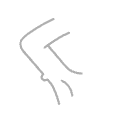
As shown in the diagram, small zigzag incisions are made on both sides of the linear scar. The scar tissue is excised, and the resulting zigzag edges are carefully sutured together. W-plasty converts a straight scar into a series of small zigzag scars. Because a zigzag scar is less conspicuous than a straight linear scar, Z-plasty or W-plasty is performed for patients who wish to minimize the visibility of their scar as much as possible.
IC Clinic’s Commitment to Quality
At IC Clinic, we are committed to achieving natural-looking, minimally visible scars. Our clinic offers the following features that contribute to less noticeable outcomes.
- We use suture thread finer than a strand of hair to perform precise, meticulous suturing
- Our specialist physicians select the most appropriate technique from options including W-plasty and Z-plasty
- We have extensive experience performing hundreds of earlobe cleft surgeries each year (patients travel to us from across Japan, including from Tohoku and Okinawa)
- Our team includes specialist physicians from multiple disciplines — plastic surgery, dermatology, and orthopedic surgery — with expertise in auricular reconstruction
- We are dedicated not only to achieving clean scarring, but also to minimizing discomfort throughout the treatment process
Overview of the Earlobe Cleft Surgery Process (Example)
Before surgery, the earlobe is fully split open.
The areas to be sutured are marked.
An IC Clinic physician carefully assesses the wound and performs the treatment.
Appearance one week after surgery.
Appearance after suture removal. Some redness remains immediately after suture removal, but the torn area heals together cleanly.
Redness at the scar site may persist for approximately three months, but it gradually fades and becomes nearly imperceptible.
FAQ: Earlobe Cleft and Torn Earlobe Surgery
Approximately 30 minutes. At IC Clinic, our plastic surgeons specializing in auricular reconstruction do their utmost to ensure a clean, minimally visible result.
Most patients experience minimal discomfort, as the procedure is performed under local anesthesia. A pain-relieving anesthetic injection is given at the start, which may cause a brief mild sensation. Once the anesthesia has taken effect, the surgery can generally be completed with very little discomfort.
Post-operative swelling typically subsides within approximately one week. Mild puffiness may be noticeable for 1–2 weeks. The final result is generally seen around 6 months after surgery. Redness at the scar site may remain for approximately three months, but it gradually fades and becomes nearly imperceptible.
Suture removal is performed 7–14 days after surgery. Because very fine thread is used, suture removal involves minimal discomfort.
Exposed buried absorbable sutures: The sutures will be removed.
Infection: Although very rare, if you experience signs of infection — such as persistent wound pain, fever, persistent swelling, persistent warmth at the wound site, or discharge from the wound — please seek medical attention promptly. Treatment may involve antibiotics; if an abscess has formed, a small incision and drainage procedure may be required, and removal of the source of infection may be necessary.
Keloid formation: Depending on an individual’s skin type, keloid scarring may develop. In such cases, treatment options including oral medication, injections, and local therapy will be considered.
Hypertrophic scarring: The scar may become raised and red. If necessary, treatment with topical creams, injections, or oral medication will be provided. In rare cases, surgical excision and re-suturing may be performed to improve the appearance.
Hematoma: If a hematoma develops, drainage may be required.
※ The above complications occur only in very rare cases. Should any such symptoms arise, please be assured that our clinic will respond promptly and appropriately.
Fees for Earlobe Cleft and Piercing Hole Treatment
| Approximate cost guide for earlobe cleft surgery (insurance-covered) | ||
| Per site (patient co-payment at 30%) | ¥31,010 | |
| ※ The treatment method and fees are the same even if the earlobe cleft is congenital. | ||
| ※ Insurance coverage is available. ※ Initial consultation fee and prescription fee are included in the above price. ※ Fees may vary depending on additional treatments or types of prescribed medication. ※ Insurance coverage is determined based on a physician’s diagnosis. Please discuss this during your consultation. | ||
| Approximate cost guide for self-pay (out-of-pocket) procedures | |
| Initial consultation fee: ¥3,300 ※ If surgery is performed on the same day as the initial consultation, the initial consultation fee is waived. | |
| Follow-up consultation fee: ¥1,100 | |
| Surgical fee (includes cost of medications used during surgery) | |
| Piercing-related earlobe tear / earlobe cleft | ¥55,000 |
| Piercing hole closure (less than 2 mm) | ¥33,000 |
| Piercing hole closure (2 mm or more, less than 1 cm) | ¥55,000 |
| Piercing hole closure (1 cm or more) | ¥88,000 |
| ※ Piercing-related earlobe tears and piercing hole closures are not covered by insurance and are self-pay procedures. | |
About Surgical Benefits from Private Insurance
Patients enrolled in a medical insurance plan through a life insurance company or mutual aid association may be eligible to receive a surgical benefit payment if they undergo surgery under insurance coverage following a physician’s examination.
Even if you have life insurance, benefits will not be paid unless you submit a claim yourself.
If a physician’s certificate is required, please be sure to inform us at the time of your visit.
Please check with your life insurance company or mutual aid association if you are enrolled in such a plan. (The procedure name will be listed as “Auricular Reconstruction” or similar.)
6 Features of Our Clinic That Patients Appreciate
Team-Based Care
Our clinic is staffed by specialist physicians from multiple disciplines — including plastic surgery, dermatology, and orthopedic surgery — with expertise in auricular reconstruction.
Attentive Pain Management
Our specialist physicians select the most appropriate technique from options such as W-plasty and Z-plasty, and perform treatments with minimal discomfort.
Minimally Visible Scarring
By using suture thread finer than a strand of hair and performing precise, meticulous suturing, we work to achieve scars that are as inconspicuous as possible.
Same-Day Surgery Available
The procedure takes approximately 30 minutes and can be performed as a same-day, outpatient surgery.
Convenient Location
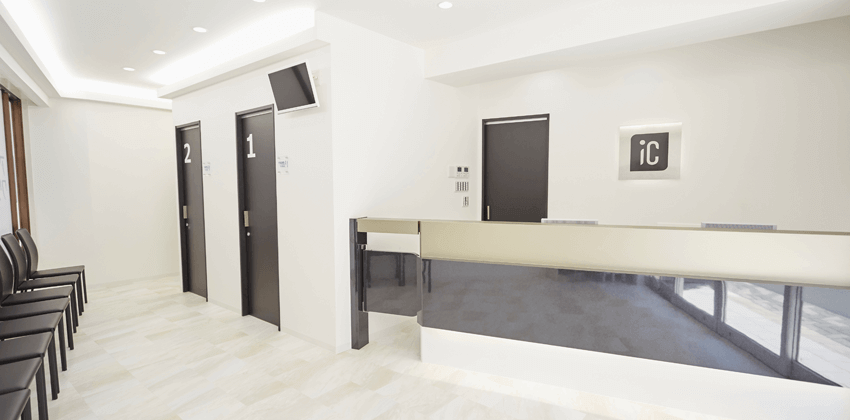
Our clinics are conveniently located close to major terminal stations in central Tokyo.
We See Many Patients Like These
- Those waiting for a torn earlobe to heal or grow back on its own
- Those who want to correct a stretched piercing hole
- Those who believe it cannot be fixed and have been covering it with their hair
- Those who have had difficult experiences at work or at home because of a torn earlobe
- Those who have felt uncomfortable or self-conscious noticing others looking at their ears during conversation

References
- Japanese Society of Plastic and Reconstructive Surgery. “Clinical Practice Guidelines for Plastic Surgery.” 2015 edition.
- Japan Society for Head and Neck Surgery. “Standard Surgical Techniques for Auricular Reconstruction.” Society Journal, 2019.
- Ministry of Health, Labour and Welfare. “Insurance Coverage Criteria for Congenital Conditions.” Notification No. Iseihatu 234, 2020.
- Japan Society of Aesthetic Plastic Surgery (JSAPS). “Prevention and Treatment of Piercing-Related Complications.” Aesthetic Surgery Journal (Japan), 2021.
- Japanese Society for Wound Surgery. “Clinical Practice Guidelines for Scar and Keloid Treatment.” Revised 2018 edition.