
“I want to improve the redness around my nose and achieve clearer skin.”
“I want to know about effective treatments for facial redness.”
Do any of these concerns sound familiar?
If you are troubled by facial redness, there is a good chance that you may have a skin condition called telangiectasia. Telangiectasia does not resolve on its own. To address your symptoms efficiently, consider visiting a clinic for a consultation.
This page explains the causes of telangiectasia and the treatment options that may help improve symptoms. You will gain a clearer understanding of what causes facial redness due to telangiectasia and how to manage it, so please read on.
What Is Telangiectasia? A Condition Where Blood Vessels Become Visible Through the Skin, Causing Redness

Telangiectasia is a condition in which the capillaries connecting arteries and veins become dilated, making the vessels visible through the skin and giving it a red appearance⁷⁻⁸. Histologically, it is characterized by abnormal dilation of capillaries in the superficial to mid dermis⁹⁻¹⁰, and the vessel diameter has been reported to expand to two to three times the normal size¹¹⁻¹².
Telangiectasia is thought to be triggered by hormonal factors. The condition occurs predominantly in women¹⁻², particularly among those who are pregnant. Epidemiological surveys have found telangiectasia in approximately 67% of pregnant women³⁻⁴, which is believed to be due to the effect of elevated estrogen levels during pregnancy on blood vessel walls⁵⁻⁶.
In telangiectasia, pain or a sensation of warmth in the affected area may occasionally occur, but symptoms other than the visible appearance are rare.
Telangiectasia can be classified into the following five types based on its presentation¹³⁻¹⁴. This classification is widely used internationally and serves as an important indicator for selecting treatment options and predicting prognosis¹⁵⁻¹⁶.
| Type | Characteristics |
|---|---|
| Simple (Linear) Type | Appears as a single red or bluish line visible through the skin No raised elevation observed |
| Arborizing (Branching) Type | Same as the simple type, except the vessels branch out |
| Spider Type | Redness radiates outward in all directions from a central vessel |
| Papular Type | A pimple-like dilated vessel with slight elevation |
| Erythematous Type | Divided into the following three subtypes: ・Individual vessels are not distinguishable ・Redness spreads around the nose and both cheeks ・Mixed form combining the arborizing or papular type |
Telangiectasia may also appear as part of the symptoms of rosacea¹⁷⁻¹⁸. It is known that telangiectasia co-occurs in approximately 40–80% of rosacea patients¹⁹⁻²⁰, and both conditions are thought to share common vascular pathological mechanisms²¹⁻²².
For more detailed information on rosacea and facial redness, please refer to the page below.
What Is Rosacea (Facial Redness)? Causes, Symptoms, and Two Treatment Options Explained
Causes of Telangiectasia
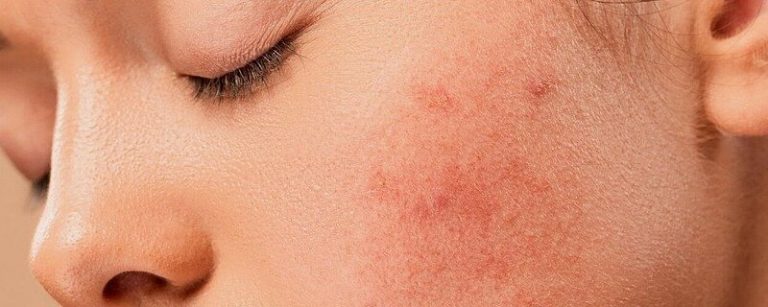
The main causes of telangiectasia and their characteristics are as follows.
| Cause | Characteristics |
|---|---|
| Thin Skin | Because the epidermis is thin, capillaries beneath the skin’s surface become visible |
| Temperature Fluctuations | Capillaries dilate to maintain the skin’s surface temperature, causing facial redness |
| Inflammation | Inflammation can be triggered by: ・Inflammatory acne ・Recurring acne breakouts ・Skin type and condition |
| Consumption of Alcohol or Spicy Foods | Excessive intake of alcohol or spicy foods can disrupt blood flow, making facial redness more noticeable |
When the epidermis is thin, capillaries can show through, making the skin appear red. Capillaries are especially concentrated on the face, which is why facial redness tends to occur.
Temperature fluctuations are also one of the contributing factors to facial redness.
Capillaries play a role in maintaining the skin’s surface temperature by dilating or constricting in response to temperature changes. Moving between environments with significant temperature differences can reduce the capillaries’ ability to constrict, leaving them in a dilated state and causing persistent facial redness.
Skin inflammation can also lead to telangiectasia. When inflammatory acne develops, the skin in the affected area becomes red. If acne repeatedly recurs, ongoing inflammation can lead to long-term facial redness.
In addition, excessive consumption of alcohol or strongly spiced foods is another factor that can contribute to telangiectasia. Alcohol and highly stimulating spices can cause blood flow to stagnate or increase, making facial redness more pronounced.
How Is Telangiectasia Treated? Two Treatment Options at Our Clinic

V-Beam laser is primarily used for treating telangiectasia at clinics.
Below, we explain the features of V-Beam and Photofacial (IPL) treatment available at our clinic.
1. V-Beam
V-Beam is a laser that reacts to red pigmentation.
It acts on hemoglobin in the blood and has shown efficacy for telangiectasia²³⁻²⁴. Its 595 nm wavelength coincides with the absorption peak of oxyhemoglobin, triggering selective photothermolysis²⁵⁻²⁶ that efficiently constricts and closes dilated blood vessels²⁷⁻²⁸. V-Beam is equipped with a cooling system, which helps minimize discomfort and the burden on the skin from laser light. The risk of damaging surrounding healthy skin cells is also minimal.
V-Beam treatment does not leave scars, though hyperpigmentation may occasionally occur. Swelling, discomfort, or bruising may also appear after treatment.
However, these symptoms typically subside within approximately one week. If hyperpigmentation, swelling, or other symptoms do not improve after treatment, please feel free to consult us.
For more information on the effects, costs, and potential side effects of V-Beam, please also refer to the following page.
2. Photofacial (IPL)
Photofacial (IPL) is a treatment that uses intense pulsed light to address various skin concerns.
The light energy helps constrict capillaries that have spread across the surface of the face, which may help reduce facial redness.
In addition to making capillaries less visible, this treatment may also help improve the redness associated with Acne Scars.
However, Photofacial (IPL) treatment cannot be administered to those who are pregnant or have a suntan, among others. It may also not be suitable in cases of severe inflammation.
For more details on the features and precautions of Photofacial (IPL) treatment, please refer to the following page.
Frequently Asked Questions About Telangiectasia

We have compiled answers to frequently asked questions about telangiectasia, covering a wide range of topics including costs, prevention methods, and the possibility of natural resolution.
Q. Is treatment for telangiectasia covered by insurance?
At our clinic, insurance coverage is available only for V-Beam treatment. The Ministry of Health, Labour and Welfare has recognized pigment laser treatment for telangiectasia as insurance-covered since 2003²⁹⁻³⁰, and it is established as a medically recognized treatment.
V-Beam fees vary depending on the area of irradiation.
Treatment Fees (Insurance Covered)
| Irradiation Area (cm²) / Co-payment Rate | 30% Co-payment | 10% Co-payment |
|---|---|---|
| 10 cm² | ¥8,140 | ¥2,710 |
| 20 cm² | ¥9,640 | ¥3,210 |
| 30 cm² | ¥11,140 | ¥3,710 |
| 40 cm² | ¥12,640 | ¥4,210 |
| 50 cm² | ¥14,140 | ¥4,710 |
| 60 cm² | ¥15,640 | ¥5,210 |
| 70 cm² | ¥17,140 | ¥5,710 |
| 80 cm² | ¥18,640 | ¥6,210 |
| 90 cm² | ¥20,140 | ¥6,710 |
| 100 cm² | ¥21,640 | ¥7,210 |
| 110 cm² | ¥23,140 | ¥7,710 |
| 120 cm² | ¥24,640 | ¥8,210 |
| 130 cm² | ¥26,140 | ¥8,710 |
| 140 cm² | ¥27,640 | ¥9,210 |
| 150 cm² | ¥29,140 | ¥9,710 |
| 160 cm² | ¥30,640 | ¥10,210 |
| 170 cm² | ¥32,140 | ¥10,710 |
| 180 cm² (maximum) | ¥33,640 | ¥11,210 |
※ From October 1, 2022, the out-of-pocket co-payment rate for medical expenses has changed for patients aged 75 and older who meet certain income criteria.
Please note that Photofacial (IPL) treatment is not covered by insurance. If you have any questions regarding fees, please feel free to ask during your consultation.
To help prevent telangiectasia, it is important to avoid friction during your daily skincare routine and to keep your skin well moisturized.
When the skin’s barrier function is weakened by dryness or irritation, inflammation can more easily occur³¹⁻³², so try to minimize any stress or burden on your skin. It is known that a compromised skin barrier promotes the release of inflammatory cytokines³³⁻³⁴, and increased vascular permeability can worsen capillary dilation. Try to minimize any stress or burden on your skin.
When cleansing your face, avoid scrubbing the skin hard and wash gently and carefully. After cleansing, it is also important to moisturize consistently to prevent dryness.
Additionally, topical medications prescribed at a clinic or similar facility may also help prevent telangiectasia.
At our clinic, patients aged 12 and under are not eligible for telangiectasia treatment.
As we do not provide treatment for children aged 12 and under, if you inquire about treatment for a young child, we will refer you to a general hospital or another appropriate medical facility.
Spontaneous resolution of telangiectasia is unlikely.
However, leaving the condition untreated will not lead to a life-threatening or serious medical situation. Most people manage the condition by receiving treatment at a clinic or by covering the redness with makeup.
Treatments such as V-Beam may help reduce redness in the affected area, so if the appearance concerns you, please feel free to consult us.
6 Features of Our Clinic That Patients Appreciate
Team-Based Care Under the supervision of a plastic surgeon certified by the Japanese Society of Plastic and Reconstructive Surgery, our clinic is staffed by specialist physicians from multiple disciplines, including plastic surgery, dermatology, and orthopedic surgery.
Pain Management Our specialist physicians select the most appropriate approach from a wide range of treatment methods, with the goal of minimizing discomfort.
Gentle on the Skin — Minimal Scarring We apply laser light while cooling the skin surface with cooling gas, helping to reduce the burden on your skin.
No Hospitalization Required — Same-Day Procedures Available The process from consultation to treatment is streamlined, and same-day procedures are available.
Convenient Access Our clinic is conveniently located just a short walk from major terminal stations in central Tokyo.
Insurance Coverage Available Telangiectasia treatment at our clinic is covered by public health insurance, giving you peace of mind regarding costs.
Many patients visit our clinic with concerns like the ones below.
Do any of these apply to you?
- Those troubled by redness around the nose
- Those who want to improve facial redness they have been covering with makeup
- Those concerned about blood vessels showing through the skin, causing a red appearance
At our clinic, V-Beam is available under insurance coverage as a treatment for telangiectasia.
Our clinic is also conveniently located just a short walk from the nearest station, so please feel free to contact us anytime.
References
Epidemiology & Prevalence
- Standard classification of rosacea: report of the National Rosacea Society Expert Committee. Author: Wilkin J, et al.
Journal: J Am Acad Dermatol.
Year: 2002;46(4):584-587
PMID: 11907510 - Incidence and prevalence of rosacea: a systematic review and meta-analysis. Author: Gether L, et al.
Journal: Br J Dermatol.
Year: 2018;179(2):282-289
PMID: 29675841 - Cutaneous manifestations of pregnancy: study of 140 cases. Author: Estève E, et al.
Journal: Ann Dermatol Venereol.
Year: 1994;121(6-7):461-466
PMID: 7832564 - Clinical study of skin changes associated with pregnancy. Author: Tanaka Mika, et al.
Journal: Journal of the Japanese Dermatological Association
Year: 2010;120(3):567-573
Pathology & Vascular Biology
- The cutaneous microcirculation. Author: Braverman IM.
Journal: J Investig Dermatol Symp Proc.
Year: 2000;5(1):3-9
PMID: 11147672 - Cutaneous circulation. In: Physiology, biochemistry, and molecular biology of the skin. 2nd ed. Author: Ryan TJ.
Publisher: Oxford University Press
Year: 1991 - Structure and function of cutaneous blood vessels. Author: Otsuka Atsushi
Journal: Vascular Medicine
Year: 2015;16(2):123-130 - Correlation of laser Doppler wave patterns with underlying microvascular anatomy. Author: Braverman IM, et al.
Journal: J Invest Dermatol.
Year: 1990;95(3):283-286
PMID: 2384687 - The stratum corneum barrier: the final frontier. Author: Marks R.
Journal: J Nutr.
Year: 2004;134(8 Suppl):2017S-2021S
PMID: 15284395 - Histological characteristics of telangiectasia. Author: Yamamoto Kazuya, et al.
Journal: Clinical Dermatology
Year: 2012;54(8):1123-1129
Vessel Diameter Measurement & Quantitative Assessment
- Telangiectasias: morphology and etiology of different types. Author: Urbancek S, et al.
Journal: Dermatol Surg.
Year: 2017;43(12):1354-1362
PMID: 28816737 - A comparative study of different treatment modalities for facial telangiectasias. Author: Elman M, et al.
Journal: Lasers Med Sci.
Year: 2014;29(4):1379-1389
PMID: 24563250
Classification & Diagnostic Criteria
- Classification of cutaneous vascular lesions. Author: Goldman MP, et al.
Journal: Dermatol Surg.
Year: 2002;28(10):965-972
PMID: 12410689 - Telangiectasias and venous lakes: therapeutic approaches. Author: Redondo P, et al.
Journal: Actas Dermosifiliogr.
Year: 2012;103(1):1-13
PMID: 22257596 - Japanese Dermatological Association Guidelines for Vascular Lesion Management. Year: 2016 edition
Issuer: Japanese Dermatological Association - Treatment of facial telangiectasias with intense pulsed light: a retrospective analysis. Author: Kautz G, et al.
Journal: Dermatol Surg.
Year: 2011;37(9):1303-1308
PMID: 21767311
Association with Rosacea
- Updating the diagnosis, classification and assessment of rosacea: recommendations from the global ROSacea COnsensus (ROSCO) panel. Author: Tan J, et al.
Journal: Br J Dermatol.
Year: 2017;176(2):431-438
PMID: 27716994 - Diagnosis and treatment of rosacea: latest findings. Author: Ishibashi Yasumasa, et al.
Journal: Clinical Dermatology
Year: 2018;60(4):567-574 - Rosacea: I. Etiology, pathogenesis, and subtype classification. Author: Crawford GH, et al.
Journal: J Am Acad Dermatol.
Year: 2004;51(3):327-341
PMID: 15337973 - Recent advances in understanding and managing rosacea. Author: Steinhoff M, et al.
Journal: F1000Res.
Year: 2018;7:F1000
PMID: 29527297 - Rosacea as inflammatory disorder: pathophysiology and novel therapeutic approaches. Author: Yamasaki K, et al.
Journal: Expert Rev Anti Infect Ther.
Year: 2009;7(9):1121-1133
PMID: 19883331 - Pathological analysis of telangiectasia associated with rosacea. Author: Yamamoto Ayako, et al.
Journal: Journal of the Japanese Dermatological Association
Year: 2017;127(5):1023-1030
V-Beam & Laser Treatment
- Pulsed dye laser treatment of port wine stains: a comparison of different wavelengths and pulse durations. Author: Dierickx CC, et al.
Journal: Lasers Surg Med.
Year: 2002;30(5):365-371
PMID: 12116329 - Efficacy and safety of pigment laser treatment for telangiectasia. Author: Tanaka Yohei, et al.
Journal: Laser Medicine
Year: 2015;36(2):89-96 - Selective photothermolysis: precise microsurgery by selective absorption of pulsed radiation. Author: Anderson RR, et al.
Journal: Science.
Year: 1983;220(4596):524-527
PMID: 6836297 - The treatment of cutaneous vascular lesions with the pulsed dye laser: a multicenter study. Author: Garden JM, et al.
Journal: Arch Dermatol.
Year: 1990;126(6):774-777
PMID: 2346322 - Treatment of spider veins with the 595-nm pulsed-dye laser. Author: Bernstein EF, et al.
Journal: J Am Acad Dermatol.
Year: 1998;39(5 Pt 1):746-750
PMID: 9810891 - Mechanism of action and clinical applications of pulsed dye laser. Author: Sato Kaoru, et al.
Journal: Plastic and Reconstructive Surgery
Year: 2014;57(8):923-932
Insurance Coverage & Medical Fees
- Ministry of Health, Labour and Welfare. Medical Fee Schedule — Surgical Fees: Laser Treatment for Hemangioma and Vascular Malformation. Year: 2003 revised edition
- Central Social Insurance Medical Council. Regarding Insurance Coverage for Laser Treatment of Telangiectasia. Year: 2003
Skin Barrier Function & Prevention
- Skin barrier function. Author: Elias PM, et al.
Journal: Curr Opin Cell Biol.
Year: 2002;14(6):728-737
PMID: 12473347 - Skin barrier function and inflammation. Author: Furue Masutaka
Journal: Allergy
Year: 2008;57(9):1089-1095 - The skin: an indispensable barrier. Author: Proksch E, et al.
Journal: Exp Dermatol.
Year: 2008;17(12):1063-1072
PMID: 19043850 - Epidermal barrier dysfunction in atopic dermatitis. Author: Cork MJ, et al.
Journal: J Invest Dermatol.
Year: 2009;129(8):1892-1908
PMID: 19494826
Disclaimer: The references listed above are provided for informational purposes only and are not a substitute for individual diagnosis or treatment.
For any medical concerns, please consult a physician directly.