
This page is supervised and written by specialist physicians at IC Clinic.
Skin Tag Treatment: A Complete Guide

3 Types of Neck Skin Tags and Their Causes — Treatable at a Clinic
“How can I get rid of skin tags on my neck?”
“Do over-the-counter products work on neck skin tags?”
Many people find themselves troubled by skin tags around the neck area.
For skin tag treatment, we recommend visiting a dermatology clinic. A clinic can offer treatments suited to the type and condition of your skin tags. This page covers the following topics:
- Types of neck skin tags
- Treatment options available at a clinic
- Prevention tips
- Frequently asked questions
If you are concerned about neck skin tags and would like to have them treated, please read on.
Why Do Neck Skin Tags Appear? 3 Types and Their Causes

There are three types of neck skin tags. Their characteristics are as follows:
| Type | Acrochordon | Skin Tag | Soft Fibroma |
|---|---|---|---|
| Size | Approx. 1–2 mm | Approx. 1 mm to several mm (larger than acrochordons) | Approx. 1–3 mm (larger than skin tags) |
| Characteristics | · Round · Light brown or brown · Tend to appear in large numbers across the neck | · Protrudes from the skin; appears as though it could be pulled off · Tends to grow larger | · Skin-colored or light brown · Slightly raised above the skin surface |
While they differ in size, there is no clear medical distinction among them. In addition, none of these skin tags are viral in origin, and the likelihood of malignant transformation is low.
The causes of these skin tags include the following:
- Skin aging
- Friction from clothing, accessories, and similar items
- UV radiation
Other related conditions include seborrheic keratosis, which is commonly seen in middle-aged and older individuals, and pedunculated fibroma (fibroepithelial polyp), a larger, hanging growth that is more pronounced than a soft fibroma.
How to Identify Neck Skin Tags — Viral Warts Are Unlikely to Appear on the Neck
Neck skin tags can generally be distinguished by their size. Refer to the table above and compare it with the skin tag you have.
If the surface of a neck skin tag feels rough, it may be a seborrheic keratosis (age-related skin tag). This is a benign condition and generally poses no significant concern beyond its appearance.
Warts can be either viral or non-viral in origin, and neck skin tags are almost always non-viral.
Viral warts typically appear on the hands and feet, so the likelihood of neck skin tags being contagious is considered low.
Can Over-the-Counter Products Remove Neck Skin Tags?
Some over-the-counter products claim to be effective on neck skin tags; however, rather than directly removing them, these products are generally intended for purposes such as making skin tags less noticeable, promoting skin cell turnover to encourage natural shedding, or conditioning the skin through moisturization.
Over-the-counter products for soft fibromas and seborrheic keratoses:
Products containing coix seed (Job’s tears) extract / Yokuinin: Coix seed is thought to support skin cell turnover and help the natural elimination of old keratin and unwanted matter.
Available forms include oral supplements, topical preparations, and cosmetics.
These products are intended to improve skin condition over time, potentially making small skin tags less noticeable.
They do not produce immediate results.
Products containing peeling or keratin-softening ingredients: Creams and gels containing peeling agents such as glycolic acid or salicylic acid, or keratin-softening ingredients such as urea, are also available.
These work to soften hardened keratin and promote skin renewal, which may help smooth raised skin tags.
However, as these ingredients can sometimes be too harsh for the skin, it is important to follow usage instructions carefully and discontinue use immediately if any adverse reaction occurs.
Over-the-counter products for viral warts:
For viral warts, over-the-counter wart treatments containing salicylic acid as the main ingredient are available in liquid or adhesive plaster form.
These products use salicylic acid’s keratin-softening and peeling properties to gradually break down the wart.
However, viral warts tend to have deep roots, and if the virus remains after the visible portion is removed, recurrence is likely.
There is also a risk of inflammation or pain if the product comes into contact with healthy surrounding skin.
Furthermore, self-diagnosing a growth as a viral wart carries the risk of overlooking a potentially malignant lesion.
Regardless of the type of skin tag, it is difficult to fully remove one with over-the-counter products alone. In the case of viral warts in particular, incorrect self-assessment can lead to worsening of the condition, transmission to others, or the overlooking of a malignant tumor, so caution is advised.
Risks of Attempting to Remove Neck Skin Tags at Home
Some websites introduce methods for removing neck skin tags at home, but these approaches carry serious risks and should never be attempted.
Risks of Using Thread or Scissors
Attempting to tie off a skin tag with thread, or cut it with scissors or a cutter, involves the following serious risks:
- Infection: Using non-sterile instruments or allowing a wound to become unsanitary can cause bacterial infection, leading to inflammation, suppuration, or even serious conditions such as cellulitis.
- Bleeding and pain: Cutting the skin will cause bleeding and significant pain.
Bleeding may not stop, and there is also a risk of nerve damage. - Scarring: Attempting to forcibly remove a skin tag can cause deep tissue injury, increasing the risk of noticeable scarring such as keloids or hypertrophic scars.
- Recurrence and worsening: Depending on the type of skin tag, leaving the root intact can lead to recurrence, or the irritation may stimulate further growth.
In the case of viral warts in particular, forcible removal may cause the virus to spread to the surrounding skin. - Missed diagnosis: What appears to be a skin tag may, in some cases, be a malignant skin tumor.
Removing it through self-treatment can forfeit the opportunity for early detection and timely medical care, with potentially serious consequences.
Risk of Worsening with Topical Products
Using topical products based on information obtained from over-the-counter sources or the internet can also worsen the condition of the skin.
- Irritation-induced inflammation or contact dermatitis: Incorrectly applying high-concentration acidic solutions or strongly irritating ingredients can damage healthy skin, causing redness, itching, pain, and inflammatory reactions such as contact dermatitis.
- Worsening of the condition: Using a product unsuited to the type of skin tag, or applying it excessively, can irritate the skin tag and cause it to grow larger or become inflamed.
- Allergic reactions: There is also a possibility of an allergic reaction to unfamiliar ingredients.
To avoid these risks, if you are concerned about neck skin tags, the safest course of action is to consult a dermatologist or clinic for a proper diagnosis and appropriate treatment.
Treatment Options for Neck Skin Tags by Type and Cause
The most suitable treatment for neck skin tags varies depending on the type and cause.
At a dermatology clinic, the type of skin tag is accurately diagnosed and an appropriate treatment approach is recommended based on each individual’s condition.
Treatments Available at a Dermatology Clinic
At a dermatology clinic, the physician selects the most suitable treatment from a range of options, taking into account the type, size, and number of skin tags, as well as the patient’s preferences and skin condition.
The main treatment options are as follows:
Cryotherapy with Liquid Nitrogen
Cryotherapy with liquid nitrogen involves applying liquid nitrogen at −196°C to the skin tag using a cotton swab or similar instrument, instantly freezing and destroying the tissue.
How it works: The skin tag cells are frozen and destroyed, and the necrotic tissue naturally sloughs off over time.
Advantages:
Insurance coverage may apply, which can help reduce the cost.
Each session is completed in a short time.
Suitable even when there are a large number of skin tags over a wide area. Anesthesia is often not required.
Disadvantages:
A stinging sensation during treatment and a burning sensation afterward may occur.
Blisters or dark scabs may form after treatment, and healing can take several days to several weeks. There is a possibility of residual hyperpigmentation or hypopigmentation (white marks).
It is often not possible to remove the skin tag in a single session, and multiple visits may be required (typically once every one to two weeks). Particularly with viral warts, there is a risk of scarring if surrounding tissue is excessively damaged.
Laser Treatment
Laser treatment involves directing a specific wavelength of light at the skin tag to vaporize or destroy the tissue.
Carbon dioxide (CO2) lasers are most commonly used, though other laser types may be chosen depending on the type of skin tag.
How it works: The CO2 laser reacts with the water content in cells, generating thermal energy that instantly vaporizes skin tag tissue.
Damage to surrounding tissue is minimal, enabling precise treatment.
Advantages:
Minimal bleeding.
Treatment time is short, and local anesthesia is used to help minimize discomfort.
Scarring tends to be less noticeable.
Treatment is often completed in a single session.
Disadvantages:
In most cases, this is a non-covered, out-of-pocket treatment, and costs tend to be higher.
Temporary redness or hyperpigmentation may occur after treatment.
Some downtime (the period needed for healing) may be required.
Electrosurgical Cauterization
Electrosurgical cauterization uses high-frequency electrical current to burn away or vaporize skin tag tissue.
How it works: The heat generated coagulates, incises, and vaporizes the tissue, removing the skin tag.
Advantages:
Reliable removal can be expected.
Simultaneous hemostasis keeps bleeding to a minimum.
Treatment is often completed in a single session.
Disadvantages:
Local anesthesia is required.
There is a non-zero risk of thermal burns.
Temporary redness, hyperpigmentation, or scarring may remain after treatment.
Surgical Excision
For relatively large skin tags or those with suspected malignancy, surgical excision may be selected.
How it works: A scalpel is used to excise the skin tag along with surrounding tissue, which is then sutured.
Advantages:
Reliable removal of the skin tag.
The excised tissue can be submitted for pathological examination to confirm whether it is malignant.
Disadvantages:
Local anesthesia is required.
Incision and suturing are necessary, so scarring will remain.
A follow-up visit is required for suture removal.
Compared with other treatment options, the downtime may be longer.
Comparing Treatment Options by Skin Tag Type: Clinic vs. Over-the-Counter
When treating neck skin tags, you may be unsure whether to use over-the-counter products or seek treatment at a dermatology clinic.
Below, we compare the recommended approach based on each type of skin tag.
Are There Effective Over-the-Counter Products for Soft Fibromas?
For soft fibromas, over-the-counter cosmetics containing coix seed extract and keratin care products are sometimes used with the aim of making skin tags less noticeable or improving skin texture.
By supporting skin cell turnover and preventing dryness, these products may help small skin tags naturally slough off or reduce the likelihood of new ones forming.
However, these products are intended solely for improving skin condition or providing preventive care, and do not physically remove already-formed skin tags.
If the number or size of skin tags is significant, or if you want to see a reliable improvement in appearance, clinical removal treatment is the most appropriate and reliable option.
| Treatment Option | Effectiveness for Soft Fibromas | Features | Cost |
| Over-the-counter products (coix seed, keratin care) | May reduce visibility; preventive care | No immediate effect; requires continued use; low skin irritation | Low to moderate |
| Clinical removal treatment | Reliable removal | Physician diagnosis and procedure; can be completed in one session; partially covered by insurance | Moderate to high (depending on treatment) |
Over-the-Counter Products for Viral Warts
For viral warts, over-the-counter products containing salicylic acid and similar ingredients are available in liquid or adhesive plaster form.
These products work by dissolving keratin and gradually peeling away the surface of the wart; however, they do not kill the virus itself.
As a result, their effectiveness is limited when the wart’s roots are deep or it has spread over a wide area, and there is also a risk of worsening the condition.
Viral warts are contagious and, if left untreated, may spread or be transmitted to others. For this reason, self-treating with over-the-counter products is not recommended.
Professional treatment at a dermatology clinic is strongly advisable for accurate diagnosis and reliable management of the underlying viral cause.
| Treatment Option | Effectiveness for Viral Warts | Features | Cost |
| Over-the-counter products (salicylic acid, etc.) | Peels the surface; difficult to achieve lasting results | Can be harsh; risk of affecting healthy skin; risk of recurrence and spread | Low to moderate |
| Clinical treatment | Aims to reliably address the virus and achieve lasting results | Physician diagnosis and procedure; high reliability; insurance coverage available | Moderate (e.g., liquid nitrogen) |
Cost of Neck Skin Tag Treatment and Insurance Coverage
When considering treatment for neck skin tags, cost is an important factor.
Clinical treatment may be covered by health insurance in some cases, while other treatments are provided on a self-pay basis.
Estimated Treatment Costs at a Dermatology Clinic
Treatment costs vary considerably depending on the type, number, and size of the skin tags, the chosen treatment method, and whether insurance coverage applies.
When Insurance Coverage May Apply
In general, treatment is more likely to be covered by insurance when any of the following conditions apply:
- A diagnosis has been made: When the condition has been diagnosed as soft fibroma, seborrheic keratosis, or a viral wart (verruca vulgaris, flat wart, etc.) and medical treatment is deemed necessary.
- Symptoms are present: When symptoms such as pain, itching, bleeding, or inflammation are affecting daily life.
- Malignancy is suspected: When skin cancer cannot be ruled out and examination or removal is considered necessary.
The main insurance-covered treatment options include cryotherapy with liquid nitrogen and surgical excision.
| Treatment | Estimated Cost (with 30% co-payment) | Notes |
| Liquid nitrogen cryotherapy | Several hundred to several thousand yen per session (varies by number and size of skin tags) | Multiple sessions are often required |
| Surgical excision | Several thousand to tens of thousands of yen (varies by size, location, and whether suturing is required) | Pathological examination fees may apply separately |
※ The figures above are estimates only; actual costs vary depending on the medical institution and the individual case.
Initial consultation fees, follow-up consultation fees, and prescription medication costs are charged separately.
Non-Covered (Self-Pay) Cosmetic Treatment
When the primary purpose is cosmetic improvement, or when a more advanced treatment method is chosen, the treatment will generally be provided as self-pay (non-insurance).
- Cosmetic-purpose treatment: When treating soft fibromas or seborrheic keratoses solely for aesthetic reasons—such as wanting to improve appearance—with no medical symptoms present.
- Advanced treatment methods: Laser treatment (e.g., CO2 laser) is offered as a self-pay procedure at many clinics.
While it enables precise treatment with less noticeable scarring, costs tend to be higher.
| Treatment | Estimated Cost (Self-Pay) | Notes |
| Laser treatment | ¥5,000 to tens of thousands of yen per lesion, or tens of thousands to hundreds of thousands of yen per treatment area | Varies by clinic, number and size of skin tags, and treatment area |
| Electrosurgical cauterization | Several thousand to tens of thousands of yen per lesion | Varies by clinic, number, and size of skin tags |
For self-pay treatment, pricing varies significantly between clinics, so it is important to attend a consultation in advance and confirm the estimated cost.
Please also note that combining insurance-covered and self-pay treatments in the same visit is not permitted under Japanese medical regulations.
Please discuss your condition, preferences, and budget with your physician to determine the most appropriate treatment option and associated costs.
3 Ways to Address Neck Skin Tags — Visit a Clinic for Removal
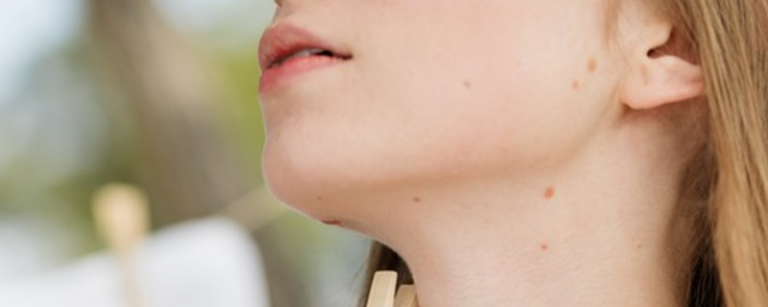
If you would like to have neck skin tags removed, we recommend seeking treatment at a clinic.
At a clinic, your treatment plan is tailored to the specific type and condition of your skin tags, which can offer greater results than over-the-counter products. At our clinic, we provide skin tag treatment using the following approaches:
- CO2 laser (carbon dioxide laser)
- Cryotherapy with liquid nitrogen (for viral cases only; generally not recommended for neck skin tags due to the higher likelihood of post-inflammatory hyperpigmentation)
- Surgery
Each approach is described below.
CO2 Laser (Carbon Dioxide Laser)
The CO2 laser is a laser that can vaporize and remove skin tag tissue in an instant. It works by using thermal energy generated through a reaction with the water content in cells to ablate the skin tag.
The CO2 laser treatment has three key characteristics:
- Minimal discomfort
- Minimal bleeding
- Faster healing of the treated area
The following pricing applies for CO2 laser removal of soft fibromas (acrochordons):
| Price | |
|---|---|
| 1–3 lesions | ¥5,000 (tax incl. ¥5,500) × number of lesions |
| 4–5 lesions | ¥4,000 (tax incl. ¥4,400) × number of lesions |
| 6–10 lesions | ¥3,500 (tax incl. ¥3,850) × number of lesions |
| 11–30 lesions | ¥3,000 (tax incl. ¥3,300) × number of lesions |
| 31–50 lesions | ¥2,500 (tax incl. ¥2,750) × number of lesions |
| 51 lesions or more | ¥2,000 (tax incl. ¥2,200) × number of lesions |
Please note that CO2 laser treatment is generally a self-pay (non-insurance-covered) procedure.
For more details about our CO2 laser treatment, please visit the page below.
Removal of Warts and Moles with CO2 Laser | Key Features, Pricing, and Precautions
Cryotherapy with Liquid Nitrogen
Cryotherapy with liquid nitrogen is one of the most commonly used wart treatments, and at our clinic it is offered as the first-line option for viral warts. However, neck skin tags are almost always non-viral, and because this method tends to cause hyperpigmentation, it is generally not recommended for neck skin tags from a cosmetic standpoint.
Cryotherapy with liquid nitrogen also has the following drawbacks:
- Pain during treatment
- In viral cases, the wart may spread to a wider area
- In some cases, cryotherapy may not achieve satisfactory results
For these reasons, our clinic considers the condition of each skin tag and its compatibility with available treatments, and may recommend an alternative approach.
In addition, cryotherapy requires repeated sessions. Please be aware that attending regular appointments is necessary to achieve adequate results from this treatment.
For more information about this treatment, please refer to the page below.
Types of Warts and Treatment Options
Surgery
Surgical removal is also an effective treatment option for neck skin tags.
A scalpel is used to remove the skin tag at its root, which can be helpful for cases that are difficult to treat by other methods. Our clinic has surgeons on staff, so we are able to proceed with treatment promptly in line with each patient’s preferences.
We understand that the idea of surgery can feel daunting, but local anesthesia is administered, so discomfort during the procedure is generally minimal.
Surgery at our clinic may be covered by insurance, so please feel free to contact us for a consultation.
Tips for Managing and Preventing Neck Skin Tags

To help prevent neck skin tags, we recommend avoiding the following types of clothing and accessories:
- Collared shirts
- Turtlenecks
- Scarves
- Necklaces
Friction from clothing and accessories is one of the causes of skin tags, so minimizing physical irritation to the skin is important. In addition, dry skin is more susceptible to friction-related irritation, so keeping the neck and décolletage area well moisturized is also beneficial.
Sun exposure can also contribute to the development of neck skin tags, so applying sunscreen is recommended. When doing so, be sure to apply it not only to your face but also to your neck and décolletage.
Frequently Asked Questions About Neck Skin Tags

Below, we answer some frequently asked questions about neck skin tags.
We hope this section is helpful for anyone concerned about neck skin tags.
Neck skin tags may sometimes fall off naturally—for example, when the body develops antibodies to the virus or the immune system resolves the condition.
However, antibodies to a virus do not form overnight. In the meantime, the skin tags continue to grow and multiply.
Rather than waiting for them to fall off on their own, we recommend seeking appropriate treatment promptly.
Among the treatments we offer for neck skin tags, cryotherapy and surgery may be eligible for insurance coverage in some cases.
However, CO2 laser treatment is not covered by insurance. Please consult with your attending physician to find out whether an insurance-covered procedure is suitable for your condition. We will recommend a treatment approach tailored to your skin tags and personal preferences.
For larger neck skin tags in particular, CO2 laser treatment is one option worth considering. Further information about our CO2 laser treatment is available on the page below—please take a look if you would like to learn more.
Removal of Warts and Moles with CO2 Laser | Key Features, Pricing, and Precautions
While over-the-counter products may offer some improvement, they cannot address the underlying cause.
Reasons for this include: not using the product correctly;
being unable to accurately identify the cause of the skin tag and therefore not selecting the right product;
and the fact that the type and concentration of active ingredients differ from those in prescription treatments.
If you are keen to have your neck skin tags removed, visiting a clinic for proper treatment is a more appropriate approach than relying on over-the-counter options.
Yes, age-related neck skin tags (seborrheic keratoses) can also be treated.
CO2 laser treatment is recommended for age-related skin tags as it involves minimal discomfort and bleeding, with relatively fast healing. For comparatively small skin tags under 2 mm in diameter, treatment at our clinic is available from ¥11,000 (tax included).
We will assess your individual condition and may introduce other treatment options as well, so please feel free to come in for a consultation at IC Clinic.
For Neck Skin Tag Treatment, Visit IC Clinic
Neck skin tags fall into the following three categories:
- Acrochordon
- Skin tag
- Soft fibroma
While over-the-counter products or natural resolution may sometimes help, visiting a dermatology clinic is recommended for proper treatment.
At IC Clinic, we assess each patient’s type and condition of neck skin tags and propose a treatment plan suited to the individual. Leaving skin tags untreated can allow them to grow and multiply, so please do not hesitate to come in for a consultation at IC Clinic.