

To Parents and Guardians Concerned About Their Child’s Underarm Odor (Axillary Osmidrosis)
“Could my child have axillary osmidrosis…?”
“I worry they might be teased by friends.”
“Would treatment place too much of a burden on my child?”
Do any of these concerns sound familiar? For children entering adolescence, underarm odor can sometimes become a significant source of emotional stress. However, choosing the right treatment at the right time can help address the condition effectively while keeping the physical and emotional impact on your child to a minimum.
IC Clinic offers a dedicated treatment program for children aged 7 to 12. Our board-certified plastic surgeons provide thorough consultations and recommend the most suitable treatment approach for each child, supporting their path to a happier, more confident everyday life. Why not start with a free consultation? Let us take that first step together toward your child’s brighter future.
Self-Check
If three or more of the following apply, your child may have axillary osmidrosis.
- One or both parents have axillary osmidrosis or hyperhidrosis
- A parent or relative has axillary osmidrosis or hyperhidrosis
- Sweat stains frequently appear in the underarm area of clothing
- Earwax is wet; underarm hair is darker and thicker than other children’s, with noticeable pigmentation
- Friends or parents have commented on underarm odor or sweating
- Tends to sweat quickly when nervous or excited
- Foot odor is noticeable
Axillary osmidrosis is not a disease—it is a physical trait. With appropriate treatment, the condition can be effectively resolved.
Why Does Axillary Osmidrosis Occur? The Role of Underarm Sweat Glands
The underarm area contains two types of secretory glands—apocrine glands and eccrine glands—as well as sebaceous glands. When sweat from the apocrine glands mixes with sebum from the sebaceous glands and is then broken down by bacteria, a strong odor is produced. This is what is known as axillary osmidrosis.
By destroying or removing the apocrine glands, the condition can be effectively resolved.
When Does Axillary Osmidrosis Develop in Children?
Apocrine glands tend to increase rapidly during puberty, and odor typically begins to develop around this time.
Because axillary osmidrosis follows an autosomal dominant inheritance pattern, children of parents who have the condition are at higher risk of developing it themselves.
Additional indicators include wet earwax, frequent sweat stains in the underarm area of clothing, and noticeable foot odor.
Since adolescence is an emotionally sensitive period,
early intervention is recommended.

For Parents Concerned About the Impact on Their Child
Many parents worry about the physical and emotional toll that treatment may place on their child.
Will they be bullied because of the odor? Will surgery actually help? Will there be visible scarring? Will it affect their school life?
Once you start thinking about it, the concerns can feel endless.
At IC Clinic,
we place great importance on caring for both parent and child

When the right treatment is chosen at the right time, axillary osmidrosis can be effectively addressed in a single procedure with minimal disruption to daily life.
To achieve this, a thorough medical assessment is of course essential—but open communication with your child is equally important.
At our clinic, we conduct careful one-on-one consultations with each child to recommend the most appropriate treatment method and timing.
We also take every possible measure to minimize post-operative downtime (the period during which scarring, swelling, or residual symptoms may be present), so your child can return to their normal routine as soon as possible.
What Sets IC Clinic Apart

Specialized Treatment Focused on Outcomes
Our board-certified and senior plastic surgeons are committed to delivering outcome-focused treatment while keeping the burden on each patient as low as possible.
Transparent and Straightforward Pricing
Rooted in a clinic culture built on insurance-based medicine, we are committed to honest and easy-to-understand pricing.
A Welcoming Clinic for Patients of All Ages and Backgrounds
We strive to create an environment where anyone—regardless of age or gender—feels comfortable coming to us with their concerns.
Feel free to start with a free consultation
Appointments & Enquiries
Online Appointments & Enquiries
You can book online 24 hours a day. Your appointment will be confirmed once you receive a reply from our online booking team.
If you do not receive a response within 24 hours, your email may have been blocked—please contact us by phone.
Phone Appointments & Enquiries
If you need an appointment on short notice—such as the evening before or on the day itself—please be sure to call us directly.
For the treatment of axillary osmidrosis in children, we offer three treatment options.
- miraDry
- Quadracut (Formula Shaver System)
- Flap Method
Each option is explained in detail below.
1. miraDry — Non-Surgical Microwave Treatment
Targeting both sweat glands responsible for odor using microwave energy
miraDry uses microwave energy delivered from the surface of the skin. The heat generated destroys the two types of sweat glands responsible for underarm odor and sweating. Because the sweat glands are destroyed and rarely regenerate, long-lasting results can be expected.
There is also very little required rest after the procedure, so it places far less strain on the body and daily routine compared with surgical options.
Among current treatments for underarm odor and excessive sweating, miraDry offers a favorable profile in terms of effectiveness, scarring, and recovery time.
Benefits of miraDry
- Long-lasting results
- No incisions, so no scarring
- Both underarms treated in a single session
Related page: miraDry Treatment in Tokyo (Nihonbashi): Effects, Pricing, and Pre-Treatment Precautions
IC Clinic’s Refined miraDry Protocol — Enhanced Results with Reduced Side Effects
Point 1 — Reduced Risk of Side Effects
Because miraDry was originally developed for Western body types, applying the standard protocol to Japanese patients carried a risk of side effects such as swelling and numbness. IC Clinic was among the first clinics in Japan to introduce miraDry, and through extensive case studies, we refined our approach—including anesthesia technique, energy output, and treatment area—to better suit Japanese patients and help minimize the risk of side effects.
Point 2 — Maximum Output Across a Wide Treatment Area
Two key factors in achieving strong results with miraDry are the treatment area (coverage) and the energy output (intensity). At IC Clinic, we apply treatment across as wide an area as possible and at maximum output. This approach is designed to pursue the highest level of effectiveness achievable in a single session.
Point 3 — Tailored Anesthesia Technique
We adjust the concentration and fluid volume of the anesthetic based on each patient’s individual condition, including skin thickness and underarm surface area. Fluid volume in particular is considered a critical factor in ensuring both safety and effectiveness, and it is the aspect we pay the most careful attention to during anesthesia administration. We also use a powered injection device and vibration tool to help minimize discomfort during the injection process.
Point 4 — Comprehensive Post-Treatment Support
One of miraDry’s key advantages is that the entire treatment is completed in a single visit and no follow-up appointments are required, making it a notably accessible option compared with other procedures. That said, in some cases mild pain or swelling may persist, and to give patients peace of mind, we offer complimentary follow-up consultations to monitor progress. For patients who find it difficult to visit the clinic in person, we also provide remote follow-up support via email and other channels.
Selected as “Top Japan miraDry Provider” for Two Consecutive Years
IC Clinic has been recognized as a “Top Japan miraDry Provider 2023” by Miramar Labs, the U.S. company that manufactures the miraDry system.
This marks our second consecutive year receiving the award, following our first recognition in 2022. The award is presented to the clinic in Japan with the highest annual sales of miraDry tips—single-use medical devices used individually for each patient—reflecting the trust and support of the many patients who have chosen our clinic.
We are deeply grateful to every patient who has entrusted us with their miraDry treatment, and we remain committed to continually raising the standard of medical care and patient satisfaction going forward.
2. Quadracut (Formula Shaver System)
A gentler procedure with minimal discomfort and shorter downtime
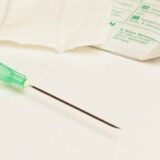
The Formula Shaver System targets the apocrine sweat glands responsible for odor by shaving and suctioning them out through a small incision of just 4–5 mm made on the upper-arm side of the underarm skin. A cannula with an opening at the tip and alternating rotating blades on the inside is inserted through this small incision to shave and suction away the sweat glands. While this is one of the more recent approaches to treating axillary osmidrosis, it offers results comparable to the traditional excision method.
Compared with the standard excision method, which typically requires an incision of 4–5 cm, the Formula Shaver System requires an incision just one-tenth of that length—4–5 mm—and results in a shorter post-operative compression period. The smaller incision makes this a gentler option on the body.
Benefits of This Procedure
- Minimal scarring.
- Less trauma to the skin, making it a suitable option for women and children as well.
3. Flap Method
A surgical procedure to remove the apocrine sweat glands that cause underarm odor
This procedure involves making an incision of several centimeters along the natural crease in the center of the underarm, through which the sweat glands are directly removed.
Among the various available treatment approaches, this method is considered to offer a high level of efficacy for axillary osmidrosis, and it can also be effective in treating the hyperhidrosis that often accompanies the condition. ※ Due to the greater physical demands of this procedure, it is not offered for pediatric patients.
Benefits of This Procedure
- Particularly well-suited for patients with a very high density of apocrine glands (where odor is noticeable to others upon entering the room)
- Because the apocrine glands are directly excised, results tend to be long-lasting
Feel free to start with a free consultation

Appointments & Enquiries
Online Appointments & Enquiries
You can book online 24 hours a day. Your appointment will be confirmed once you receive a reply from our online booking team.
If you do not receive a response within 24 hours, your email may have been blocked—please contact us by phone.
Phone Appointments & Enquiries
If you need an appointment on short notice—such as the evening before or on the day itself—please be sure to call us directly.
Treatment Process
Step 1 — Make an Appointment
Book via our online form or by phone.
Step 2 — Consultation
We will listen carefully to your child’s symptoms and concerns. Please feel free to share even the smallest worries.
Step 3 — Deciding on a Treatment Plan and Date
We will recommend the most suitable treatment approach and schedule.
Step 4 — Treatment
Treatment begins only after confirming that the anesthesia has taken full effect.
Step 5 — Aftercare
The treated area is protected to help prevent swelling and inflammation.
Frequently Asked Questions
Yes, absolutely. Before any revision procedure, we conduct a thorough consultation. We typically assess the time elapsed since your previous surgery and listen carefully to what aspects of the outcome did not meet your expectations before determining next steps.
Our standard minimum age is 12, but for our children’s treatment program the eligible age range is 7 to 12.
We welcome patients from across Japan and, in some cases, from overseas. For axillary osmidrosis surgery, most complications arise from insufficient rest on the day of the procedure.
For patients traveling from a distance, activities such as holding overhead straps on the train or walking long distances on the way home after surgery are best avoided.
A follow-up visit the next day can also be a burden for those who have traveled far, so once your surgery date is confirmed, we recommend staying at a nearby accommodation for one night to ensure adequate rest and help reduce the risk of post-operative complications.