
This page is supervised and written by specialist physicians at IC Clinic.
Lipoma (Epidermoid Cyst) Treatment at IC Clinic

Please note that, due to our current scheduling arrangements, lipoma surgery appointments are accepted on weekdays only.
A lipoma is a soft lump that forms beneath the skin — essentially a collection of fatty tissue.
Although the word “tumor” may sound alarming, the vast majority of lipomas are benign and do not require immediate treatment. However, they will not resolve on their own and tend to grow slowly over time, so surgical removal will eventually be necessary.
If a lipoma is left to grow larger before surgery, the procedure may carry greater risks, and there is a possibility of more noticeable scarring after the operation.
When a lipoma is still small, removal can often be performed as a simple same-day procedure. If you suspect you may have a lipoma, we encourage you to consult a medical professional.
This article explains what lipomas are, as well as available treatment options and surgery. We hope it serves as a helpful reference for anyone concerned about a lipoma.
What Is a Lipoma?
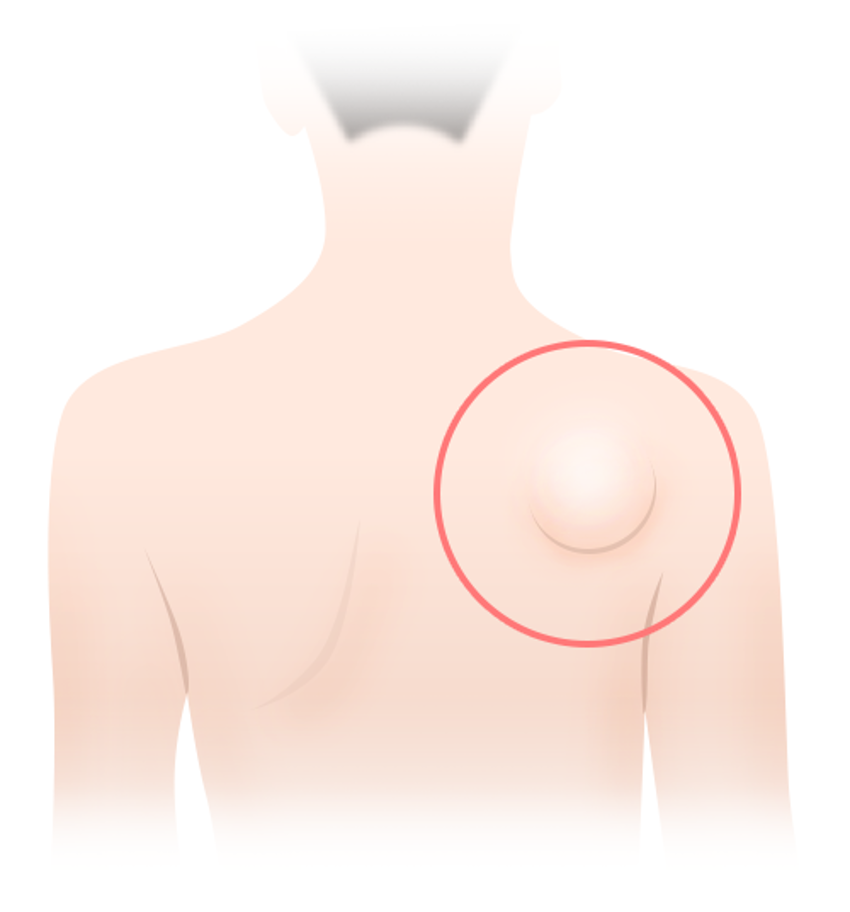
A lipoma is a benign soft-tissue tumor composed of fat cells — in simple terms, a lump of fatty tissue.
It is not attached to the overlying skin and is one of the most common types of benign skin growths.
Lipomas are sometimes confused with epidermoid cysts (atheromas), but unlike cysts, they do not become infected or produce an odor.
What Are the Symptoms of a Lipoma?
1. Usually no pain
In many cases, lipomas cause no pain or itching. Occasionally, if a lipoma grows large enough to press on a nerve, some discomfort may be felt.
2. A raised lump or swelling under the skin
A lipoma typically presents as a dome-shaped elevation of the skin with no change in skin color. Beneath the skin, a soft, rubbery lump can be felt.
3. Size can range from about 1 cm to approximately 10 cm
Lipomas grow slowly and usually become noticeable once they reach around 1 cm. In some cases, they can grow to nearly 10 cm in size.
Most lipomas develop in the subcutaneous fat layer, and rarely within muscle tissue (either inside a muscle or between muscles).
The skin is structured in layers from the surface: epidermis, dermis, and subcutaneous fat tissue, with muscle and bone beneath. Because lipomas form below these layers, the skin directly above the lump typically shows no visible changes — the defining feature is a soft, elastic mass felt beneath the skin surface.
There is also a subtype called an angiolipoma, which can be painful.
Angiolipomas are usually small — about 1–2 cm in diameter — and are rich in blood vessels. When removed, they appear somewhat redder than a typical lipoma due to their high vascularity.
What Causes Lipomas? Is Stress a Factor?
Lipomas form when fat-storing cells multiply, but the precise underlying cause is not yet fully understood.
Some patients wonder whether stress may be responsible, but there is no established evidence that stress directly causes lipomas.
Normally, mature fat cells do not replicate. However, even in adulthood, undifferentiated cells that are capable of developing into fat cells remain around capillaries throughout the body and are thought to serve as a supply source for new fat cells.
Tumor growth is believed to arise when some form of abnormality occurs in these undifferentiated cells.
Chromosomal abnormalities have been identified in nearly 80% of lipomas, suggesting that the genetic changes resulting from these chromosomal abnormalities may be involved in the differentiation and proliferation of fat cells.
Who Is More Likely to Develop a Lipoma?
In general, lipomas are considered more common in women and individuals with obesity.
Although they are thought to originate in early childhood, they typically cause no symptoms initially and are often only noticed once they have grown large enough to feel as a lump.
Because they grow so slowly, they are rarely detected early; they are uncommon in people under 20 and are most frequently seen in those in their 40s and 50s.
When Should a Lipoma Be a Concern? Understanding Benign vs. Malignant

The vast majority of lipomas are benign, so emergency surgery is generally not required.
They do grow gradually over time, but since they will not disappear or shrink on their own, surgical removal will be necessary at some point.
In rare cases, however, a fatty tumor may be malignant — such as a liposarcoma or other malignant soft-tissue tumor — so it is important to remain attentive.
How to Tell the Difference Between a Benign and Malignant Lipoma: Warning Signs
Malignant tumors such as liposarcoma or malignant soft-tissue tumors require prompt treatment.
Benign lipomas typically enlarge over a period of years. If a lump grows noticeably within a few months, malignancy may be a possibility and should be evaluated.
Other warning signs to watch for include: ‘larger than 10 cm,’ ‘associated pain,’ or a ‘firm, hard lump.’
It can be difficult to distinguish a benign from a malignant lipoma by imaging alone (MRI or CT); pathological examination of the surgically removed tissue is typically required for a definitive diagnosis.
If you have any concerns, we recommend consulting a medical professional as soon as possible.
Conditions That May Be Mistaken for a Lipoma
Lipomas can sometimes be confused with other conditions.
While self-diagnosis is difficult, it is worth being aware of other possibilities.
| Lipoma | Liposarcoma | Epidermoid Cyst (Atheroma) | Schwannoma | Ganglion Cyst | |
| Features | Dome-shaped elevation of the skin; no change in skin color. | Dome-shaped elevation of the skin; no change in skin color. | Often appears bluish-black overall; feels firm and elastic to the touch. | Skin raises into a knob-like protrusion. | Dome-shaped elevation of the skin. |
| Pain | Usually none | Usually none | Pain may occur if inflammation develops. | Pain may occur when the tumor is tapped or pressure is applied. | Usually none |
| Size | Approx. 1 cm – 10 cm | Approx. 1 cm – 10 cm | Can be several cm to tens of cm | 3 cm or less | Approx. 5 mm – 4 cm |
| Texture | Soft and rubbery | Soft and rubbery | Firm lump-like texture | Knob-like texture | Hard |
| Treatment | Surgical excision | Surgical excision, drug therapy, radiation therapy | Surgical excision | Periodic monitoring, surgical excision, or stereotactic radiation therapy | Aspiration with a syringe or surgical excision |
| Risk level | Low | High | Low (may worsen if inflammation occurs) | Low | Low |
What Happens If a Lipoma Is Left Untreated?
Leaving a lipoma untreated rarely leads to malignant transformation.
While it is not a life-threatening condition, if a lipoma is allowed to grow larger before surgical removal, the procedure may carry greater risks and may result in more significant post-operative scarring.
There is also the possibility that what appears to be a lipoma could turn out to be a malignant tumor or a different condition entirely, which could lead to a delay in appropriate treatment.
To begin with, a lipoma will not resolve on its own if left untreated.
It is advisable to consider treatment as soon as you notice symptoms.
At IC Clinic, we strive to create a welcoming environment where patients of all ages and backgrounds feel comfortable discussing any concern.
If reading this article has left you feeling a little uncertain, please don’t hesitate to reach out to IC Clinic Ueno for a consultation.
Treatment Options for Lipomas

The treatment for a lipoma is surgical removal.
It is not a condition that can be managed with topical creams or oral medication.
Below, we outline the treatment approach for lipomas, along with examples of procedures performed at IC Clinic.
Surgical excision as the definitive treatment for lipomas
The definitive treatment for a lipoma is surgical excision.
Because lipomas are benign, the risk of spread or metastasis is extremely low, and they do not require emergency surgery.
That said, lipomas do not disappear on their own and will slowly grow larger, eventually interfering with daily life — which is why many patients ultimately choose surgical removal.
The Surgical Procedure for Lipoma Removal
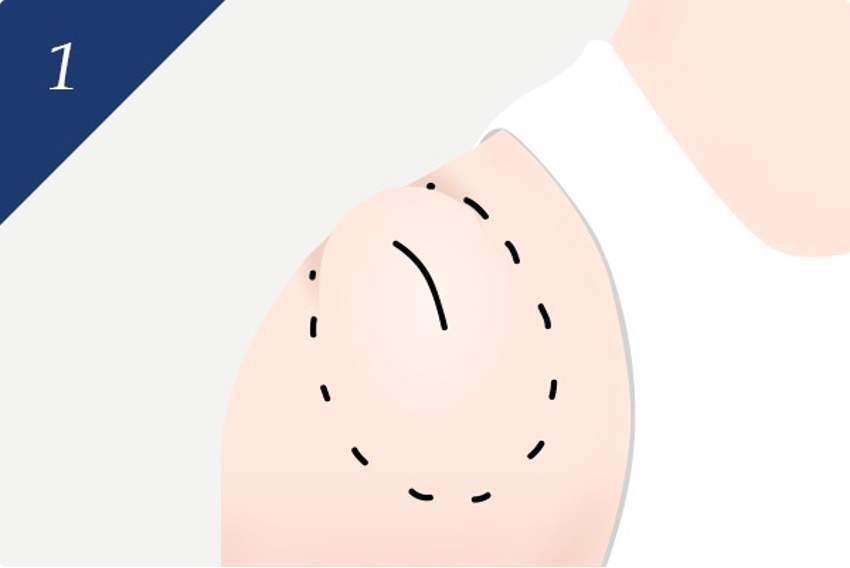
A large lipoma is visible on the shoulder. Before surgery, the area is carefully marked.
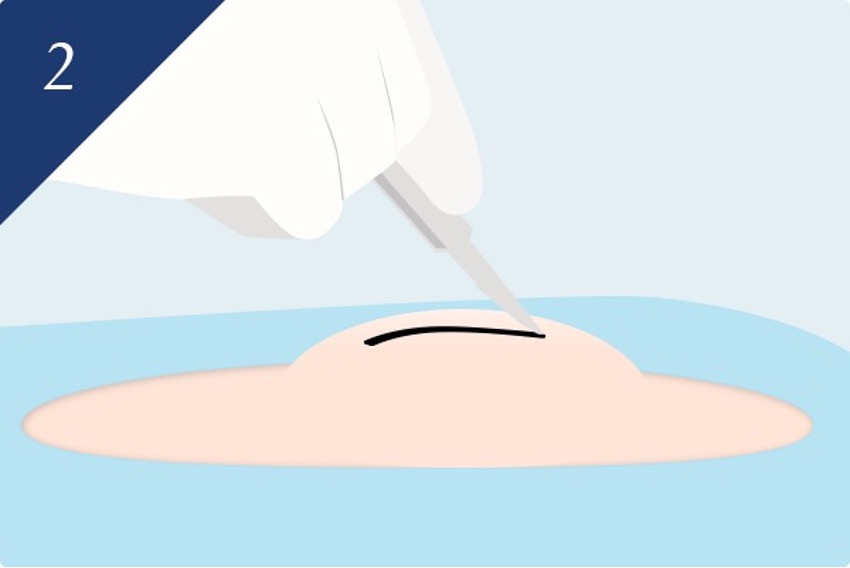
A local anesthetic is administered, and an incision is made directly over the lump. At IC Clinic, our plastic surgery specialists take great care to keep the incision as small as possible — typically about two-thirds the length of the lump itself.
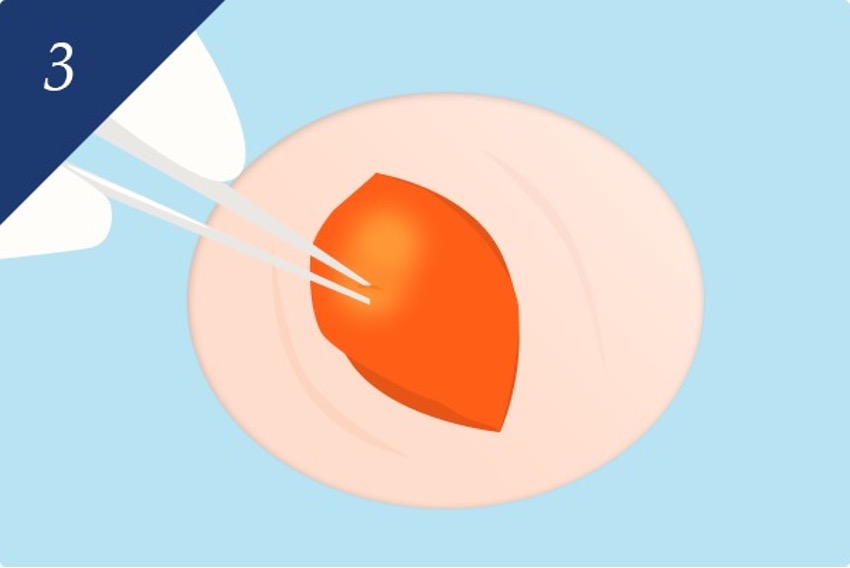
The tumor is carefully removed using a combination of finger dissection and forceps, adapting the technique as needed throughout the procedure.
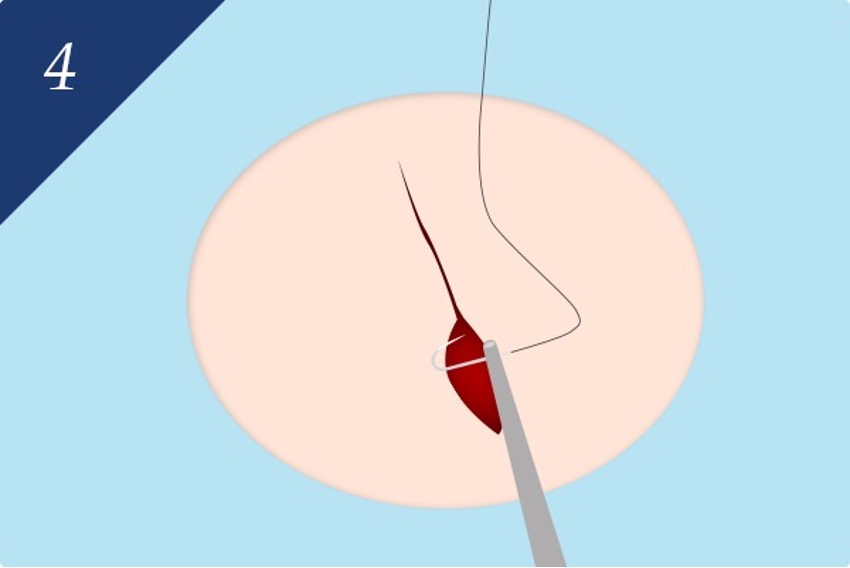
Once the lump is removed, the resulting cavity can be prone to blood pooling, so thorough hemostasis is performed before suturing. A drain (a small tube) may be placed as needed to prevent blood from collecting. The area is then secured with gauze and elastic tape for compression.
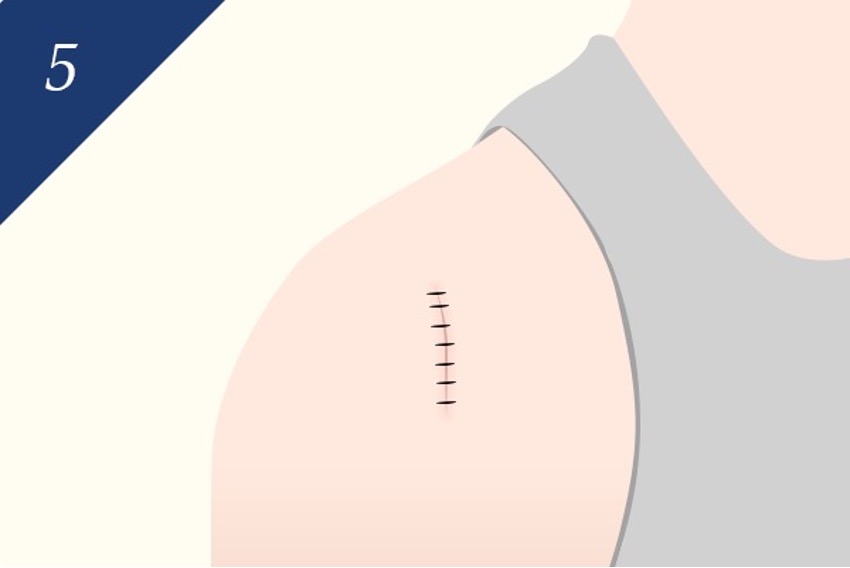
Sutures are removed at a follow-up visit. In some cases, absorbable sutures that dissolve internally may be used, eliminating the need for suture removal. Depending on the closure technique, the sutures may also be placed so they are not visible on the surface. Very fine sutures are used throughout for precise closure, which supports a smoother recovery.
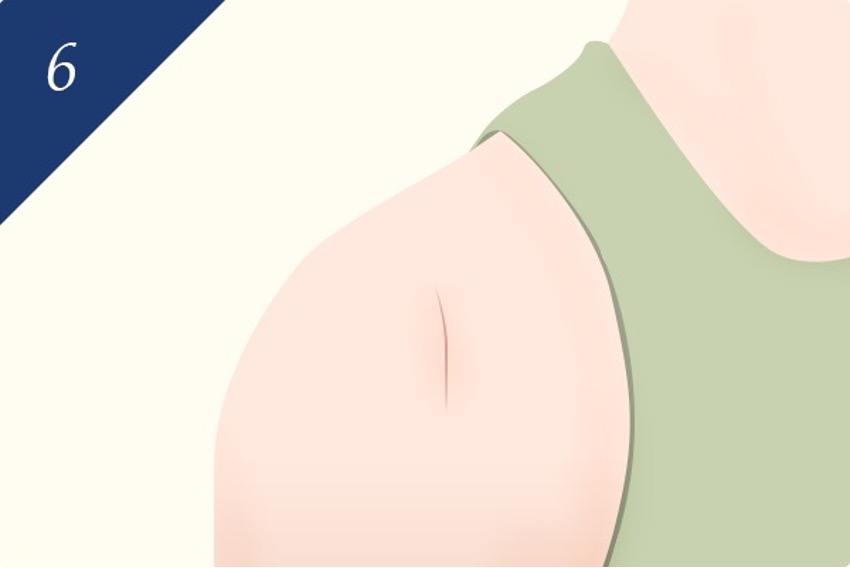
After about one week, redness typically fades and the skin gradually returns to a cleaner appearance. A commitment to refined, aesthetically conscious results is one of the hallmarks of care at IC Clinic.
5 Things to Know Before Your Lipoma Surgery

As explained above, the definitive treatment for a lipoma is surgical excision — and understandably, many patients feel anxious at the prospect of surgery.
However, knowing what to expect during the procedure and how it may affect your daily life afterwards can help you approach treatment with greater confidence.
Here are five key things to know before undergoing lipoma surgery.
(1) How the Treatment Process Works
For a same-day lipoma removal, the process typically follows these steps:
1. Initial Consultation
After an examination by our physician, an MRI scan will be arranged at a partnered imaging facility. ※ The scan will be scheduled for a later date, but appointments can be arranged promptly. ※ Surgery can also be booked at the same time.
2. MRI Scan
You will attend the partnered facility for your MRI scan. ※ The images will be sent directly to our clinic. ※ Scans are generally completed on schedule, so many patients fit them in around their work commitments.
3. Same-Day Surgery
You will return to our clinic for a follow-up consultation before proceeding to surgery. ※ No hospital stay is required — you will be able to go home the same day. Please note that depending on the location, size, and nature of the tumor, a referral to a university hospital or general hospital may occasionally be necessary. Same-day surgery is not possible in all cases.
(2) Cost of Lipoma Surgery
Lipoma surgery is covered by national health insurance. The following figures are approximate cost estimates.
| Approximate cost of lipoma surgery (30% patient co-payment) | ||
| Exposed areas | Under 2 cm | Approx. ¥5,000–¥6,000 |
| 2 cm – under 4 cm | Approx. ¥11,000–¥12,000 | |
| 4 cm or larger | Approx. ¥15,000–¥16,000 | |
| Non-exposed areas | Under 3 cm | Approx. ¥4,000–¥5,000 |
| 3 cm – under 6 cm | Approx. ¥10,000–¥11,000 | |
| 6 cm or larger | Approx. ¥12,000–¥14,000 | |
| ※ Insurance-covered treatment is available. ※ Costs vary depending on the location, size, whether a pathological examination is performed, and any prescribed medication. ※ If the lipoma is adherent to the fascia, a separate billing calculation may apply. ※ Initial consultation fees, follow-up consultation fees, prescription fees, and medication costs are charged separately. ※ If the tumor extends into a deeper layer such as the muscle, an MRI scan is generally recommended. ※ Very large tumors or those in complex locations may require referral to a university or general hospital. ※ Please feel free to contact us if you have any other questions about costs. | ||
| Approximate cost of lipoma surgery (10% patient co-payment) | ||
| Exposed areas | Under 2 cm | Approx. ¥2,000 |
| 2 cm – under 4 cm | Approx. ¥4,000 | |
| 4 cm or larger | Approx. ¥5,000 | |
| Non-exposed areas | Under 3 cm | Approx. ¥1,500 |
| 3 cm – under 6 cm | Approx. ¥3,500 | |
| 6 cm or larger | Approx. ¥4,500 | |
| ※ From 1 October 2022, patients aged 75 and over with income above a certain threshold will be subject to a revised out-of-pocket co-payment rate. ※ Insurance-covered treatment is available. ※ Costs vary depending on the location, size, whether a pathological examination is performed, and any prescribed medication. ※ If the lipoma is adherent to the fascia, a separate billing calculation may apply. ※ Initial consultation fees, follow-up consultation fees, prescription fees, and medication costs are charged separately. ※ If the tumor extends into a deeper layer such as the muscle, an MRI scan is generally recommended. ※ Very large tumors or those in complex locations may require referral to a university or general hospital. ※ Please feel free to contact us if you have any other questions about costs. | ||
Can Life Insurance Cover Lipoma Surgery Costs?
If you are enrolled in a private medical insurance plan or mutual aid association, you may be eligible to receive a surgical benefit after receiving a diagnosis from a physician and undergoing insurance-covered surgery.
Please note that benefits are not paid automatically — you must submit a claim yourself.
If a physician’s report is required, please let us know at the time of your visit.
Please check with your insurance company or mutual aid association if you are enrolled in a plan.
(The procedure may be documented as “Excision of Skin and Subcutaneous Tumor” or “Excision of Soft-Tissue Tumor.”)
(3) Lipoma Surgery Can Be Performed as a Same-Day Procedure (No Hospital Stay Required)
In most cases, lipoma removal surgery can be completed on the same day, with no need for an overnight hospital stay.
That said, we do hear from patients who have been told by general or university hospitals that surgery is possible but requires at least three days of hospitalization — leaving them unable to take time off work or away from home.
Of course, hospitalization may genuinely be necessary in some cases depending on the size and nature of the lipoma.
However, it is also worth being aware that hospitalization requirements may sometimes reflect the hospital’s own operational circumstances rather than clinical necessity.
If you have been told that your lipoma surgery requires a hospital stay, please feel free to consult IC Clinic. We will assess your specific condition and suggest the most appropriate approach for you.
(4) Minimal Impact on Daily Life After Surgery
After same-day lipoma surgery, some discomfort may be experienced for the first day or two. For smaller incisions (1 cm or less), most patients report very little discomfort.
Pain relief medication will be prescribed, so there is generally no need for significant concern.
Strenuous physical activity is usually best avoided for about one week after surgery, but normal activities can be resumed after that. Returning to work is also generally fine, provided the surgical site is kept relatively still.
Regarding bathing — this depends on the location and size of the incision, but showering is typically permitted from the day after surgery.
(5) There Is a Possibility of Scarring After Lipoma Surgery
There is a possibility that some scarring will remain after lipoma surgery.
Scars generally become less noticeable over time, so there is no need for excessive concern — however, depending on the type and size of the lipoma, some residual scarring may occur.
Understandably, post-operative scarring can be a particular concern when a lipoma is located on the face or another visible area of the body.
Surgical techniques aimed at minimizing scarring are available, so if this is a concern, we encourage you to discuss it with us during your consultation.
Our Approach to Lipoma Treatment at IC Clinic
At IC Clinic, we are committed to achieving clean, inconspicuous scarring in all our treatments.
- 1. We focus not only on clean scarring, but also on minimizing discomfort throughout treatment.
- 2. We use suture material finer than a human hair to achieve meticulous, precise closure.
- 3. Our specialists select the incision technique that delivers the most effective outcome within the smallest possible area and incision length.
- 4. We have extensive clinical experience performing lipoma surgeries each year, welcoming patients from across Japan, including Tohoku and Okinawa.
- 5. Our team includes specialist physicians in plastic surgery, dermatology, orthopedic surgery, and other disciplines, many of whom trained at the University of Tokyo School of Medicine.
Frequently Asked Questions About Lipoma Treatment
Below are answers to questions we frequently receive about lipoma treatment. Please take a look at anything you are uncertain about.
Lipomas can develop anywhere on the body. The most common sites are the neck, shoulders, and back, followed by the thighs, lower legs, and buttocks.
Although they are thought to originate in childhood, lipomas grow so slowly that they are rarely detected early. They are uncommon in people under 20 and are most frequently seen in those in their 40s and 50s.
Lipomas do not disappear on their own. The definitive treatment is surgical excision.
Even for a small lipoma, we do not recommend attempting to remove it yourself using a needle or any other implement. Puncturing the lump can allow bacteria to enter and trigger inflammation, and may also result in scarring.
Lipomas typically grow slowly after they form. Sudden, rapid growth would be considered unusual. As mentioned in this article, rapid growth may be a sign of malignancy or another condition, and we recommend consulting a medical professional promptly.
We recommend seeing a plastic surgeon. Dermatologists may also be able to evaluate lipomas, but given that surgical excision may ultimately be required, visiting a plastic surgery department is often the more straightforward option.
Consult IC Clinic for Lipoma Treatment
In this article, we have covered everything from what lipomas are to the specific treatment options available.
As noted throughout, lipomas do not resolve on their own. Since they will gradually grow larger over time, we recommend seeking treatment as soon as you notice symptoms.
If you have any concerns about lipoma treatment, please do not hesitate to consult IC Clinic. We aim to provide attentive, forward-looking care in an environment where every patient feels at ease.
Four Reasons to Choose IC Clinic
(1) Results-Focused Specialist Care
Our experienced specialist physicians are dedicated to delivering results-focused treatment that minimizes the burden on each patient.

(2) A Treatment Plan Tailored to Your Needs and Goals
We listen carefully to each patient’s concerns and worries, and recommend a treatment plan suited to their individual condition and wishes.

(3) Minimizing Discomfort and Keeping Scarring as Clean as Possible
From our range of treatment options, we select the approach that minimizes discomfort and reduces post-procedure effects as much as possible.

(4) A Welcoming Environment for Patients of All Ages and Backgrounds
We work to create a clinic environment where anyone — regardless of age or gender — feels comfortable coming to us with their concerns.