
This page is supervised and written by specialist physicians at IC Clinic.
A Complete Guide to V-Beam Treatment

What Are the Effects and Downtime of V-Beam? Treating Telangiectasia & Facial Redness with Insurance-Covered Care!
At our clinic, we propose treatment plans tailored to each individual patient and provide care focused on results.
We take the time to listen carefully to your concerns and symptoms, so please use the button below to book a consultation.
- Why Patients Choose Our V-Beam Laser Treatment
- Do Any of These Concerns Sound Familiar?
- What Is V-Beam?
- Introducing the “V-Beam Prima” — the Latest Model in the V-Beam Series
- What Are Facial Redness, Flushing, and Telangiectasia?
- About V-Beam Treatment at IC Clinic
- Side Effects (Downtime) of V-Beam Treatment
- Treatment Fees (Insurance-Covered)
- Treatment Fees (Self-Pay)
Why Patients Choose Our V-Beam Laser Treatment
Team-Based Medical Care
Board-certified plastic surgeons from the Japan Society of Plastic and Reconstructive Surgery and a former associate clinical professor from a university hospital provide insurance-covered treatment.

Attention to Discomfort
We select the most appropriate approach from established insurance-covered treatment methods, with the aim of minimizing discomfort during treatment.

Insurance Coverage Available
Our V-Beam treatment may be covered by Japan's national health insurance, helping to ease the financial burden on patients.

※Depending on the area of concern and treatment plan, self-pay options may be recommended in some cases.
Short Treatment Sessions
Each treatment session takes approximately 5 to 10 minutes.

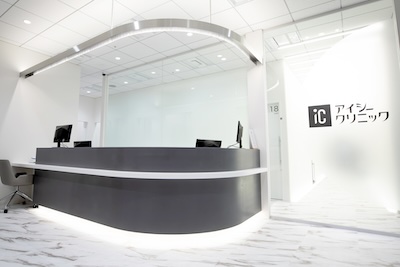
Conveniently Located Just Minutes from the Station
Our clinic is situated within walking distance of the nearest station. We welcome patients not only from Tokyo, but also from Saitama, Chiba, Kanagawa, and surrounding areas.
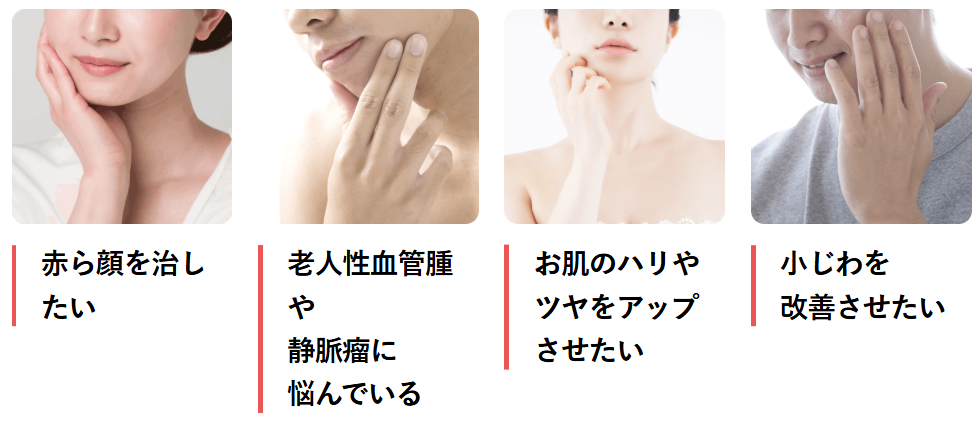
Do Any of These Concerns Sound Familiar?
What Is V-Beam?
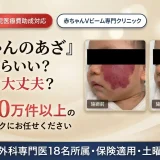
V-Beam is a laser used to treat facial redness, flushing, and telangiectasia (dilated capillaries).
While conventional lasers react to dark melanin pigment, a key feature of the V-Beam laser is that it reacts to red pigment. As a result, it targets hemoglobin (red blood cells) in the blood, making it a treatment option that may be effective for red birthmarks and facial redness.
V-Beam treatment also has the following additional characteristics:
Skin-beautifying effects such as improvement of fine lines and enhanced skin firmness and radiance may also be expected.
This is because the treatment is thought to activate fibroblasts (the cells responsible for skin elasticity, firmness, and radiance) and promote collagen production.
The device is equipped with a cooling system, which helps reduce discomfort and the burden on the skin during treatment.
The treatment is designed to cause minimal impact on the surrounding healthy tissue.
Introducing the “V-Beam Prima” — the Latest Model in the V-Beam Series
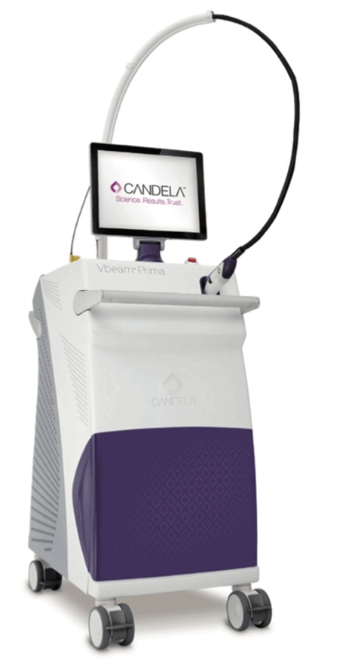
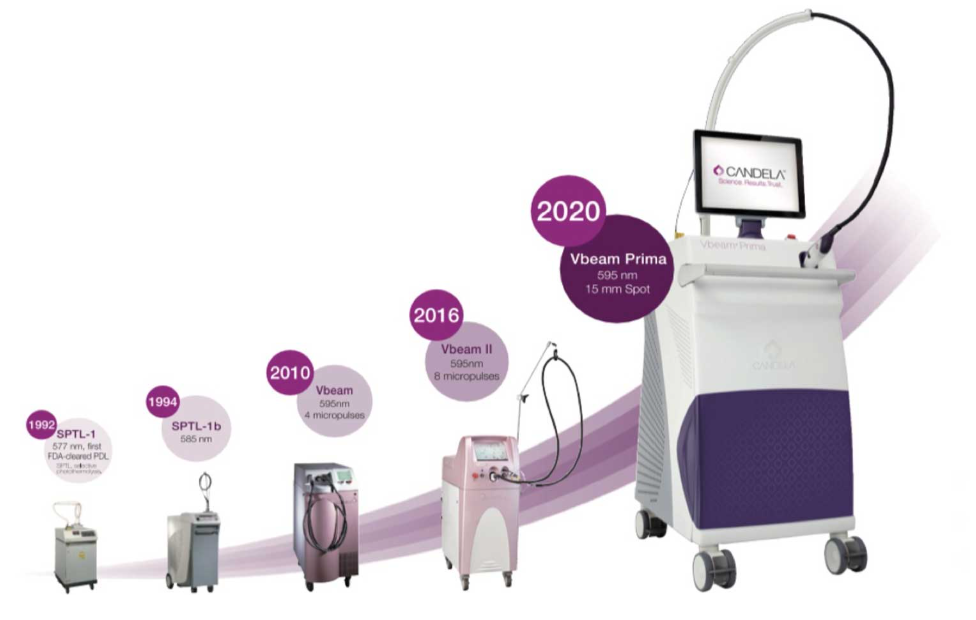
The V-Beam Prima is a long-pulsed dye laser with a wavelength of 595 nm, designed to treat port-wine stains, infantile hemangiomas, and telangiectasia. First introduced to the Japanese market in 1992 as the “SPTL-1,” the technology has evolved through the “V-Beam II” to reach this latest model. Compared to the previous V-Beam II, the Prima is capable of delivering laser energy with a larger spot size and higher output.
Our clinic had previously used the V-Beam II; however, in response to patient requests, we have upgraded to the latest model, the V-Beam Prima.
You can now receive treatment with the newest V-Beam technology at no additional cost.
※Some of our clinic locations still use the V-Beam II. Please contact us in advance if you would like to confirm availability of the V-Beam Prima.
What Are Facial Redness, Flushing, and Telangiectasia?
Facial Redness & Flushing
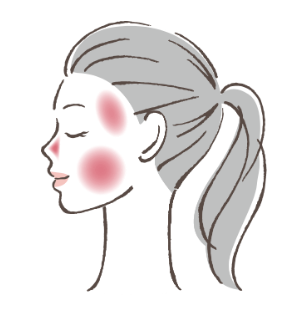
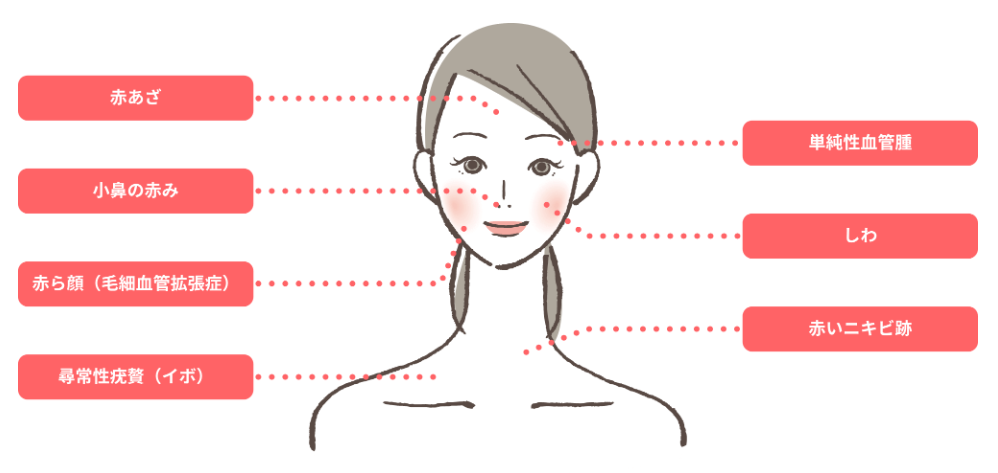
Facial redness is often caused by telangiectasia of the facial capillaries (particularly around the nose). Without a proper diagnosis, it is sometimes mistakenly treated with topical agents or vitamin supplements for conditions such as rosacea, seborrheic eczema/dermatitis, or atopic dermatitis.
Telangiectasia
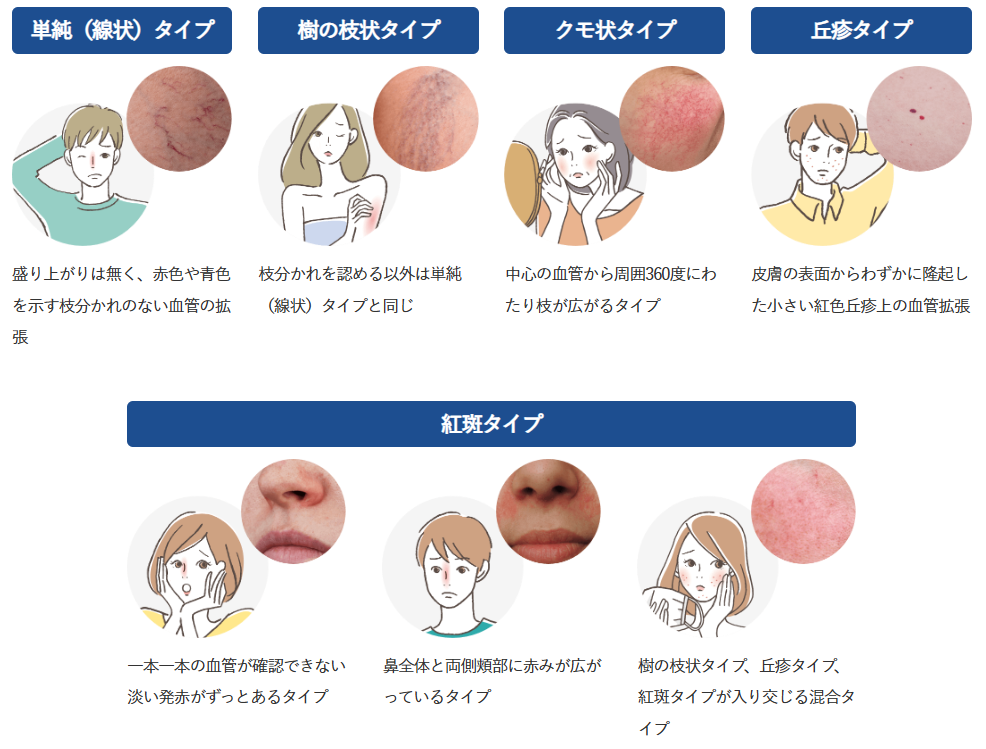
Telangiectasia refers to a condition in which the capillaries in the dermis become dilated, resulting in increased blood flow and redness of the skin compared to normal.
Telangiectasia is sometimes classified into the following five types.
About V-Beam Treatment at IC Clinic
Our Approach
At our clinic, we are committed to delivering insurance-covered V-Beam treatment that patients can feel is working.
Our treatment is characterized by the following features:
① We have an established track record of insurance-covered surgical and procedural treatment for skin conditions since our clinic opened.
② Our physicians propose the most suitable treatment plan tailored to each patient’s skin condition.
③ All V-Beam treatments are performed by physicians with specialized experience in this procedure.
④ Our team includes physicians from multiple specialties, including plastic surgery, dermatology, and orthopedics.
⑤ We carry out each treatment with the goal of keeping discomfort to a minimum.
How V-Beam Treatment Works: Step by Step
① Book an Appointment
Please make a reservation by phone or through our online booking form.
② Consultation & Diagnosis
A physician will assess your skin condition and symptoms to determine whether laser treatment is appropriate for you.
③ Treatment
V-Beam laser treatment is performed. (※Please remove any makeup and sunscreen before the laser is applied.)
④ Post-Treatment Care
Leave the treated area as-is on the day of treatment. Bathing is permitted from the day after laser irradiation; however, please avoid very hot water and rubbing the skin vigorously.
Treatment Areas for V-Beam
Side Effects (Downtime) of V-Beam Treatment
Swelling
Mild swelling may occur for several days to approximately one week after treatment.
Redness & Discomfort
Mild discomfort may be experienced for several hours to approximately two days after treatment. If the treated area becomes red or feels sore, applying a cold pack or similar cooling measure can help ease the sensation. In cases of stronger inflammation, a topical medication will be prescribed, so please do not hesitate to consult us.
Bruising (Purpura)
Bruising generally fades within approximately one to two weeks; however, treating at higher energy levels may result in purpura (bruising) around the eyes and other areas. Patients taking antiplatelet medications or similar drugs are more prone to bruising and should take particular care.
Blistering & Crusting
In rare cases involving very intense irradiation, the original redness may react more strongly than expected. A topical medication will be prescribed according to your symptoms, so please follow the aftercare instructions carefully to help prevent post-inflammatory hyperpigmentation.
Post-Inflammatory Hyperpigmentation
Japanese skin tends to be prone to post-inflammatory hyperpigmentation, and some patients may develop this condition after laser treatment depending on their individual skin type.
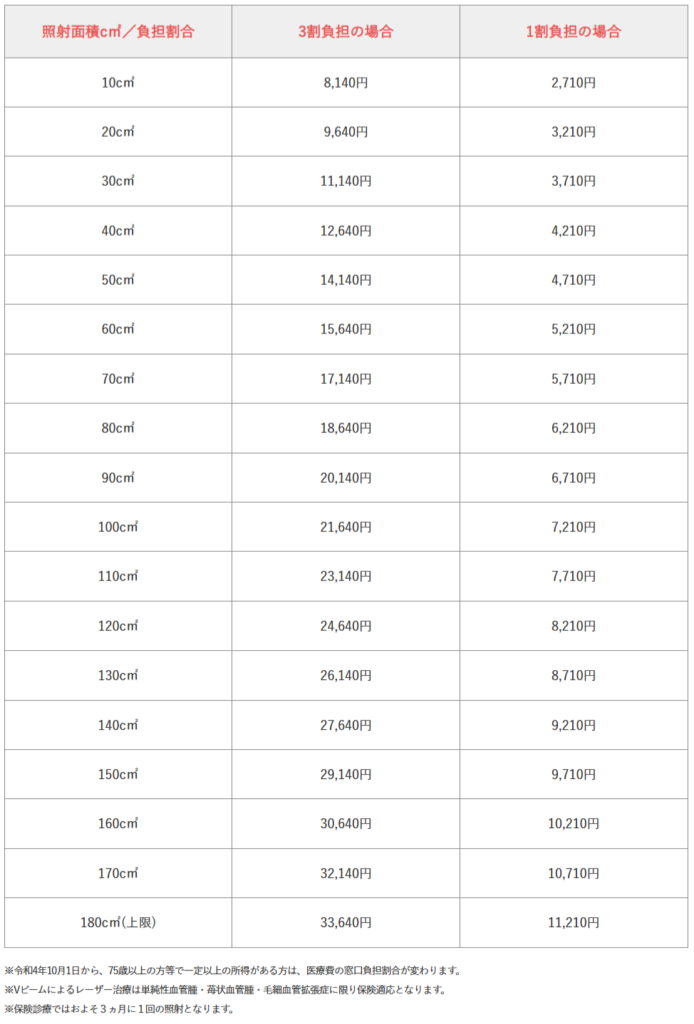
Treatment Fees (Insurance-Covered)
Treatment Fees (Self-Pay)
For detailed pricing on our V-Beam treatments, we provide recommendations tailored to each patient’s individual concerns. Full details of treatment options and fees will be explained during your consultation.