
Please Note: The following conditions are not treated at our clinic.
- Burns and burn scars
- Self-inflicted lacerations (wrist cutting)
- Traumatic injuries and wounds
- Post-cosmetic surgery conditions
“What causes scars and keloids?”
“How are scars, keloids, and hypertrophic scars treated?”
If you have questions like these, you are not alone.
A keloid is a condition in which fibrous tissue that forms during wound healing proliferates and spreads beyond the boundaries of healthy surrounding tissue.
This article covers a wide range of information—from answers to the questions above to guidance for those wondering where on the body scars and keloids are most likely to develop.
If you are troubled by scars or keloids, we hope this article will be a helpful resource.
What Are Keloids? How They Differ from Ordinary Scars and Burns

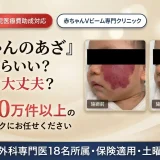
A keloid is a raised, reddish growth that extends beyond the boundaries of the original wound on the skin.
Scars and keloids can develop as a result of burns, physical trauma, or acne. Unlike ordinary wounds or burns, however, keloids continue to expand into surrounding skin that was not originally injured.
Scars and keloids can also interfere with daily life by making it difficult to stretch the body or move the joints freely.
When keloids develop in children, the restricted skin flexibility can impair normal growth, making early treatment particularly important.
Why Do Scars and Keloids Form? Understanding the Causes

A key factor in keloid formation is excessive collagen production. Collagen is found in the dermis—the thickest layer that makes up the bulk of the skin.
Collagen is essential for wound healing: when a wound occurs, the body produces collagen to repair the damaged tissue.
However, when collagen is produced in excessive amounts for reasons that are not fully understood, it accumulates beyond the original wound site and forms a keloid.
Who Is More Prone to Scars and Keloids? Understanding Keloid-Prone Skin
Keloid formation is significantly influenced by individual constitution. Some people recover from deep wounds without any issues, while others develop keloids from something as minor as acne or an insect bite.
Genetics (familial keloids) is cited as one of the factors that may make a person more prone to developing scars and keloids. Keloids tend to be more common in people of African descent and less common in those of European descent, with people of Asian descent—including Japanese—falling somewhere in between.
Where Do Scars and Keloids Develop? Common Sites on the Body
The table below outlines areas of the body where scars and keloids are commonly found.
| Body Area | Characteristics / Common Causes |
|---|---|
| Ears | · Inflammation from piercing holes |
| Chin / Jaw | · Acne |
| Chest | · Acne · Surgery |
| Armpits / Shoulders | · Areas with a wide range of motion |
| Lower Abdomen | · Cesarean section · Post-surgical scarring |
The likelihood of developing keloids in these areas may vary depending on individual constitution.
How Do Keloids Differ from Other Types of Scars? A Guide to Identification
There are three types of scars that are similar in appearance to keloids:
- Mature scar (cicatrix)
- Immature scar
- Scar contracture
Read on for a description of each type to help determine which may apply to your situation.
Mature Scar (Cicatrix)
A mature scar is a fully healed wound that no longer causes pain or itching and is relatively inconspicuous in appearance. Depending on the shape of the original wound, the skin surface may appear uneven or linear.
Mature scars are typically pale or whitish in color, although some may appear brownish due to post-inflammatory hyperpigmentation.
Immature Scar
An immature scar refers to the period of approximately six months to one year after a wound has healed, during which the scar may still appear red or feel firm.
During this phase, the scar tissue is not yet stable, so it is important to keep the area well moisturized and prevent it from drying out.
Sun exposure during this period can lead to pigmentation changes, so applying sunscreen consistently is recommended.
Scar Contracture
Scar contracture occurs when healed scar tissue tightens and restricts movement in the affected area. It is particularly common around the joints of the hands and feet, the mouth, and the eyelids.
Surgical intervention may be necessary if the tightened skin causes pain, or if it significantly interferes with daily activities—such as difficulty bending the elbow or opening the mouth.
Treatment Options for Scars and Keloids
The following treatment options are available for scars and keloids:
- Insurance-covered surgery
- Laser treatments
- Taping and topical medications
- Specialized outpatient care: self-pay surgery
- Specialized outpatient care: injections + V-Beam laser
Each option is described below. If you are considering treatment for scars or keloids, please use this as a reference.
Treatment Option ① Insurance-Covered Surgery
Insurance-covered surgery involves excising the scar or keloid in an elliptical (leaf-shaped) pattern. This procedure is covered by health insurance, with an estimated cost of approximately ¥10,000–¥15,000 (tax included).
One advantage of surgery is that the raised tissue is removed entirely, leaving only the sutured line. While the sutured area will appear red immediately after the procedure, it typically fades gradually over the course of approximately one year if healing progresses without complications.
On the other hand, depending on the location and individual constitution, there is a possibility that the excised area may develop into a new scar or keloid. Whether recurrence actually occurs cannot be determined until after the surgery has been performed.
At our clinic, we apply protective taping to the wound for several months following surgery to help minimize the risk of recurrence where possible.
Treatment Option ② Laser Treatments
Laser treatment is a non-surgical option for addressing scars and keloids. It is not covered by health insurance, and the cost is approximately ¥16,500 per session per area (tax included).
For those who feel apprehensive about surgery, starting with laser treatment may be a reasonable first step. Treatment response is typically assessed after approximately one to five sessions.
If the scar or keloid shows improvement with laser treatment, no surgery will be necessary. If improvement is limited, surgical options can be discussed at that point.
Treatment Option ③ Taping and Topical Medications
This approach involves prescribing adhesive medicated patches that can be applied at home.
The patches are cut to cover the hypertrophic scar and replaced every 24 or 12 hours.
This method is generally considered less likely to produce significant improvement compared to surgery or the injection-plus-laser approach, and the treatment period tends to be longer.
Continuous use of topical medications and taping for several months or more is required. If improvement is insufficient, other treatment options will be considered.
This option is typically recommended for patients who prefer not to undergo surgery or scar injections.
Treatment Option ④ Specialized Outpatient Care: Self-Pay Surgery
Specialized outpatient care refers to a second-opinion consultation, in which treatment is informed by the perspective of a physician other than the patient’s primary doctor.
Patients who do not have a referral letter from another clinic may still be eligible for surgery depending on the findings of their consultation.
Please note, however, that surgery under specialized outpatient care is provided on a self-pay basis.
The surgical procedure itself is the same as standard surgery: the scar or keloid is excised in an elliptical (leaf-shaped) pattern.
Treatment Option ⑤ Specialized Outpatient Care: Injections + V-Beam Laser
This treatment combines injections with V-Beam laser therapy, available through our specialized outpatient care program.
As a non-surgical approach, it involves administering injections directly into the affected scar or keloid tissue, along with V-Beam laser treatment.
Unlike surgical excision, multiple treatment sessions may be required; however, this option may be a more accessible starting point for those who are concerned about undergoing surgery.
※ Specialized outpatient care is provided on a self-pay basis.
Frequently Asked Questions About Scars and Keloids

Below are some frequently asked questions about scars and keloids. Please feel free to refer to any sections that are relevant to your concerns.
Keloids and hypertrophic scars look similar, which can make them difficult to tell apart.
As a general guide, keloids typically originate from a small wound, become red and raised, grow beyond the original wound boundaries, and may cause pain or itching.
Hypertrophic scars also appear red and raised, but are generally considered not to extend beyond the original wound margins—so comparing the size of the scar to that of the original wound may help distinguish the two.
That said, it can be difficult to differentiate between keloids and hypertrophic scars based on histological (visual) appearance alone.
Q: Are keloids benign or malignant?
The table below summarizes the distinguishing characteristics of benign and malignant skin tumors. Based on these criteria, keloids are considered benign: while they may expand somewhat beyond the original wound, their growth is gradual and does not progress aggressively.
| Benign | Malignant | |
|---|---|---|
| Size | Up to 1–3 cm | 3 cm or larger |
| Shape | Symmetrical | Asymmetrical |
| Borders | Well-defined | Poorly defined |
| Surrounding skin | Smooth | Irregular |
| Necrosis | Absent | Present |
| Growth rate | Slow | Rapid |
As shown above, malignant tumors are characterized by an asymmetrical shape and a size of 3 cm or more—features that may overlap with some characteristics of keloids. However, keloids typically stop growing beyond a certain size and enlarge only slowly.
For these reasons, keloids are generally classified as a type of benign tumor.
Consult IC Clinic for Scar and Keloid Treatment
When scars or keloids develop, the tightening effect on the surrounding skin can interfere with daily activities.
While keloids may resemble hypertrophic scars in appearance, a key sign of a keloid is that the tissue spreads beyond the boundaries of the original wound. If this is the case, we recommend seeking treatment as soon as possible.
If you are concerned about a scar or keloid—regardless of its size—please consult IC Clinic before the condition progresses further.
Please Note: The following conditions are not treated at our clinic.
- Burns and burn scars
- Self-inflicted lacerations (wrist cutting)
- Traumatic injuries and wounds
- Post-cosmetic surgery conditions
References
- Japan Dermatological Association & Japanese Society for Wound Surgery. “Guidelines for the Treatment of Scars and Keloids (2018 Revised Edition).” Journal of the Japanese Dermatological Association, 2018.
- Japan Society of Plastic and Reconstructive Surgery. “Clinical Practice Guidelines for Plastic Surgery.” 2015 Edition.
- Ministry of Health, Labour and Welfare. “Insurance Coverage for Keloid and Hypertrophic Scar Treatment.” Notification No. Iseihatu 456, 2019.
- International Scar Management Association. “Prevention and Treatment of Keloids and Hypertrophic Scars: International Clinical Recommendations.” 2014 Edition (Japanese Translation).
- Japan Society for Laser Surgery and Medicine. “Guidelines for Cutaneous Laser Treatment.” 2017 Edition.
※ The references listed above are provided as sources of medical evidence. For diagnosis and treatment decisions specific to your condition, please consult a qualified specialist.