
“Can heparinoid moisturize the skin when applied topically?”
“Is heparinoid available over the counter, or do I need a prescription from a clinic?”
Do you have questions like these?
Heparinoid is a moisturizing ingredient that acts on the stratum corneum and helps improve the skin’s moisture-retention function from within. While it is available over the counter, obtaining a prescription from a clinic allows you to use it with a lower level of risk.
On this page, we explain the effects and side effects of heparinoid and how it differs from other moisturizing ingredients. We hope this information helps you decide whether to purchase and use heparinoid, so please read through to the end.
At our clinic, we propose a treatment approach tailored to each individual patient and provide care with a focus on results. We take the time to carefully listen to your concerns and symptoms, so please use the button below to book a counseling session.
Table of Contents
- 1 What Is Heparinoid? A Long-Lasting Moisturizing Ingredient
- 1.1 What Is Heparinoid Oily Cream?
- 1.2 Difference Between Heparinoid Oily Cream and Hirudoid
- 2 Effects of Heparinoid | Three Actions That Help Improve Dry Skin
- 3 Which Is Better for Heparinoid — Lotion, Spray, or Cream?
- 4 Are There Side Effects with Heparinoid? Itching and Redness May Occur
- 5 [Comparison Table] How Heparinoid Differs from Other Moisturizing Ingredients
- 6 Frequently Asked Questions About Heparinoid
- 6.1 Q. Is it safe to use heparinoid on the face?
- 6.2 Q. Can heparinoid oily cream improve facial pigmentation, enlarged pores, or acne?
- 6.3 Q. If I have rough skin or a burn, should I avoid using heparinoid?
- 6.4 Q. Is an over-the-counter lotion containing heparinoid just as effective as a prescription product?
- 7 Visit a Medical Institution for a Heparinoid Prescription
What Is Heparinoid? A Long-Lasting Moisturizing Ingredient

Heparinoid is a moisturizing ingredient that may provide sustained benefits for improving dry skin. It has properties similar to heparin, a substance naturally produced in the human liver, and is known for its high water-absorbing and water-retaining capacity.
When heparinoid is applied, it may help improve and strengthen the moisture-retention function of the stratum corneum within the skin.
Petrolatum (Vaseline) is another well-known moisturizing ingredient; it works by forming a film over the epidermis to prevent moisture from evaporating from inside the skin. In contrast, heparinoid works from within the skin itself.
Heparinoid has a good potential to help improve skin concerns such as dryness and rough skin.
What Is Heparinoid Oily Cream?
Heparinoid oily cream is a preparation with heparinoid as its active ingredient. It has a firm, substantial texture and is associated with high coverage and moisturizing properties.
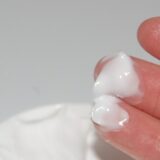
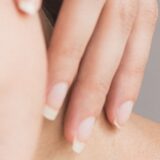
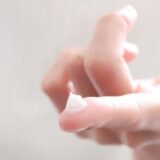
To apply, use clean fingertips or the palm of your hand to gently massage the product into the affected area. The recommended amount per application is approximately 0.5 g — roughly the amount that fits from the tip of your index finger to the first knuckle.
The best time to apply is after bathing, when the skin is soft and more receptive.
Difference Between Heparinoid Oily Cream and Hirudoid

Hirudoid was the original product brought to market, while heparinoid oily cream was developed as a generic (off-patent) medication.
In terms of ingredients and effects, Hirudoid and heparinoid oily cream are largely similar. However, since the formulation differs slightly, the feel on the skin and how well it absorbs may vary from person to person.
Heparinoid cream is a generic medication that contains the same active ingredient and works in the same way as Hirudoid, but is available at a lower cost.
Hirudoid cream, on the other hand, has been on the market since 1954 and has a long history of use.
Effects of Heparinoid | Three Actions That Help Improve Dry Skin
Heparinoid may help improve the moisture-retention function of the stratum corneum through the following three actions:
- Moisturizing
- Circulation enhancement
- Anti-inflammatory
The stratum corneum acts as a barrier, preventing moisture from evaporating out of the skin and protecting against external irritants. When it is damaged or shed due to dryness, UV exposure, or other factors, this protective and moisturizing function is compromised.
Heparinoid may promote skin cell turnover through its three actions — moisturizing, circulation enhancement, and anti-inflammatory effects. As new cells are generated, skin density may improve.
It may also help restore damaged skin to a healthier state, making it useful in addressing concerns such as skin dryness, inflammation, rough skin, and chilblains. Heparinoid may also be prescribed after peeling treatments to help prevent dryness, as the skin tends to be more sensitive during that time.
Which Is Better for Heparinoid — Lotion, Spray, or Cream?
Heparinoid is available in three main formulations: lotion, spray, and cream. The table below summarizes the features of each and who each formulation may suit.
| Features | May Suit | |
|---|---|---|
| Lotion | · Easy to spread over a wide area · Easier to apply to the scalp, which is affected by hair |
· Those with symptoms covering a wide area · Those who want to use it on the scalp · Those with mild dryness |
| Spray | · Foam type · Less sticky feel |
· Those short on time · Those who dislike a sticky sensation |
| Cream | · High moisturizing effect · Can provide a thick layer of coverage over the affected area |
· Those just starting treatment · Those with more severe dryness or eczema · Those experiencing worsened dryness in winter |
In terms of moisturizing effect, cream tends to be higher as it can provide a thick layer of coverage. That said, lotion and spray may offer advantages in terms of feel and ease of use.
It is important to consider the area of application and the effect you are looking for, and choose the formulation that best suits your needs.
Are There Side Effects with Heparinoid? Itching and Redness May Occur

The use of heparinoid may cause side effects such as skin redness, rash, or itching. However, such reactions are not frequently reported.
Due to its relatively low risk of side effects, heparinoid is also used in infants. If redness, rash, itching, or similar symptoms persist over a prolonged period, please consult a physician or pharmacist.
When using a cream or lotion formulation, skin reactions may sometimes be caused by the excipients (additives) rather than the heparinoid itself.
In addition, because heparinoid has a circulation-enhancing effect, it may inhibit blood coagulation. Those with conditions associated with a higher risk of bleeding — such as hemophilia or thrombocytopenia — should use it with appropriate caution.
[Comparison Table] How Heparinoid Differs from Other Moisturizing Ingredients
There are many moisturizing ingredients besides heparinoid. The table below summarizes the features and moisturizing mechanisms of various moisturizing ingredients.
| Ingredient | Features |
|---|---|
| Heparinoid | · Acts deep within the skin to support cell repair · May improve the skin’s internal structure for sustained effect |
| Petrolatum (Vaseline) | · A petroleum-derived moisturizing ingredient · Forms a film on the skin’s surface to help prevent moisture from evaporating |
| Ceramide | · Helps retain moisture · Works more effectively when used alongside a moisturizer |
| Collagen | · Helps maintain skin hydration · Naturally present within the skin, but decreases with age · Has good water-retaining properties |
| Hyaluronic Acid | · Water-soluble and commonly used in cosmetics · Helps boost moisture levels at the skin’s surface |
Petrolatum, ceramide, collagen, and hyaluronic acid all act at the skin’s surface to help enhance moisture retention and water absorption. Heparinoid, by contrast, is characterized by its ability to act from within the skin.
In terms of where it acts and how long its effects may last, heparinoid differs from other moisturizing ingredients.
Frequently Asked Questions About Heparinoid

Below are answers to questions we frequently receive about heparinoid. We have selected common queries covering areas of application, conditions it may be helpful for, and precautions for use.
These answers may help deepen your understanding of heparinoid, so we encourage anyone considering its use to read through them.
Q. Is it safe to use heparinoid on the face?
Heparinoid can generally be used on the face without issue.
However, care should be taken when applying it near the eyes to avoid contact with them. If the product does get into your eyes, rinse them thoroughly with water immediately.
Heparinoid can generally be used on virtually any part of the body and can be applied all over if desired. Maintaining overall skin hydration may help support healthy skin with a lower risk of skin concerns.
Q. Can heparinoid oily cream improve facial pigmentation, enlarged pores, or acne?
Heparinoid may offer some benefit for certain types of acne.
Specifically, it may be relevant for acne caused by disrupted skin cell turnover due to dryness.
Because heparinoid has a moisturizing effect, it may help address skin dryness. It may also help prevent clogged pores, which could in turn contribute to a reduction in acne breakouts.
Heparinoid is also thought to be potentially useful for acne with associated redness.
On the other hand, it is difficult to expect a significant effect on pigmented spots. While improved skin hydration may give the appearance of lightened spots, heparinoid does not have a mechanism for removing pigmentation.
Q. If I have rough skin or a burn, should I avoid using heparinoid?
Application to open wounds or areas of severely broken-down skin should be avoided.
That said, heparinoid may be helpful for rough skin and burns. Once a wound has healed to a degree and a scar has formed, heparinoid can generally be used without issue.
When used on burn scars, heparinoid may help improve the appearance of the affected area.
Q. Is an over-the-counter lotion containing heparinoid just as effective as a prescription product?
Over-the-counter lotions containing heparinoid may offer similar effects to prescription products.
There is no confirmed evidence that over-the-counter products are less effective or carry a higher risk of side effects. However, heparinoid does carry the possibility of side effects such as skin redness, rash, or itching.
We recommend obtaining a prescription from a physician at a clinic, so that you have someone to consult if side effects occur and you are unsure whether to continue use.
Visit a Medical Institution for a Heparinoid Prescription

Heparinoid is an ingredient that acts on the stratum corneum and may provide sustained moisturizing benefits.
It may help address concerns such as skin dryness, inflammation, rough skin, and chilblains. Heparinoid is available by prescription at hospitals and clinics.
If you are experiencing skin concerns, we encourage you to consult a medical institution to find the most suitable heparinoid product and maintain consistent use.
At our clinic, we propose a treatment approach tailored to each individual patient and provide care with a focus on results. We take the time to carefully listen to your concerns and symptoms, so please use the button below to book a counseling session.