
“Can hyperhidrosis be improved with surgery?”
“What treatment options are available for hyperhidrosis and underarm odor (axillary osmidrosis)?”
If you have questions like these, you are not alone.
Hyperhidrosis and palmar hyperhidrosis can be improved through surgical procedures. In addition, some treatment approaches for hyperhidrosis may also help improve axillary osmidrosis (underarm odor).
On this page, we explain the symptoms of hyperhidrosis and axillary osmidrosis, available surgical procedures, non-surgical treatment options, and the associated treatment costs.
At our clinic, we propose a treatment plan tailored to each individual patient and provide care with a focus on outcomes. We take the time to carefully listen to your concerns and symptoms, so please use the button below to book a consultation.

Table of Contents
- 1 Hyperhidrosis and Axillary Osmidrosis (Underarm Odor) | Two Concerns Related to Underarm Sweating
- 2 What Is Hyperhidrosis? Emotionally Triggered Sweating from Eccrine Glands
- 2.1 Symptoms of Hyperhidrosis: Sweating Levels Vary Among Individuals
- 2.2 What Is Palmar Hyperhidrosis? Excessive Sweating of the Palms
- 3 What Is Axillary Osmidrosis (Underarm Odor)? The Smell of Sweat from Apocrine Glands
- 4 Surgical Options for Axillary Osmidrosis: Subcutaneous Shaving (Skin Flap Method) — Procedure Details and Drawbacks
- 5 What Is “Endoscopic Thoracic Sympathectomy (ETS)” for Hyperhidrosis? Reducing Underarm and Palm Sweating
- 5.1 Are There Side Effects of Hyperhidrosis Surgery? Compensatory Sweating May Occur
- 5.2 Who Is Not Eligible for Endoscopic Thoracic Sympathectomy
- 6 Treatment Options for Hyperhidrosis and Axillary Osmidrosis
- 6.1 Treatment ① miraDry | Destroying Sweat Glands with Microwave Energy
- 6.2 Treatment ② Botulinum Toxin Injection | Injecting a Neurotoxin to Reduce Sweating
- 6.3 Treatment ③ Quadracut Method | Minimally Invasive Incision with Small Scarring
- 6.4 “Iontophoresis” — A Treatment Option for Hyperhidrosis Only
- 7 Treatment Costs for Hyperhidrosis and Axillary Osmidrosis
- 8 Consult IC Clinic for Hyperhidrosis and Axillary Osmidrosis Treatment
- 9 References
Hyperhidrosis and Axillary Osmidrosis (Underarm Odor) | Two Concerns Related to Underarm Sweating


Hyperhidrosis and axillary osmidrosis (underarm odor) are two common concerns related to underarm sweating.
Hyperhidrosis refers to a condition in which excessive sweating occurs in areas such as the underarms, palms, face, or feet.
Axillary osmidrosis is a condition in which sweat secreted by the apocrine glands — a type of sweat gland — reacts with bacteria on the skin, producing a distinctive odor. People with a higher density of apocrine glands tend to experience stronger odor.
While both conditions involve sweat, the underlying sweat glands differ: hyperhidrosis is caused by sweat from the eccrine glands, while axillary osmidrosis is caused by sweat from the apocrine glands.
What Is Hyperhidrosis? Emotionally Triggered Sweating from Eccrine Glands
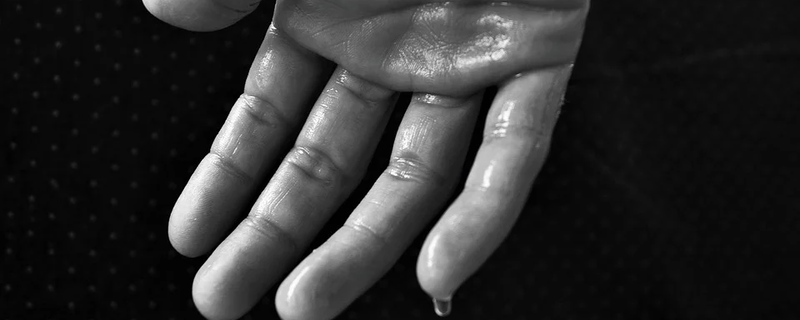

Hyperhidrosis is a condition characterized by sweating that exceeds what is physiologically necessary. It has been reported to affect approximately 2.8% of the population in the United States (Reference 2). In primary hyperhidrosis, overactivity of the sympathetic nervous system is considered the main underlying cause (Reference 4), and a genetic predisposition is also known to be involved (Reference 12).
Under normal circumstances, sweat is produced to regulate elevated body temperature; however, in hyperhidrosis, sweating occurs excessively.
The areas affected by hyperhidrosis vary from person to person. While some individuals experience whole-body sweating, others notice symptoms only in specific areas such as the face, scalp, underarms, palms, or feet.
Localized hyperhidrosis is thought to occur when the sympathetic nervous system becomes overactive due to mental stress or other psychological factors — in addition to neurological conditions such as numbness in the hands and feet.
Below, we explain specific examples of hyperhidrosis symptoms and provide details about palmar hyperhidrosis.
Symptoms of Hyperhidrosis: Sweating Levels Vary Among Individuals
While excessive sweating is the hallmark symptom of hyperhidrosis, the degree of sweating varies among individuals.
The following symptoms may indicate hyperhidrosis:
- Large sweat stains on clothing
- Documents becoming wet from dripping sweat
- Sweating so heavily when nervous that handshakes feel uncomfortable
Hyperhidrosis can have a serious impact on patients’ social functioning and mental well-being, and it is frequently reported to be associated with social phobia, anxiety, and depressive symptoms (References 13, 14). For diagnosis, it is important to comprehensively evaluate both objective measurements of sweat output and the subjective impact on the patient’s quality of life (QOL) (Reference 3).
That said, if you experience sweating that causes inconvenience in daily life, it is worth considering treatment options for hyperhidrosis.
What Is Palmar Hyperhidrosis? Excessive Sweating of the Palms
Palmar hyperhidrosis is the most common form of focal hyperhidrosis. It typically begins in childhood or adolescence, and symptoms are often worsened by emotional stress (Reference 12). Many patients experience limitations in social activities and career choices (Reference 14), making it a condition where active treatment is often appropriate.
Symptoms include continuous sweating from the palms, causing documents to become wet and making it difficult to perform desk work.
If you experience sweating from your palms that drips even on cool days, or if it interferes with everyday activities, palmar hyperhidrosis may be a possibility.
What Is Axillary Osmidrosis (Underarm Odor)? The Smell of Sweat from Apocrine Glands


Axillary osmidrosis (underarm odor) is a condition in which sweat secreted by the apocrine glands undergoes oxidation, producing a distinctive odor.
In axillary osmidrosis, odorless precursor substances secreted by the apocrine glands are broken down by resident skin bacteria — primarily Staphylococcus epidermidis and Corynebacterium — resulting in the characteristic smell (Reference 11). This process produces volatile fatty acids such as 3-methyl-2-hexenoic acid, which are responsible for the distinctive odor.
As a result, individuals with a higher density of apocrine glands are more likely to develop axillary osmidrosis.
Surgical Options for Axillary Osmidrosis: Subcutaneous Shaving (Skin Flap Method) — Procedure Details and Drawbacks
One surgical approach for axillary osmidrosis is the subcutaneous shaving method (skin flap method). The procedure involves the following steps:
- Local anesthesia is administered
- An incision is made in the affected area, such as the underarm
- Apocrine glands are removed under direct visualization
- The skin is sutured and measures are taken to prevent blood from pooling beneath the skin
The subcutaneous shaving method (skin flap method) is a standard surgical treatment for axillary osmidrosis, with satisfactory outcomes reported in a substantial proportion of patients (Reference 11). Because apocrine glands are removed under direct vision, a meaningful treatment effect can be anticipated; however, careful consideration of postoperative complication risks and cosmetic concerns is important when determining candidacy.
Because the sweat glands responsible for axillary osmidrosis are directly removed, this approach may provide long-term symptom improvement — which is its main advantage.
However, since the skin is incised, it may take approximately three months for the scar to become less noticeable, and about two weeks before exercise can be resumed — these are notable drawbacks to consider.
What Is “Endoscopic Thoracic Sympathectomy (ETS)” for Hyperhidrosis? Reducing Underarm and Palm Sweating
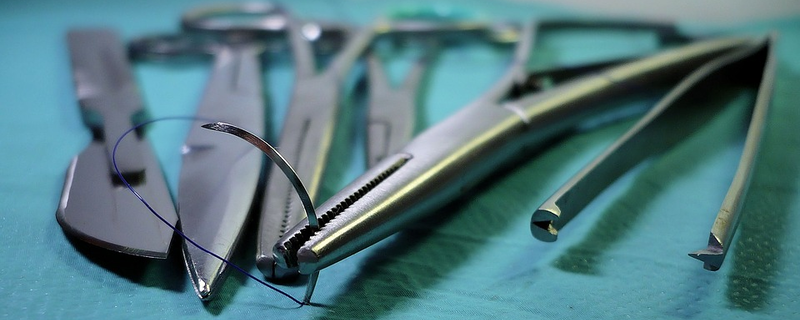

Another surgical approach for hyperhidrosis is endoscopic thoracic sympathectomy (ETS).
While this procedure is not used for axillary osmidrosis, it is expected to reduce sweating across both hands, the underarms, and the area from the upper chest to the neck, and may offer meaningful results for palmar hyperhidrosis.
The procedure involves the following steps:
- General anesthesia is administered
- A small incision of approximately 3 mm is made in the skin below the chest
- An endoscope is inserted, and a second incision of approximately 5 mm is made in the underarm skin
- The third thoracic sympathetic nerve — which controls sweating — is severed
- For underarm hyperhidrosis, the fourth thoracic sympathetic nerve is also severed
Most patients are discharged the day after surgery; however, the sympathetic nerves that have been severed or ablated during the procedure cannot be restored afterward.
Side effects may also occur, so it is important to carefully consider whether to proceed with surgery.
Are There Side Effects of Hyperhidrosis Surgery? Compensatory Sweating May Occur
Endoscopic thoracic sympathectomy (ETS) demonstrates a high success rate for palmar hyperhidrosis (Reference 6); however, compensatory sweating occurs in a significant proportion of cases (Reference 5), and among those, a notable subset experience a level of sweating that interferes with daily life (Reference 15). Thorough preoperative counseling and careful patient selection are therefore essential.
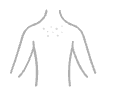
Compensatory sweating is a side effect in which, following ETS performed to address palmar hyperhidrosis, sweating increases in areas such as the back or lower body.
Even if hyperhidrosis improves, there is a possibility of developing a new concern in the form of compensatory sweating, so careful consideration before proceeding with surgery is necessary.
Additionally, the recurrence rate following ETS is estimated at approximately 1–5%.
Who Is Not Eligible for Endoscopic Thoracic Sympathectomy
The following individuals are not eligible for endoscopic thoracic sympathectomy:
- Individuals aged 40 or older
- Individuals who have previously undergone chest surgery
- Children in the lower grades of elementary school who are under 145 cm in height
- Individuals whose occupation would be significantly affected by compensatory sweating
- Individuals with axillary osmidrosis (underarm odor)
Individuals aged 40 or older, or those who have had prior chest surgery, often have adhesions within the chest cavity, making it difficult to precisely locate the sympathetic nerves — and surgery may therefore not be recommended in these cases.
Treatment Options for Hyperhidrosis and Axillary Osmidrosis

Hyperhidrosis and axillary osmidrosis can be addressed not only through the surgical procedures described above, but also through clinic-based treatments. The following three treatment options are available for hyperhidrosis and axillary osmidrosis:
- miraDry
- Botulinum toxin injection
- Quadracut method
In addition, “iontophoresis” is a treatment approach that may offer improvement specifically for hyperhidrosis.
Below, we explain each option in detail.
Treatment ① miraDry | Destroying Sweat Glands with Microwave Energy
miraDry (microwave thermolysis) is a treatment that selectively destroys sweat glands using 5.8 GHz microwave energy. In clinical trials, it has demonstrated a meaningful reduction in sweating for axillary hyperhidrosis (References 7, 8). As a non-invasive treatment, it offers the potential for long-lasting results.
Unlike conventional surgery, no skin incision is required, leaving no surgical scars, and the procedure can be completed in a relatively short time with effects that may be long-lasting.
If side effects such as bruising or swelling occur following miraDry, they generally resolve within a few weeks.
For more information about miraDry, please visit the page below.
miraDry (Non-Surgical Underarm Odor & Hyperhidrosis Treatment) | Cosmetic Dermatology in Tokyo (Ikebukuro, Shibuya, Shinjuku, Ueno) — IC Clinic
Treatment ② Botulinum Toxin Injection | Injecting a Neurotoxin to Reduce Sweating
Botulinum toxin injection is a treatment that reduces sweating by injecting a neurotoxin into the affected area.
By injecting botulinum toxin, this approach is expected to suppress the release of acetylcholine — the neurotransmitter responsible for stimulating sweat production.
In addition to addressing underarm hyperhidrosis, it can also help reduce sweat output from the apocrine glands, making it a notable option for axillary osmidrosis as well.
Botulinum toxin type A injection has demonstrated a substantial reduction in sweating for axillary hyperhidrosis (References 1, 10), with an average duration of effect of approximately 6–7 months. Serious side effects are uncommon (Reference 10), and multiple clinical trials have confirmed a meaningful improvement in patients’ quality of life (Reference 13).
For more information about botulinum toxin injections, please refer to the page below.
What Is Botulinum Toxin Injection? Five Cosmetic Effects to Expect and Possible Side Effects
Treatment ③ Quadracut Method | Minimally Invasive Incision with Small Scarring
The Quadracut method is a treatment in which sweat glands are removed through a small incision.
Like the subcutaneous shaving method (skin flap method), the skin is incised; however, the incision is only about 1 cm, resulting in minimal scarring.
In addition to eccrine and apocrine glands, hair follicles are also removed, so a hair reduction effect in the underarm area may also be expected. Because the incision is small, hospitalization is not required.
For more information about the Quadracut method, please see the page below.
What Is the Quadracut Method (Formula Shaver System)? An Overview of This Underarm Odor Surgery and Key Points to Know
“Iontophoresis” — A Treatment Option for Hyperhidrosis Only
Iontophoresis is a treatment approach available specifically for hyperhidrosis.
Iontophoresis temporarily blocks sweat ducts by passing a direct or alternating current of 15–20 mA through the skin (Reference 9). It has been reported to be effective for palmar and plantar hyperhidrosis, and is recognized as a treatment option with a favorable safety profile and relatively few side effects.
Each session takes approximately 30 minutes, and symptom relief may be expected with a course of 8 to 12 treatments.
After completing the initial 12-session course, ongoing treatment at a frequency of once or twice per week is needed to help maintain the effects.
※ This treatment is not currently offered at our clinic.
Treatment Costs for Hyperhidrosis and Axillary Osmidrosis


Treatment fees for hyperhidrosis and axillary osmidrosis at our clinic vary depending on the treatment method and plan chosen.
For pricing details, please refer to the relevant fee schedules below for each concern.
Hyperhidrosis Fee Schedule
Underarm Odor (Axillary Osmidrosis) Fee Schedule
Consult IC Clinic for Hyperhidrosis and Axillary Osmidrosis Treatment


In addition to surgical procedures, the following treatment options are available for hyperhidrosis and axillary osmidrosis:
- miraDry
- Botulinum toxin injection
- Quadracut method
Surgical procedures carry disadvantages including slower wound healing and a relatively greater risk of side effects.
On the other hand, treatment selection for hyperhidrosis and axillary osmidrosis is determined through a comprehensive evaluation of the severity of symptoms, the affected area, the patient’s age, occupation, and the degree of impact on quality of life (References 3, 4). In recent years, minimally invasive treatments have become more widely available, making it possible to pursue both patient satisfaction and safety.
If you are troubled by hyperhidrosis or axillary osmidrosis, or are considering treatment, we warmly encourage you to consult with IC Clinic.
References
- Naumann M, Lowe NJ. Botulinum toxin type A in treatment of bilateral primary axillary hyperhidrosis: randomised, parallel group, double blind, placebo controlled trial. BMJ. 2001;323(7313):596-599.
- Strutton DR, Kowalski JW, Glaser DA, Stang PE. US prevalence of hyperhidrosis and impact on individuals with axillary hyperhidrosis: results from a national survey. Journal of the American Academy of Dermatology. 2004;51(2):241-248.
- Solish N, Bertucci V, Dansereau A, et al. A comprehensive approach to the recognition, diagnosis, and severity-based treatment of focal hyperhidrosis: recommendations of the Canadian Hyperhidrosis Advisory Committee. Dermatologic Surgery. 2007;33(8):908-923.
- Hornberger J, Grimes K, Naumann M, et al. Recognition, diagnosis, and treatment of primary focal hyperhidrosis. Journal of the American Academy of Dermatology. 2004;51(2):274-286.
- Gossot D, Galetta D, Pascal A, Debrosse D, Caliandro R, Girard P, Stern JB, Grunenwald D. Long-term results of endoscopic thoracic sympathectomy for upper limb hyperhidrosis. Annals of Thoracic Surgery. 2003;75(4):1075-1079.
- Reisfeld R, Nguyen R, Pnini A. Endoscopic thoracic sympathectomy for treatment of essential hyperhidrosis syndrome: experience with 650 patients. Surgical Laparoscopy, Endoscopy & Percutaneous Techniques. 2000;10(1):5-10.
- Glaser DA, Coleman WP 3rd, Fan LK, et al. A randomized, blinded clinical evaluation of a novel microwave device for treating axillary hyperhidrosis: initial results from a dry-run study with the device. Dermatologic Surgery. 2012;38(2):185-191.
- Hong HC, Lupin M, O’Shaughnessy KF. Clinical evaluation of a microwave device for treating axillary hyperhidrosis. Dermatologic Surgery. 2012;38(5):728-735.
- Reinauer S, Neusser A, Schauf G, Hölzle E. Iontophoresis with alternating current and direct current offset (AC/DC iontophoresis): a new approach for the treatment of hyperhidrosis. British Journal of Dermatology. 1993;129(2):166-169.
- Heckmann M, Ceballos-Baumann AO, Plewig G. Botulinum toxin A for axillary hyperhidrosis (excessive sweating). New England Journal of Medicine. 2001;344(7):488-493.
- Yoo WM, Pae NS, Lee SJ, Roh MR. Treatment of axillary osmidrosis with superficial liposuction curettage: a prospective and randomized study. Plastic and Reconstructive Surgery. 2006;117(4):1329-1335.
- Ro KM, Cantor RM, Lange KL, Ahn SS. Palmar hyperhidrosis: evidence of genetic transmission. Journal of Vascular Surgery. 2002;35(2):382-386.
- Weber A, Heger S, Sinkgraven R, et al. Psychosocial aspects of patients with focal hyperhidrosis. Marked reduction of social phobia, anxiety and depression and increased quality of life at 12 weeks after treatment with botulinum toxin A. British Journal of Dermatology. 2005;152(2):342-345.
- Kamudoni P, Mueller C, Halpert E, et al. The impact of hyperhidrosis on patients’ daily life and quality of life: a qualitative investigation. Health and Quality of Life Outcomes. 2017;15(1):121.
- Park S, Kang SH, Lee BC. Treatment outcomes of palmar hyperhidrosis by endoscopic thoracic sympathectomy and analysis of factors affecting the compensatory sweating. Annals of Dermatology. 2010;22(4):415-421.
At our clinic, we propose a treatment plan tailored to each individual patient and provide care with a focus on outcomes. We take the time to carefully listen to your concerns and symptoms, so please use the button below to book a consultation.