
“What kind of results can I expect from Spectra?”
“I’d like to know how Spectra treatment works and what aftercare is involved.”
If these questions are on your mind, read on.
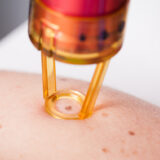
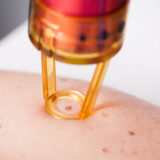
Spectra is an FDA-cleared medical laser device featuring five laser functions.
At IC Clinic, we offer treatment menus using Spectra that may help address pigmented spots, freckles, and melasma, as well as support clearer, healthier-looking skin.
On this page, we explain the potential benefits of Spectra, its five laser functions, and possible side effects. We also cover the treatment process and pricing, so please read through to the end.
At our clinic, we propose a treatment approach suited to each individual patient and focus on delivering results. We take time to listen carefully to your concerns and symptoms, so please use the button below to book a consultation.
Table of Contents
- 1 What Is Spectra? An FDA-Cleared Medical Laser Device
- 1.1 What Sets Spectra Apart? How It Differs from Other Q-Switched YAG Lasers
- 1.2 Q-Switched YAG Laser (Spectra) vs. Pico Laser: What’s the Difference?
- 2 Spectra’s Five Laser Functions: Skin Benefits by Irradiation Mode
- 2.1 Lutronic Toning | Melasma Improvement
- 2.2 Lutronic Peel | Pigmented Spots, Freckles & Dullness
- 2.3 Spectra Peel | Enlarged Pores, Acne-Prone Skin & Facial Redness
- 2.4 Dual Peel | Spectra Peel and Lutronic Peel Combined
- 2.5 KTP Laser | Superficial Pigmented Lesions
- 3 How Spectra Treatment Works
- 3.1 How Often Should You Have Spectra? Once Every Two Weeks as a Guide
- 3.2 Session Duration and Number of Sessions Before Noticing Results
- 4 Recovery and Aftercare After Spectra Treatment
- 5 Side Effects and Downtime of Spectra Laser Treatment
- 5.1 Can Spectra Treatment Make Melasma Darker?
- 5.2 Is Spectra Treatment Painful? Discomfort During the Procedure Is Generally Mild
- 6 Spectra Pricing
- 7 Consult IC Clinic for Spectra Treatment
What Is Spectra? An FDA-Cleared Medical Laser Device

The Q-switched YAG laser “Spectra” is a medical laser device manufactured by Lutronic that has received clearance from the U.S. FDA (Food and Drug Administration).
It is equipped with two laser wavelengths—532 nm and 1064 nm—as well as a millisecond-range long-pulse laser, making it capable of addressing not only pigmented spots and freckles but also overall skin quality improvement.
Spectra is also notable for its ability to target melanin deposits in deeper layers of the skin, such as melasma. It may also be suitable as a treatment option for tattoo removal.
What Sets Spectra Apart? How It Differs from Other Q-Switched YAG Lasers
What distinguishes Spectra from conventional Q-switched YAG lasers is its ability to deliver uniform irradiation across the treated area.
Conventional lasers were non-uniform in their beam profile, meaning the high-energy center could cause inflammation while the lower-energy periphery produced little effect.
Spectra addresses both of these limitations.
In addition, Spectra has a shorter pulse width and higher peak power than conventional Q-switched YAG lasers. This helps minimize damage to healthy surrounding skin while supporting improvement of the targeted concern.
Q-Switched YAG Laser (Spectra) vs. Pico Laser: What’s the Difference?
In addition to Q-switched YAG lasers, pico lasers are another type of laser technology used in medical laser devices.
The key differences are as follows.
| Q-Switched YAG Laser | Pico Laser | |
|---|---|---|
| Laser Wavelength | 532 nm, 1064 nm | 532 nm, 785 nm, 1064 nm |
| Pulse Width | Nanoseconds (billionths of a second) | Picoseconds (trillionths of a second) |
| Action on Melanin | Destroys melanin using heat | Shatters melanin using photoacoustic waves |
| Best Suited For | Darker pigmented spots | Both lighter and darker pigmented spots |
| Characteristics | ・Results may be noticeable after a single session ・Downtime tends to be somewhat longer |
・Results may be noticeable in fewer sessions ・Shorter downtime |
Q-switched YAG lasers and pico lasers differ in pulse width and in the mechanism by which they act on melanin.
Q-switched YAG lasers may deliver noticeable results after a single session, though downtime tends to be somewhat longer.
Pico lasers, by comparison, generally have shorter downtime, but multiple sessions may be needed before results become apparent.
If you are looking to address darker pigmented spots in as few sessions as possible, a Q-switched YAG laser may be the more suitable option.
Spectra’s Five Laser Functions: Skin Benefits by Irradiation Mode

Spectra is equipped with the following five laser functions.
- Lutronic Toning
- Lutronic Peel
- Spectra Peel
- Dual Peel
- KTP Laser
Below, we take a closer look at the characteristics of each mode.
Lutronic Toning | Melasma Improvement
Lutronic Toning is an irradiation mode suited for melasma treatment.
It uses low-level laser energy to gradually break down melanin pigment, supporting melasma improvement over time.
As a gentle laser treatment, it is associated with mild discomfort during the procedure. Makeup may be applied on the same day as treatment, and scabbing or redness is generally minimal.
Lutronic Peel | Pigmented Spots, Freckles & Dullness
Lutronic Peel delivers a 1064 nm YAG laser to transfer heat to the epidermal layer, targeting the melanin that causes pigmented spots.
By breaking down melanin with gentle, controlled energy rather than aggressive stimulation, it may help improve the appearance of pigmented spots and freckles and support clearer-looking skin.
With repeated sessions, overall skin tone may brighten and skin quality may improve. A treatment interval of 2–4 weeks is generally recommended.
Spectra Peel | Enlarged Pores, Acne-Prone Skin & Facial Redness

Spectra Peel delivers a 1064 nm YAG laser that penetrates heat into the dermal layer to stimulate collagen production and support skin quality improvement.
By promoting the production of collagen and elastin to help restore dermal elasticity, it may provide skin-beautifying effects and support improvement of enlarged pores, acne-prone skin, and facial redness.
Gradual improvement in skin quality may be noticed with successive sessions.
Depending on the concern being addressed, a general guide is 5–10 sessions at intervals of 2–4 weeks.
Dual Peel | Spectra Peel and Lutronic Peel Combined
Dual Peel is an irradiation method that combines Spectra Peel and Lutronic Peel in a single session.
Potential benefits include:
- Improvement of pigmented spots and dullness
- Tightening of pores, improvement of acne-prone skin and redness
- Skin beautification effects such as improved texture and firmness
By combining the potential benefits of both Lutronic Peel and Spectra Peel, it supports a comprehensive approach to skin improvement.
KTP Laser | Superficial Pigmented Lesions
The KTP laser is a short-wavelength laser operating at 532 nm.
It may help improve superficial pigmented lesions such as age spots and freckles.
Specific concerns for which the KTP laser may be used include:
- Ephelides (freckles)
- Solar lentigo (age spots)
- Nevus spilus (flat pigmented nevus)
- Becker’s nevus
and others.
With Spectra treatment, the attending physician applies laser irradiation tailored to each patient’s specific condition, supporting improvement of a wide range of skin concerns.
How Spectra Treatment Works

Spectra treatment at our clinic follows the steps below.
- Consultation
We begin by listening to your concerns. We discuss your individual goals—such as the removal of pigmented spots, freckles, or melasma—and work with you to determine the most appropriate treatment plan. - Treatment
Please remove any makeup before your session. For patients concerned about discomfort during treatment, a topical anesthetic cream may be applied. - Aftercare
After treatment, the skin surface is gently cleansed and the treated area is protected with gauze or tape. Any scabbing that forms typically falls away naturally within a few weeks.
On the day of your Spectra treatment, you may resume face washing, applying makeup, showering, bathing, and light exercise.
However, please take care not to rub or scrub the treated area.
After treatment, please allow an appropriate interval before your next session, in accordance with your treatment plan.
How Often Should You Have Spectra? Once Every Two Weeks as a Guide
As a general guide, Spectra sessions are recommended once every two to three weeks. It is common to continue sessions over approximately six months.
However, the frequency and number of sessions will vary depending on each patient’s condition, so we encourage you to discuss your situation with our clinic and proceed at a pace that suits you.
Session Duration and Number of Sessions Before Noticing Results
A single Spectra session takes approximately 30 minutes as a guide. Including a consultation, the first visit will typically take longer than 30 minutes.
Spectra treatment is known for its potential to deliver noticeable results. Results may vary among individuals, but some patients may begin to notice changes after their first or second session.
That said, improvement does not appear immediately. Symptoms tend to improve gradually over the course of approximately one month, so it is important to continue treatment and monitor progress over time.
Recovery and Aftercare After Spectra Treatment

Any scabbing that forms after Spectra treatment will typically fall away naturally within a few weeks, revealing new skin underneath. Picking or forcibly removing scabs increases the risk of post-inflammatory hyperpigmentation, so please leave them to heal naturally.
The time it takes for scabbing to form varies among individuals, so if no scab develops over the treated area, simply monitor the area and wait.
If no scab has formed after several days, please consult the medical facility where you received treatment.
In some cases, a thin brownish layer of skin may appear after treatment. Like scabbing, this thin layer will fall away naturally over time, so please do not attempt to remove it.
Side Effects and Downtime of Spectra Laser Treatment

Possible side effects and downtime associated with Spectra laser treatment include the following.
- Redness and swelling of the treated area
- Temporary worsening of acne due to increased skin cell turnover
- Hypopigmentation or post-inflammatory hyperpigmentation
Spectra treatment may cause swelling in and around the treated area, as well as redness at the treatment site.
Worsening of acne, blistering, hypopigmentation (skin discoloration), and post-inflammatory hyperpigmentation due to increased skin cell turnover are also possible side effects of Spectra treatment.
If any of the above symptoms occur, please consult a medical professional promptly.
Can Spectra Treatment Make Melasma Darker?
In general, Spectra treatment is not expected to cause melasma to darken. Lutronic Toning makes it possible to treat melasma without damaging the surrounding tissue.
However, depending on the nature of the melasma, there is a risk that it may become darker in some cases. It is important to proceed with treatment under appropriate medical consultation and assessment.
At our clinic, we tailor treatment to each individual patient’s condition, so if you are concerned about melasma, please feel free to consult IC Clinic.
Is Spectra Treatment Painful? Discomfort During the Procedure Is Generally Mild
Strong pain during Spectra treatment is not generally expected.
Results vary among individuals, but the sensation is often described as similar to a light snap of a rubber band against the skin.
At IC Clinic, a topical anesthetic cream is available for patients who are concerned about discomfort during Spectra treatment.
We also check in with patients throughout the procedure regarding their comfort level, so you can receive treatment in a relaxed state.
Spectra Pricing
Pricing for Spectra treatment at our clinic varies depending on the course and number of sessions.
Please refer to the pricing tables below for details.
Acne Scars (Redness) Pricing
Redness / Facial Redness Pricing
Skin Beautification & Radiance Pricing
Pigmented Spots & Melasma Pricing
Body Hyperpigmentation Pricing
Enlarged Pores Pricing
Consult IC Clinic for Spectra Treatment
Spectra is an FDA-cleared medical laser device that may be effective for addressing pigmented spots and melasma. In addition to helping improve enlarged pores and acne-prone skin, it may also support skin beautification benefits such as improved firmness and radiance.
Spectra treatment can also reach deeper layers of the skin, making it a potential option for tattoo removal.
IC Clinic offers treatment using “Spectra.” Through Spectra Peel and Lutronic Peel, we can tailor treatment to each patient’s individual concerns.
If you are troubled by pigmentation such as pigmented spots or melasma, please consider consulting IC Clinic.
At our clinic, we propose a treatment approach suited to each individual patient and focus on delivering results. We take time to listen carefully to your concerns and symptoms, so please use the button below to book a consultation.