
“I want clear, smooth skin free of acne and wrinkles.”
“What does it take to achieve beautiful skin?”
Many people are searching for ways to improve their skin.
Paying attention to your lifestyle and skincare routine can help you achieve healthier-looking skin to a certain degree. However, self-care alone has its limits, making it difficult to achieve the level of results you may be hoping for.
On this page, we explain ways to improve your skin and treatments that may support skin beautification.
Receiving professional treatment at a clinic is one option worth considering on your journey to better skin. If you’re looking to address skin concerns, we hope you find this information helpful.

Table of Contents
- 1 How to Achieve Beautiful Skin: Key Points for a Clearer Complexion
- 2 [Important Note] Skincare Alone Has Its Limits
- 3 Pros and Cons of Receiving Skin Beautification Treatments at a Clinic
- 4 8 Skin Beautification Treatments at IC Clinic
- 4.1 1. AGNES
- 4.2 2. Dermapen Microneedling
- 4.3 3. Photofacial (IPL) (ICON)
- 4.4 4. Hyaluronic Acid Injections
- 4.5 5. Q-Switch YAG Laser (Spectra)
- 4.6 6. HIFU
- 4.7 7. Chemical Peeling
- 4.8 8. V-Beam
- 5 Frequently Asked Questions About Skin Beautification
- 5.1 Q. Are there foods that are good for the skin?
- 5.2 Q. Should I avoid wearing makeup for the sake of my skin?
- 5.3 Q. How can I minimize the appearance of pores?
- 6 Visit IC Clinic for Skin Beautification Treatments
How to Achieve Beautiful Skin: Key Points for a Clearer Complexion
The following are key points for improving your skin through self-care.
| Self-Care Tips | Potential Benefits |
|---|---|
| UV Protection (Sunscreen) | Helps prevent UV-induced hyperpigmentation and wrinkles |
| Moisturizing | Helps restore the skin’s barrier function weakened by dryness |
| Maintaining Skin Cleanliness | Helps address acne caused by excess sebum |
| Care with Ingredients Such as Vitamin C Derivatives | May help control sebum production and tighten pores |
Exposure to UV rays triggers the production of melanin, the pigment responsible for skin darkening.
You may associate UV rays primarily with summer, but they affect the skin year-round regardless of the season. For this reason, applying sunscreen throughout the year is an important part of any skincare routine.
In addition, when the skin becomes dry, its barrier function weakens, making it more susceptible to irritation—which can have a negative impact on skin health. Keeping the stratum corneum well-hydrated through adequate moisturizing with toners and emulsions can help you maintain healthier-looking skin.
[Important Note] Skincare Alone Has Its Limits
There are limits to what skincare alone can achieve.
Achieving beautiful skin depends significantly on “dermal stem cells” located deep in the dermis, which play a role in generating new skin cells.
Dermal stem cells contribute to the production of collagen and hyaluronic acid, which give the skin its firmness and moisture. However, UV damage and natural aging can lead to a decline in the number of dermal stem cells over time.
Only a small number of commercially available cosmetics are formulated to interact with dermal stem cells.
As a result, skincare products alone may not deliver sufficient results. If you are serious about improving your skin, it may be worth considering professional medical treatments.
Pros and Cons of Receiving Skin Beautification Treatments at a Clinic
One advantage of receiving skin beautification treatments at a clinic is that many patients notice a difference on the same day as their treatment.
While self-care measures such as dietary changes and lifestyle improvements may also support skin health, they typically require consistent effort over a long period. For those seeking more efficient skin quality improvement, clinical skin treatments may be a worthwhile option.
In addition, since multiple types of skin beautification treatments are available, clinics can help you identify an approach suited to your individual needs.
On the other hand, potential drawbacks of clinical treatment include the associated costs, as well as the possibility of side effects and downtime.
Downtime refers to the period needed for post-treatment swelling or discomfort to subside. Symptoms typically resolve over time, but if you are concerned, you may wish to schedule rest days following your treatment.
8 Skin Beautification Treatments at IC Clinic

Since the effects of skincare-based approaches are limited, receiving professional treatment at a clinic is worth considering. Here we introduce the 8 skin beautification treatments offered at our clinic.
- AGNES
- Dermapen Microneedling
- Photofacial (IPL)
- Hyaluronic Acid Injections
- Q-Switch YAG Laser (Spectra)
- HIFU
- Chemical Peeling
- V-Beam
Below, we explain the features and potential benefits of each treatment.
1. AGNES
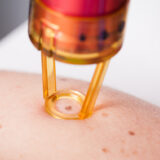
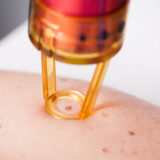
AGNES is a radiofrequency device that works directly on the dermis. It uses several types of ultra-fine insulated needles that emit high-frequency radio waves, which can be selected according to the treatment purpose. A range of effects may be expected, including disruption of the sebaceous glands that contribute to acne, as well as the potential to stimulate collagen production and help improve the appearance of wrinkles.
Because AGNES acts directly on the dermis without affecting the skin’s surface, it can be administered with a favorable safety profile. The downtime is relatively short and the likelihood of recurrence after treatment is generally low, meaning many patients report noticing an improvement.
In some cases, results may be noticed within approximately one week after the procedure. However, a single session is unlikely to address the concern comprehensively; on average, three to five treatment sessions at intervals of one to three months are typically required.
For more details about AGNES, please visit the page linked below. We encourage anyone interested to take a look.
AGNES for Acne Removal and Under-Eye Care — Treatment Costs and 4 Example Cases
2. Dermapen Microneedling
Dermapen Microneedling is a recommended treatment option for those concerned about acne scars or fine lines. Ultra-fine needles are used to stimulate the skin, helping to activate the skin’s natural regenerative capacity and support skin renewal.
The Dermapen needles have a diameter of just 0.20 mm, which minimizes trauma to the skin. However, depending on individual skin sensitivity, there is a possibility of scarring in some cases.
Downtime is generally minimal, and most patients are able to apply makeup the following day. By introducing a serum containing growth factors into the microchannels created in the skin, even greater potential benefits may be anticipated.
For more information about Dermapen Microneedling treatment, please visit the page below. Those interested in anti-aging benefits are also welcome to take a look.
Dermapen Microneedling for Skin Quality Improvement — When to Expect Results, 3 Key Features, and the Treatment Process
3. Photofacial (IPL) (ICON)
Photofacial (IPL) treatment uses a specialized light known as IPL to target melanin pigment and hemoglobin in the skin, helping to reduce their appearance.
A key feature of Photofacial (IPL) treatment is the minimal impact on the skin—patients are generally able to apply makeup immediately after the session. Potential benefits may extend across multiple skin concerns, including pigmented spots, freckles, and acne.
At our clinic, we use a device called ICON for Photofacial (IPL) treatments. ICON is equipped with a powerful cooling system, allowing the flash light to be delivered at a high output level.
In addition, IPL delivered via ICON may help reduce excess capillaries that have spread across the surface of the face, making it a potentially useful option for improving facial redness and rosacea.
For more information about Photofacial (IPL) treatment, please see the page below.
Photofacial (IPL) with ICON — Targeting Pigmented Spots and Acne Scars: Effects, Features, and What to Know
4. Hyaluronic Acid Injections
Hyaluronic acid is a component with excellent moisturizing and water-retention properties. By injecting hyaluronic acid into targeted areas, it may be possible to help improve the appearance of wrinkles and hollows.
Introducing hyaluronic acid into the grooves of wrinkles can help lift the epidermis and add volume to the skin. This approach may help make nasolabial folds and crow’s feet less noticeable, as well as contribute to a more hydrated-looking complexion.
The main areas where hyaluronic acid can be injected include the following nine sites:
- Nasolabial folds
- Area beneath the nose
- Tear troughs
- Lips
- Crow’s feet
- Forehead
- Glabella (between the eyebrows)
- Temples
- Chin
The potential benefits vary depending on the treatment area. For more detailed information, please visit the page below.
What Are Hyaluronic Acid Injections? 9 Treatment Areas and the Aesthetic Benefits That May Be Expected
5. Q-Switch YAG Laser (Spectra)
The Q-Switch YAG Laser targets pigmentation in the skin and is used to address concerns such as age spots and freckles. By switching between two wavelengths, it can target pigmentation across a wide range of skin depths, from superficial to deeper layers.
Among Q-Switch YAG laser devices, our clinic uses the “Spectra.” Because it focuses its energy specifically on the melanin pigment responsible for spots and freckles, it has minimal impact on the surrounding healthy skin.
For a detailed explanation of how it works, please see the page below.
Q-Switch YAG Laser (Spectra) — 3 Potential Benefits Including Melasma Treatment, and Post-Treatment Progress
6. HIFU
HIFU is one approach used for lifting and firming the skin, and stands for High-Intensity Focused Ultrasound. HIFU uses the energy of ultrasound waves and heat to help firm the skin and may support improvement of skin laxity.
A key underlying factor in facial sagging is the SMAS (Superficial Musculoaponeurotic System), a layer of fascia located beneath the subcutaneous tissue. The SMAS serves as the foundation of the skin, and applying focused heat to this layer may contribute to an overall lifting effect and a more contoured appearance.
Please note that results do not appear immediately after treatment. Following a HIFU session, gradual lifting of the skin typically occurs over a period of around three months.
Additionally, the treatment tends to show greater potential benefit in those at an earlier stage of skin laxity, compared to individuals with more pronounced sagging.
If you’d like to begin caring for your skin before age-related concerns become more significant, we encourage you to review information about HIFU on the page below.
What Is HIFU? — “Ultraformer III” and Its Potential Benefits for Facial Sagging
7. Chemical Peeling
Chemical Peeling is a treatment that uses a chemical agent to exfoliate the surface of the skin. While the term “peeling” may sound intensive, the procedure is performed after softening the stratum corneum, and the likelihood of side effects such as pain or bleeding is generally low.
Peeling-related products are available over the counter, but these are not considered medical treatments. The professional-grade agents used at clinics may support more efficient skin improvement.
Chemical Peeling can help address various skin concerns, but the following four conditions are among those for which it may offer particular potential benefit:
- Pigmented spots
- Melasma
- Acne
- Blackheads / clogged pores
In addition, removing dead skin cells may help unclog pores and refine skin texture, while promoting melanin turnover may contribute to a brighter-looking complexion.
What Is Chemical Peeling? — Potential Synergistic Effects with Iontophoresis and Collagen Peeling
8. V-Beam
V-Beam is a laser treatment that may help improve facial redness.
While most lasers target black melanin (pigment cells), V-Beam selectively targets red pigment. It may offer potential benefit for concerns such as post-acne redness and redness associated with telangiectasia (capillary dilation).
Furthermore, V-Beam irradiation can stimulate fibroblasts, which are involved in producing collagen and other components. As a result, it may also support improvements in fine lines and contribute to enhanced skin firmness and radiance.
Possible side effects include mild discomfort and temporary redness. In cases of stronger inflammation, a topical medication may be prescribed; however, in most cases, symptoms subside within approximately two days.
Please note that V-Beam for skin beautification purposes is generally a self-pay (non-insurance-covered) treatment. However, insurance coverage may be available for three specific conditions: port-wine stain, strawberry hemangioma, and telangiectasia.
For details on the V-Beam procedure and fees, please see the page below.
V-Beam — Effects and Downtime: Treating Post-Acne Redness and Rosacea with Insurance-Covered Options
Frequently Asked Questions About Skin Beautification

Here we have compiled answers to frequently asked questions about skin beautification. We hope this is helpful for those looking to improve their skin.
Q. Are there foods that are good for the skin?
Some examples of skin-friendly foods that are easy to incorporate into your diet include:
- Yogurt
- Soy-based products
- Almond milk
- Vegetable juice
- Mushrooms
- Seaweed
These foods are rich in nutrients that may support skin health, including various vitamins and protein. Foods containing B vitamins—such as yogurt and soy products (tofu, natto)—may help support the skin’s natural renewal process.
Vitamin E found in almonds has antioxidant properties and may contribute to improved circulation. Vegetable juice is rich in vitamins and minerals, making it an efficient way to supplement vegetables that are often lacking in the diet.
Mushrooms and seaweed are high in dietary fiber and are said to help reduce advanced glycation end-products (AGEs), which has drawn attention in relation to anti-aging.
That said, maintaining beautiful skin through diet alone can be challenging.
Some nutrients are not retained in the body for long, and the amounts obtained from a single meal may be quite small. While diet can certainly play a supportive role, it is worth keeping in mind that noticeable changes within a short period may be difficult to achieve through food alone.
Q. Should I avoid wearing makeup for the sake of my skin?
Wearing makeup is not necessarily harmful to the skin. Primers and foundations often contain UV-filtering ingredients, and makeup can also act as a barrier against environmental irritants such as pollen and dust.
Some cosmetic products also contain ingredients that may support skin health. However, makeup left on the skin can oxidize and potentially contribute to skin concerns, so it is important to thoroughly remove makeup at the end of each day using a cleansing product followed by a face wash.
Q. How can I minimize the appearance of pores?
The main factors that contribute to pore-related concerns include the following three:
- Clogging
- Sagging
- Enlarged / open pores
Pores can become clogged when sebum and dead skin cells mix to form plugs. Daily skincare and cleansing to remove dead skin cells and help regulate sebum production are important steps in helping to prevent clogged pores.
In addition, as the skin loses firmness with age, gravity can cause pores to elongate and become more visible. Incorporating chemical peeling or using retinol-based skincare products may be helpful as a preventive measure.
In some cases, naturally larger sebaceous glands—a genetic trait—may result in more visible pores. Since it can be difficult to reduce pore size that is due to genetics, consulting a clinic about professional treatment options may also be worth considering.
Visit IC Clinic for Skin Beautification Treatments

Since the effects of skincare-based approaches are limited, we recommend considering professional skin beautification treatment at a clinic for those seeking meaningful improvement in skin quality.
At our clinic, we offer the following 8 treatments tailored to each patient’s individual skin condition:
- AGNES
- Dermapen Microneedling
- Photofacial (IPL)
- Hyaluronic Acid Injections
- Q-Switch YAG Laser (Spectra)
- HIFU
- Chemical Peeling
- V-Beam
With these 8 treatment options, we can propose an approach that may offer greater potential benefit based on your specific concerns and symptoms. If you have not been seeing the skin improvements you hoped for through skincare alone, we warmly invite you to consult with IC Clinic.