
Body Pigmented Spots & Wart Removal Treatments | IC Clinic
“I feel like my spots have been increasing lately — what could be causing them?”
“I’ve noticed small growths on my skin — are these warts?”
“Do pigmented spots and warts go away on their own?”
Do you have questions like these about pigmented spots or warts?
Pigmented spots can develop due to UV exposure, aging, and hormonal changes, and once they form, they are generally considered difficult to fade on their own. Warts are caused by viral infection or friction on the skin, and if left untreated, they may increase in number or grow larger.
On this page, we explain the types and causes of pigmented spots and warts in detail, and introduce appropriate treatment options. If you have any concerns about your skin, please consider consulting our clinic at your earliest convenience.
Types of Body Pigmented Spots & Warts by Location

There are many types of pigmented spots and warts that can appear on the body, each with different characteristics and areas where they commonly develop. In particular, the following three are representative conditions that many people struggle with.
- Petal-shaped pigmentation (flower-petal pigmented macules)
- Solar lentigines (age spots)
- Seborrheic keratosis
We will explain the characteristics and common locations of each in detail below.
Petal-Shaped Pigmentation | Spots That Commonly Develop on the Back and Shoulders
Petal-shaped pigmentation is a type of spot that tends to develop on the back and shoulders due to sun damage. These spots primarily appear after UV exposure and become more noticeable over time. They frequently develop after beach activities or outdoor events where the skin is exposed to intense sunlight, making proper UV protection an important preventive measure. Petal-shaped pigmentation generally presents as light brown or reddish patches with a distinctive petal-like or star-shaped appearance.
As these spots exist in relatively superficial skin layers, laser treatment and topical medications are commonly used approaches. Additionally, applying sunscreen diligently and avoiding prolonged direct sun exposure are important for prevention.
Solar Lentigines (Age Spots) | Spots That Commonly Develop on the Face, Backs of the Hands, and Forearms
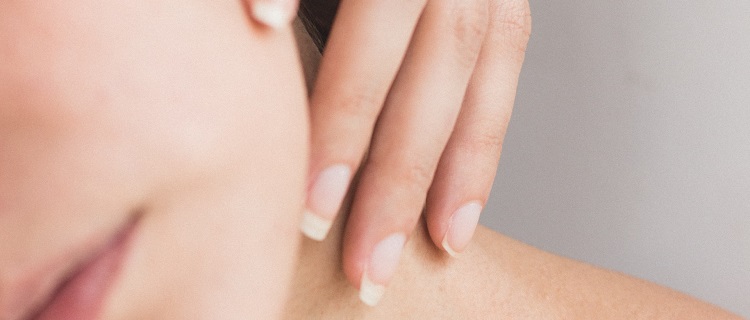
Solar lentigines are spots that tend to develop with age, and appear most often on the face, backs of the hands, and forearms. They form as melanin accumulates from years of UV exposure and skin cell turnover slows down. They are typically round or oval in shape, and vary in color from light brown to near black.
They tend to develop in areas frequently exposed to sunlight, making daily UV protection essential. Laser treatment and topical medications are used to treat solar lentigines. Appropriate care initiated early on may help prevent the spots from darkening further.
Seborrheic Keratosis | Growths That Commonly Develop on the Face, Neck, and Back
Seborrheic keratosis is a benign skin growth that develops with aging and is commonly found on the face, neck, and back. It typically appears brown or black with a rough, textured surface. Unlike flat pigmented spots, seborrheic keratosis is characterized by raised lesions that protrude from the skin surface, caused by skin aging and UV damage.
Treatment options for seborrheic keratosis include cryotherapy with liquid nitrogen, laser treatment, and electrocautery. In many cases, the procedure can be completed in a short time with minimal discomfort, although multiple sessions may be required depending on the lesion. As with pigmented spots, daily skincare and UV protection are important for prevention.
For more information on other types of warts, please see the article below, which covers the types, causes, and treatment options in detail.
Types of Warts and Treatment Options
Differences Between Petal-Shaped Pigmentation / Solar Lentigines and Other Pigmented Spots
There are many types of pigmented spots that can appear on the body, each with different characteristics and treatment approaches. Below, we explain how petal-shaped pigmentation and solar lentigines differ from other types of spots.
Differences from Melasma
Melasma presents as brownish patches that appear symmetrically on the cheeks and forehead, and is thought to be influenced by female hormones. It tends to worsen during pregnancy or with the use of oral contraceptives. In contrast, petal-shaped pigmentation and solar lentigines are primarily caused by UV damage and rarely appear symmetrically.
Melasma is typically treated with oral medications and topical agents, while petal-shaped pigmentation and solar lentigines are generally treated with laser therapy — an important distinction in treatment approach.
For more information on melasma and other types of pigmented spots, please see the article below, which covers the types, causes, and treatment options in detail.
Causes of Pigmented Spots and 6 Treatment Options: Treatment Process and Pricing Explained
Differences from Melanoma
Melanoma, also known as malignant melanoma, is a form of skin cancer that, unlike ordinary pigmented spots or warts, can progress rapidly and may pose serious health risks. While petal-shaped pigmentation and solar lentigines tend to have a relatively uniform color, melanoma is characterized by irregular pigmentation and an uneven shape.
Melanoma can also grow rapidly, and may present with raised surfaces or bleeding. Because self-diagnosis is difficult, it is important to consult a dermatologist promptly if you have any concerns, and to receive an appropriate medical evaluation.
How to Treat Body Pigmented Spots & Warts: Treatment Options

At our clinic, we use the following two laser treatments for body pigmented spots and warts.
- CO2 Laser
- Spot Laser (Q-switched Spectra laser)
Below we explain the differences and characteristics of each.
CO2 Laser
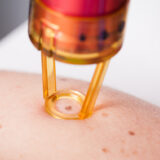
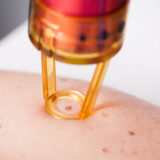
The CO2 laser is a laser treatment that uses carbon dioxide gas. It is considered particularly well-suited for treating raised warts such as seborrheic keratosis and thick pigmented lesions. This laser reacts with the water content in skin tissue and vaporizes it rapidly, allowing the affected area to be removed without a scalpel.
A scab will typically form after the procedure, and it usually falls off naturally within one to two weeks. During this period, it is important to keep the treated area clean and protected from UV exposure. CO2 laser treatment is often chosen because the procedure is relatively quick and downtime is relatively short.
Spot Laser (Q-switched Spectra Laser)
The spot laser treatment uses a Q-switched laser that targets pigment in spots. It is particularly suited for pigmentation-type spots such as solar lentigines and petal-shaped pigmentation. The laser is absorbed by melanin, breaking down the pigmented lesion so that the color gradually fades over time.
After treatment, the spot may temporarily appear darker, but this is a normal reaction as the melanin breaks down. The color will gradually lighten over several weeks to months, eventually returning toward the skin’s natural tone. Multiple sessions are often recommended to achieve the desired outcome.
How to Prevent Body Pigmented Spots & Warts

Pigmented spots and warts are easily influenced by aging, UV exposure, and lifestyle habits. Preventing them requires consistent daily skincare and improvements to your lifestyle. Below, we explain specific measures you can take to help prevent pigmented spots and warts.
Practice Thorough UV Protection
UV radiation is one of the major factors that contribute to the development of pigmented spots. When skin is exposed to UV rays, melanin is produced and may eventually become established as pigmented spots. Maintaining UV protection throughout the year is important for preventing sun damage.
Be sure to reapply sunscreen regularly. When going outdoors or spending extended time outside, reapplying every two to three hours is advisable. Using a parasol, hat, and sunglasses to physically block UV rays is also helpful.
Even indoors, UV rays can come through windows, so it is important not to let your guard down. Applying UV-blocking film to windows or using curtains with UV protection can help strengthen your defense against UV exposure at home.
Maintain a Regular Lifestyle
A well-regulated lifestyle is important for maintaining healthy skin. In particular, lack of sleep and stress can increase the production of free radicals, which are associated with the development of pigmented spots and warts, making adequate sleep and stress management essential.
Aim for seven to eight hours of sleep per night, and avoid using smartphones or computers immediately before bed to help ensure quality rest. A balanced diet is equally important. Foods rich in vitamins C and E have antioxidant properties that may help protect skin from aging. Incorporating citrus fruits, nuts, and green and yellow vegetables into your diet is a good approach.
Moderate exercise is also beneficial. Physical activity promotes better circulation and more active metabolism, which can support healthy skin cell turnover. Activities such as walking or stretching, continued at a comfortable pace, are ideal.
Follow an Appropriate Skincare Routine
Daily skincare is essential for helping to prevent pigmented spots and warts. In particular, cleansing and moisturizing are the foundation of maintaining healthy skin. When washing your face, avoid scrubbing — use a gentle lathering motion instead. Use a mild, low-irritation cleanser and rinse thoroughly with lukewarm water to avoid stressing the skin.
Moisturizing is equally important. When skin becomes dry, its barrier function weakens, making it more susceptible to UV damage. Apply toner, lotion, and cream to keep your skin well-hydrated, and pay particular attention to skincare during winter or in air-conditioned environments where the air is dry.
Additionally, when dead skin cells accumulate on the surface, skin cell turnover can become irregular, potentially contributing to pigmented spots and warts. Incorporating regular exfoliation or keratin care can help support skin renewal. However, doing this too frequently may damage the skin, so limiting it to once or twice a week is advisable.
For Body Pigmented Spot & Wart Treatment in Tokyo, Consult IC Clinic
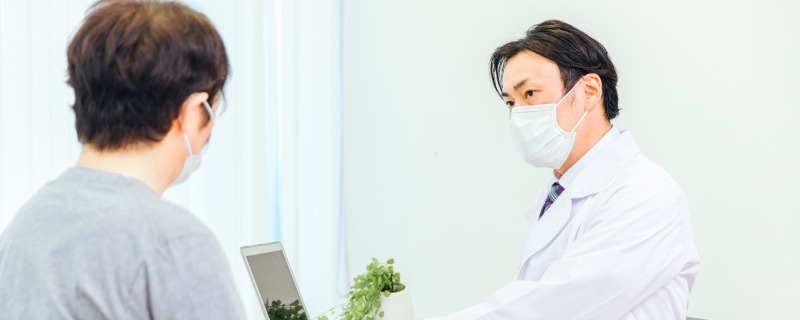
If pigmented spots or warts are left untreated or handled incorrectly, they may darken or increase in number. When exposed to strong UV rays or friction, they can be particularly resistant to improvement, and treatment may take longer as a result. However, addressing your concerns early with appropriate care and treatment can help prevent skin problems and support healthy, clear skin.
If you are concerned about pigmented spots or warts, please feel free to consult us. We will recommend a treatment approach tailored to the condition of your skin.
Detailed Diagnosis Process for Pigmented Spots & Warts
At our clinic, we place the highest priority on thorough diagnosis to ensure safe and reliable treatment. We provide accurate, evidence-based diagnoses for skin lesions that are difficult to assess by visual inspection alone.
Precision Diagnosis with Dermoscopy
Using a dermatoscope (dermoscope), we magnify the detailed skin structure — invisible to the naked eye — up to 10 times for examination. This allows for more accurate differentiation between benign and malignant lesions.
Malignancy Assessment Using the ABCDE Criteria
For early detection of melanoma (malignant melanoma), we evaluate lesions using the following criteria:
- A (Asymmetry): Asymmetry of shape
- B (Border): Irregular borders
- C (Color): Uneven coloration
- D (Diameter): Diameter greater than 6 mm
- E (Elevation/Evolution): Raised surface or changes over time
Histopathological Examination When Necessary
For cases where diagnosis is uncertain, we perform histopathological examination to reach a definitive diagnosis. With patient safety as our top priority, any suspicious lesions are always confirmed through tissue examination.
Features of Our Pigmented Spot & Wart Treatments
Reliable Diagnosis by Physicians with Dermatology Expertise
Our physicians have specialized knowledge and extensive experience in dermatology, enabling reliable differential diagnosis between pigmented spots, warts, and malignant tumors.
Safe Treatment with the Latest Laser Equipment
- CO2 Laser: Precise depth control to help reduce recurrence
- Q-switched Laser: Selectively targets melanin only
- Integrated Cooling System: Helps minimize discomfort and thermal damage
Technique to Minimize Scarring
Through treatment techniques refined over years of clinical experience, we work to minimize post-treatment scarring and pigmentation changes.
Treatment Approach by Condition
Treatment for Solar Lentigines (Age Spots)
Characteristics: Brown pigmented spots occurring in multiple areas on the face, backs of the hands, and forearms
Treatment options:
- Superficial lesions: Single session with Q-switched laser
- Darker lesions: Multiple sessions with Q-switched laser
- Raised lesions: Combined CO2 laser + Q-switched laser
Treatment for Seborrheic Keratosis
Characteristics: Brown to black raised lesions with a rough surface
Treatment options:
- Smaller lesions (under 5 mm): Single CO2 laser session
- Larger lesions (5 mm or more): CO2 laser in divided sessions
- Multiple lesions: Combined treatment with liquid nitrogen
Treatment for Petal-Shaped Pigmentation
Characteristics: Petal-like pigmentation on the back and shoulders
Treatment options:
- Acute phase: Treatment begins after inflammation has subsided
- Chronic phase: Q-switched laser combined with chemical peeling
- Extensive areas: Phased treatment plan
Detailed Treatment Process
Step 1: Initial Consultation & Diagnosis
- Detailed medical history and visual examination
- Dermoscopy examination
- Determination and explanation of treatment plan
- Histopathological examination if required
Step 2: Pre-Treatment Preparation
- Review and signing of treatment consent form
- Local anesthesia (if required)
- Marking of the treatment area
Step 3: Laser Treatment
- Irradiation at appropriate output settings
- Pain management during treatment
- Immediate confirmation of treatment outcome
Step 4: Post-Treatment Care & Instructions
- Application of ointment and protective dressing
- Detailed aftercare instructions
- Scheduling of next appointment
Treatment Schedule & Number of Sessions
CO2 Laser Treatment
- Number of sessions: Typically 1 session (2–3 sessions for larger lesions)
- Follow-up intervals: 1 week after treatment (progress check), 1 month after treatment (final review)
- Recovery period: 2–4 weeks
Q-Switched Laser Treatment
- Number of sessions: 1–3 sessions (adjusted according to lesion depth and color)
- Follow-up intervals: Every 4–6 weeks
- Recovery period: 2–6 months
Combination Treatment
- Number of sessions: 2–4 sessions
- Follow-up intervals: Adjusted according to treatment method
- Recovery period: 3–8 months
Post-Treatment Aftercare & Maintenance
Immediate Post-Treatment Care (1–2 Weeks)
- Keep the treated area clean
- Apply prescribed ointment as directed
- Protect the treated area with a dressing
- Avoid all UV exposure
Points to Note During the Healing Process
- Allow scabs to fall off naturally
- Do not forcibly remove scabs
- Take care when bathing and cleansing
- Observe the restricted period for makeup application
Long-Term Maintenance
- Regular skin check-ups
- Guidance on appropriate skincare
- Early detection of new lesions
- Annual full-body skin examination recommended
Risks, Side Effects & Important Notes
Common Side Effects
- Immediately after treatment: Redness, swelling, and mild discomfort
- 1–2 weeks after treatment: Scab formation and temporary pigmentation changes
- 1–3 months after treatment: Mild hypopigmentation may rarely occur
Rare Complications
- Infection at the treatment site (can be prevented with appropriate care)
- Scarring (patients with a tendency toward keloid formation should take particular care)
- Recurrence (may occur if treatment depth was insufficient)
Who Should Not Receive Treatment
- Those who are pregnant or breastfeeding
- Those with an active infection at the treatment site
- Those with a tendency toward keloid formation (please consult us)
- Those in an immunosuppressed state
Differential Diagnosis from Other Skin Tumors
Differentiation from Basal Cell Carcinoma
Characteristics of basal cell carcinoma:
- Pearly, nodular appearance
- Central ulceration
- Telangiectasia (dilated blood vessels)
Key differentiating factor: Observation of vascular patterns using dermoscopy
Differentiation from Melanoma
Characteristics of melanoma:
- Asymmetric shape
- Irregular coloration
- Rapid changes over time
Key differentiating factor: Comprehensive evaluation using the ABCDE criteria
Seborrheic Keratosis and Similar Lesions
Differentiation from actinic keratosis:
- Differences in the degree of surface keratinization
- Characteristics of the affected site
- Need for histological confirmation
Frequently Asked Questions (FAQ)
A: CO2 laser treatment uses local anesthesia, so discomfort is minimal. Q-switched laser treatment feels similar to a rubber band snap against the skin, and many patients undergo treatment without anesthesia.
A: This depends on the type and depth of the spot. Many cases of solar lentigines can be addressed in 1–2 sessions, while seborrheic keratosis is typically treated in a single session. Deeper or larger lesions may require multiple sessions.
A: With appropriate treatment and post-treatment care, marks are unlikely to remain in most cases. Mild pigmentation changes may occasionally occur, but these generally improve over several months.
A: Autumn and winter are generally recommended due to lower UV intensity, but treatment is available year-round with proper UV protection measures in place.
A: After CO2 laser treatment, please wait 1–2 weeks before applying makeup. After Q-switched laser treatment, makeup may be applied from the following day (avoiding the treated area).
Lifestyle Guidance for Prevention & Recurrence Prevention
How to Choose an Effective Sunscreen
- SPF value: SPF 30 or higher for daily use; SPF 50 or higher for outdoor activities
- PA value: Choose PA+++ or higher
- Application amount: Approximately a 500-yen coin size for the entire face
- Reapplication: Reapply every 2–3 hours
Key Points for Skincare
- Use skincare products containing antioxidant ingredients (vitamins C and E)
- Maintain the skin’s barrier function through adequate moisturizing
- Handle skin gently and avoid excessive stimulation
- Perform regular self-checks of your skin
Lifestyle Improvements
- Quit smoking (helps reduce free radical production)
- Actively consume antioxidant-rich foods
- Get adequate sleep (supports skin repair)
- Manage stress (helps maintain hormonal balance)